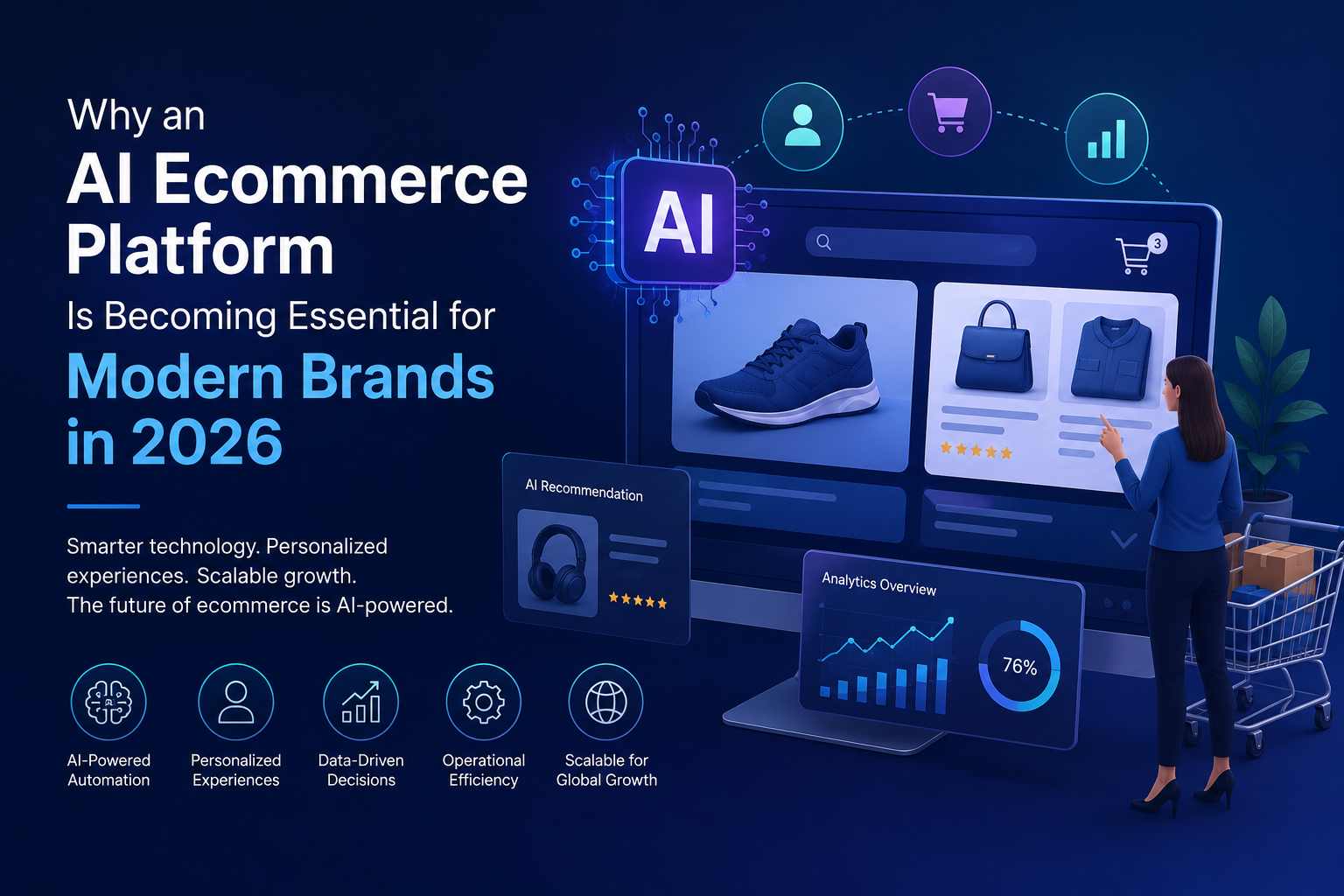
The ecommerce landscape has changed dramatically over the last few years. Rising customer expectations, increasing competition, and growing operational complexity mean brands can no longer rely on traditional systems alone. In 2026, businesses looking to build scalable, profitable ecommerce operations are turning towards an AI ecommerce platform to stay competitive, improve efficiency, and create stronger customer experiences.
For founders, retailers, and entrepreneurs aiming to build long-term digital brands, technology is no longer just infrastructure—it has become a growth driver. The shift towards intelligent automation, predictive insights, and personalised shopping experiences is making the modern ecommerce platform for brands more important than ever.
The Shift From Basic Ecommerce Tools to Intelligent Commerce
Many ecommerce businesses started with simple store builders and disconnected tools for marketing, inventory, customer support, and analytics. While this approach worked during early growth stages, scaling becomes difficult when systems fail to communicate effectively.
An AI ecommerce platform changes this model by creating a connected ecosystem. Instead of managing multiple applications manually, businesses can centralise operations while allowing AI to optimise workflows behind the scenes.
Modern brands now expect platforms that can:
- Automate repetitive tasks
- Predict buying behaviour
- Improve search visibility
- Personalise customer journeys
- Reduce operational costs
- Scale internationally
This evolution is why many companies are replacing legacy systems with smarter platforms built for future growth.
Personalisation Has Become a Competitive Requirement
European consumers increasingly expect personalised experiences across every touchpoint. Generic product recommendations and broad email campaigns are no longer enough.
An advanced AI ecommerce platform uses customer behaviour, purchase history, browsing patterns, and engagement data to create tailored experiences automatically. This allows businesses to show relevant products, recommend bundles, and improve conversion rates without increasing manual effort.
For an ecommerce platform for brands, personalisation is no longer optional—it directly impacts customer loyalty and repeat purchases.
AI Helps Brands Scale Without Increasing Operational Pressure
Growth often creates complexity. More products, more orders, and more channels usually mean higher operational costs.
AI-driven systems help brands scale efficiently by automating processes such as:
Inventory Management
Predictive inventory tools help reduce stock shortages and overstock situations.
Customer Support
AI-powered chat systems and automated workflows improve response times while reducing support workload.
Marketing Automation
Campaigns become more effective when AI analyses customer behaviour and triggers personalised communication automatically.
Product Optimisation
Smart recommendations improve product visibility and increase average order value.
A modern ecommerce platform for brands must support these capabilities because scaling manually creates bottlenecks that slow growth.
SEO and Visibility Are Becoming Platform-Level Priorities
Organic traffic remains one of the most valuable acquisition channels. However, many businesses still struggle because their technology stack limits optimisation opportunities.
An AI ecommerce platform built with SEO capabilities helps businesses improve:
- Technical SEO structure
- Page speed performance
- Metadata optimisation
- Structured data implementation
- Product page scalability
- Internal linking management
For ecommerce businesses targeting multiple European markets, multilingual optimisation and localisation have also become essential. Brands that invest in SEO-ready infrastructure today position themselves for stronger long-term growth.
Data-Driven Decisions Are Replacing Guesswork
Modern ecommerce success depends on making faster and smarter decisions.
AI systems analyse enormous amounts of customer and operational data in real time, helping businesses identify:
- Emerging product trends
- High-converting customer segments
- Sales forecasting opportunities
- Customer retention risks
- Marketing performance gaps
This intelligence transforms an ecommerce platform for brands from a transactional tool into a strategic business asset.
Future-Ready Brands Are Building Flexible Ecosystems
The ecommerce industry continues to evolve rapidly. Marketplaces expand, consumer behaviour changes, and new sales channels emerge every year.
Businesses investing in an AI ecommerce platform gain flexibility because these systems are designed for integration, automation, and scalability. Instead of rebuilding infrastructure every few years, brands can adapt faster to changing market demands.
The brands that succeed in 2026 will not necessarily be the biggest—they will be the most adaptable.
Final Thoughts
Building a successful ecommerce business in 2026 requires more than launching an online store. Businesses need technology that supports growth, improves customer experiences, and removes operational friction.
An AI ecommerce platform provides brands with the intelligence, automation, and flexibility needed to compete in a crowded digital market. Meanwhile, choosing the right ecommerce platform for brands creates the foundation for long-term scalability and future readiness.
For businesses planning their next growth phase, investing in smarter ecommerce infrastructure today may become the competitive advantage that defines tomorrow’s success.