E-commerce Platform Pricing: The Costs Businesses Often Forget
October 29, 2026
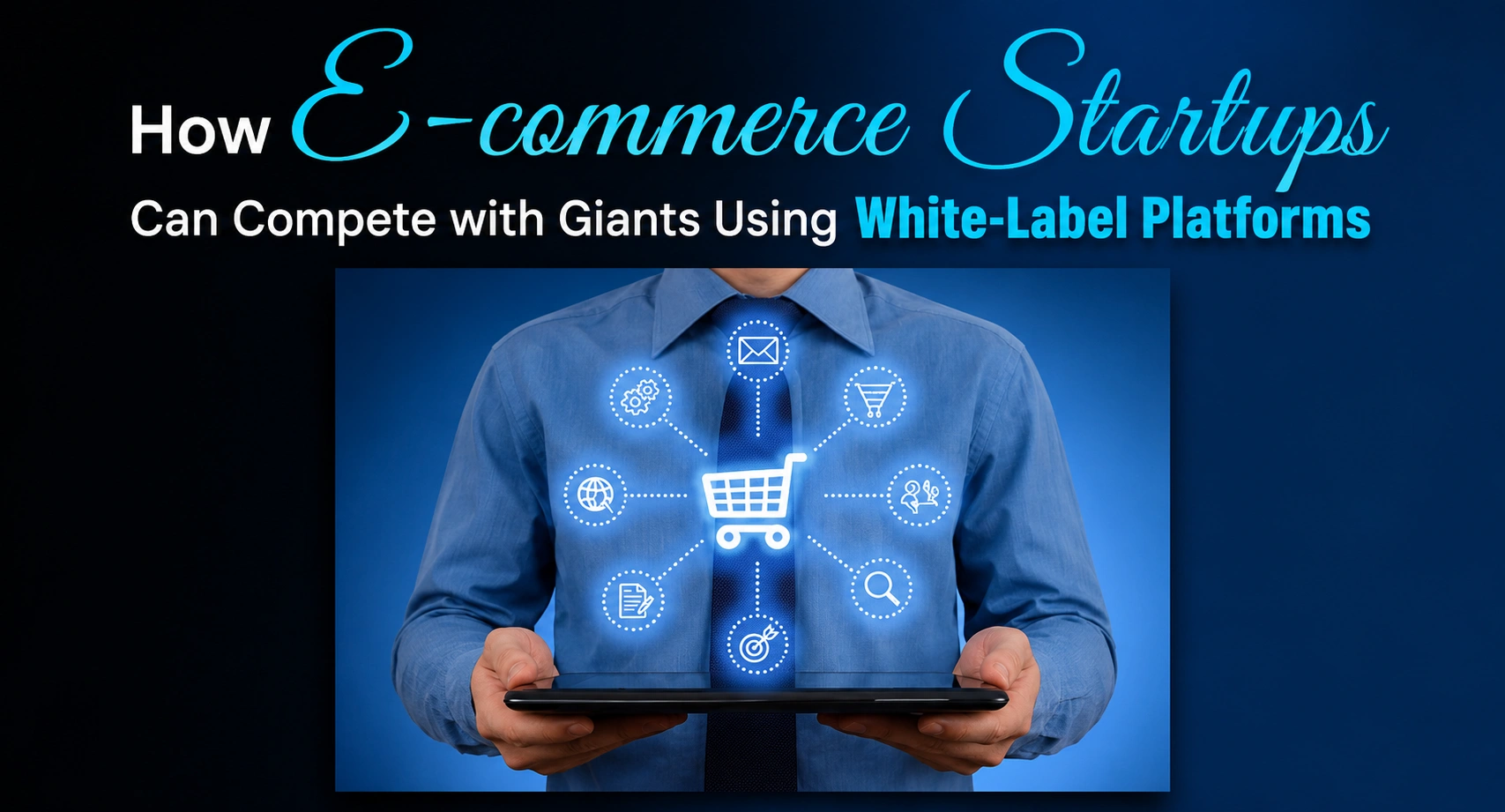
Starting a business in e-commerce right now may feel like joining a race wherein competitors already have had many years of brand equity, technology, data, and other capabilities built. While the large marketplaces may be able to compete on sheer scale, this is not something that needs to be matched by the startup.
Rather than having to work harder in every direction and spend much more time and money on building its own capabilities, the small business can compete by being more focused and agile and better attuned to its target customers. Technology will help in this regard. Rather than taking the time and resources to develop its e-commerce capabilities from scratch, the startup can leverage the white label platform to create its e-commerce capabilities more efficiently.
While evaluating an e-commerce platform India solution, white label technology can offer a good start for creating the business’s own branded e-commerce store, managing its orders and products, and conducting marketing. The idea is not to become another big marketplace. It is to create a differentiated business with a value proposition for the customers.
Why Startups Should Not Try To Outplay The Giants In Their Domain
Large scale e-commerce companies have some strengths that small scale e-commerce stores might find it difficult to copy instantly: huge catalogs of products, big technology teams, high advertising costs, and well developed logistic network. Matching all these strengths in one go might drain all the capital and energy of a startup company.
Rather, a better method would be to spot where a small company can make its strength.For instance, this might be through:
Niche marketing
Specialized products
Personalized customer services
Developing unique brands
Fast reaction to customer queries
Product community building
The technology in this case should be there just to support the process.
Functions of the White-Label E-commerce Platform
The white-label ecommerce platform offers pre-configured technology that allows customization and implementation by any organization under its own branding.
Instead of creating an entire commerce infrastructure from scratch, a company can leverage the existing functionalities for tasks like:
Building a storefront
Product management
Managing inventory
Order management
Payment processing
Marketing
Analytics
Customer experience
These elements can be branded for providing a business-specific experience. This approach can help startups save time on creating their infrastructure and focus on other aspects of the business.
Accelerate Launches Without Compromising on Anything
Starting the development process right from scratch can take into account all processes like design, development, testing, payment integration, product management, security, maintenance, and improvements. An already existing platform can give much of this basic infrastructure.
However, this doesn’t imply that every new venture launches without any sort of planning at all; configuration needs to be done regarding product structure, customer journeys, payment options, fulfillment, policies, SEO, and analytics.
The benefit here is that the business begins from a structured base rather than from an empty development platform.
In case of building an e-commerce platform for Indian ventures, this can assist in configuring the storefront according to the requirements of the region.
Develop Your Brand, Not Only Your Store

The mistake people make when thinking about white-label technology is that all stores that run on it need to be identical. However, an effective platform will have enough room for a company to build their own brand using:
Logo and branding
Color scheme and fonts
Product display
Page layouts
Content
Domain name
Navigation
Marketing messages
When looking at different e-commerce website builders, companies should consider customization along with user-friendliness.The technology you work with might be responsible for the underlying structure, but your clients see your brand.
Use Your Budget For Differentiation
While technology constitutes only one element of the budget for an ecommerce startup, savings generated from the absence of unnecessary custom development might be utilized to enhance differentiation through:
Product Development -> Content -> Customer Acquisition -> Packaging -> Customer Service -> Retention
This becomes even more pertinent for resource-strapped startups.The goal here is not just to go for the least costly technology option. It is about striking the proper balance of platform capability and operational considerations.
Harnessing Data for Intelligent Competition
A large company might have a massive amount of data at its disposal; however, even small firms can use data-driven decision making. The insights provided by an ecommerce platform include the following:
Product performance
Buyer behavior
Conversion rate
Traffic source
Cart abandonment
Re-buying
Inventory turnover
The startup would be able to know what products to focus on and what pages to improve based on this information.That is one of the reasons why an e-commerce growth platform should offer much more than just storefront capabilities.
Win with Customer Experience
The startup might not have the capacity to provide as many products as an extensive marketplace has. But what it can do is to make the process of shopping more concentrated. Look at the factors that affect customer relations:
Quick replies
Relevant product suggestions
Accurate product description
Convenient return policy
Delivery tracking
Customized messaging
Post-purchase assistance
These aspects can be an important part of the brand’s promise.
Utilize Marketing Solutions without Developing Everything From Scratch
Your ecommerce store requires traffic. The white label platform will act as the basis, but startups will require a proper marketing approach.This may include the following based on the nature of the business:
E-commerce website building platform along with the marketing and analytics solution can prove useful here.For those businesses that need professional help, working with ecommerce agency in India for SEO, PPC, conversion rate optimization, content, and ecommerce solutions is an option.
Select a Technology That Can Grow with You
That technology that works for 50 orders a month will not suffice when you have thousands of orders. Think about your future needs before selecting your technology. Think:
Will the catalog expand?
Will you be able to manage the inventory easily?
Is there room for more payments options?
Is there space for better marketing solutions?
Will the platform accommodate analytics capabilities?
Will it be easy to integrate with third party tools?
Will the storefront adapt to the brand?
Ecommerce technology provider that has an ecosystem solution might ease integration of separate pieces of technologies when your business will grow.
Reasons Why D2C Startups Can Gain from White-Label Solutions
In the case of the D2C commerce platform, having the control over the customer relationship is especially important. A D2C brand can leverage its own storefront to control how products will be presented, what messaging it will use, how it will communicate with customers, do promotions, etc.
White-label technology will serve as the basis, but the brand will retain ownership of its customer-facing identity.
Thus, the platform should align with the brand’s strategy, not vice versa.
When Should You Hire An Ecommerce Agency?
It is not always necessary to work with an ecommerce agency right from the beginning of your business. However, there comes a time when a business may need professional assistance with:
Idiocom within the White Label Model Concept
Idiocom is represented as an ecommerce growth platform, which integrates significant commerce operations into a single ecosystem. Functions of Idiocom include store building, management of products and inventory, orders, marketing, analytics, and AI-driven catalog workflow operations.
In case of startups, an integration-based approach can simplify the handling of various ecommerce systems as well as provide a starting point for creating your unique online brand.
What is important to consider here is not only how quickly you can launch the process but also how the technology will assist your company in the process of its development.
Conclusion
The competition with ecommerce powerhouses is not about matching them in terms of scale. The ability to understand where your business could add value and develop the appropriate technology is key.
White label ecommerce platforms can offer the necessary technological solution to set up a professional ecommerce site by avoiding the necessity to develop everything from the ground. This will allow you to concentrate on those things that matter for your customers such as unique products, powerful branding, valuable experience, fast support and strong relationships.
For the companies choosing ecommerce platforms in India, the platform should be seen not just as a way to quickly open a website, but as a foundation for further development.
With the help of the appropriate technology and the proper positioning, an ecommerce startup can carve out its own niche without trying to become a tiny replica of the marketplace.
Frequently Asked Questions
What is a white-label ecommerce platform?
A white-label ecommerce platform is an already developed ecommerce technology solution which can be customized and operated by a business entity under its own branding.
Is a white-label platform a good choice for ecommerce startups?
Yes and no – it depends on specifics of the business model, required features, budget and plans for the future. It may be good to use ready technology rather than developing everything from scratch.
Can a white-label store be branded with the company’s brand?
Yes, depending on the particular platform a business may customize some aspects like branding, domain, colors, layout, content and product presentation.
Is a white-label platform a better solution than custom ecommerce development?
There is not necessarily anything better about a white-label platform than the custom development.