How Ecommerce Automation Platforms Reduce Manual Work and Scale Faster
- June 2, 2026
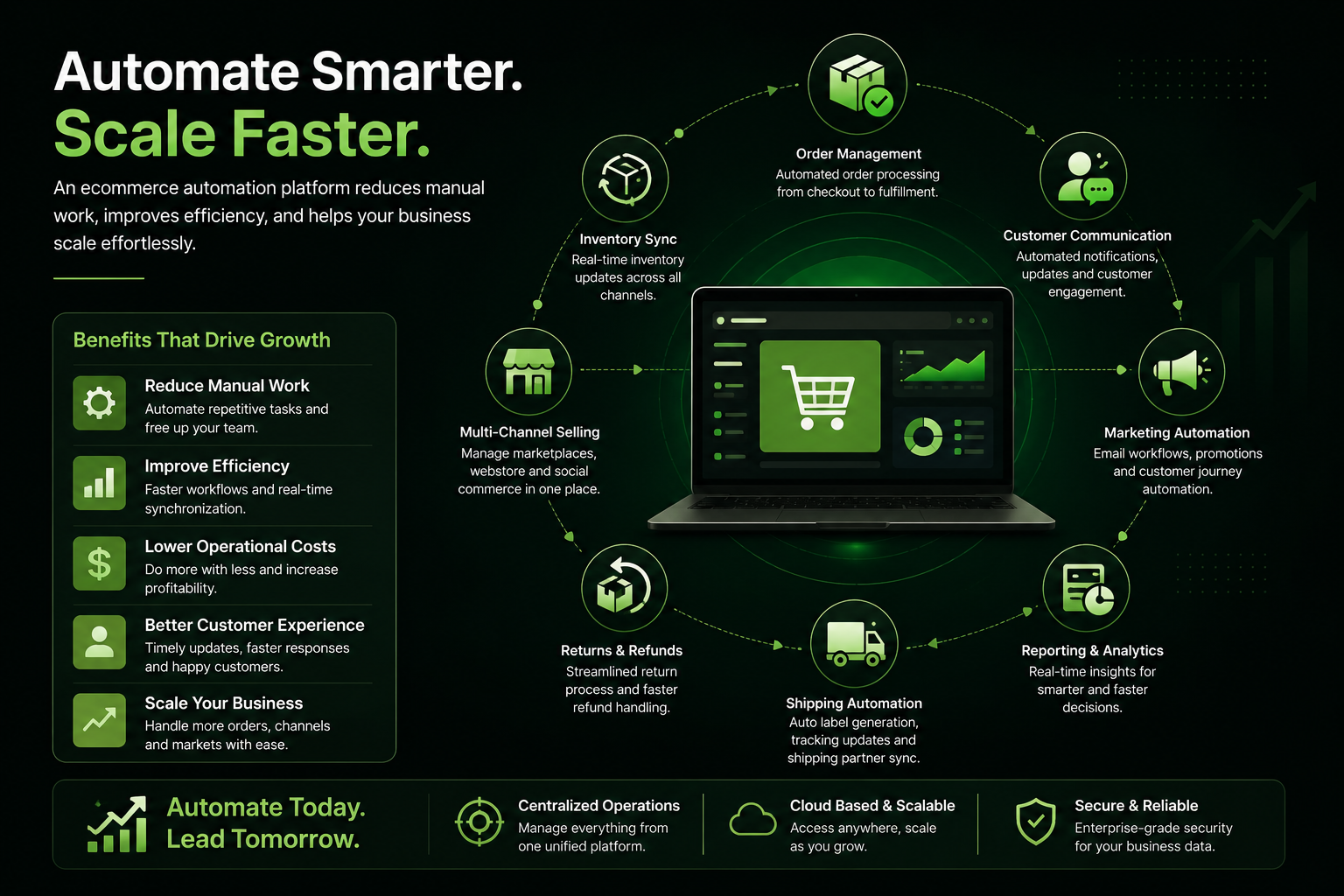
Running an ecommerce business today means managing far more than product listings and customer orders. Teams are expected to handle inventory updates, order processing, customer communication, marketing workflows, returns, reporting, and marketplace operations simultaneously. As online competition increases across Europe and global markets, businesses that continue relying heavily on manual processes often struggle to scale efficiently.
This is where an ecommerce automation platform becomes essential. By reducing repetitive tasks and streamlining workflows, businesses can improve productivity, lower operational costs, and focus more on growth initiatives rather than daily administrative work.
Why Manual Processes Slow Ecommerce Growth
Many ecommerce businesses start with spreadsheets, multiple software tools, and manual operations. While these methods may work initially, growth creates complexity.
Common operational challenges include:
- Manual inventory syncing across channels
- Delayed order processing
- Repetitive customer communication tasks
- Human errors in product management
- Time-consuming reporting processes
- Difficulty scaling multi-channel sales
These inefficiencies increase operational costs and create bottlenecks. Businesses that automate these workflows typically achieve faster response times and better customer experiences.
An advanced ecommerce SaaS platform helps businesses centralize operations while automating repetitive tasks that consume valuable team resources.
What Is an Ecommerce Automation Platform?
An ecommerce automation platform is software designed to automate repetitive ecommerce tasks and integrate multiple operational workflows into one ecosystem.
Instead of switching between multiple tools for inventory, orders, customer support, and analytics, businesses can manage everything through centralized automation.
Typical functions include:
- Inventory synchronization
- Automated order management
- Product catalog updates
- Customer notifications
- Marketing automation
- Multi-channel integrations
- Reporting dashboards
- Shipping workflow automation
Modern businesses increasingly prefer an ecommerce SaaS platform because it reduces infrastructure complexity and eliminates heavy internal IT management.
Key Areas Where Ecommerce Automation Reduces Manual Work
1. Automated Order Management
Manual order processing creates delays and increases error rates.
With automation:
- Orders move automatically through predefined workflows
- Shipping labels generate instantly
- Payment status updates automatically
- Customers receive automated notifications
An ecommerce automation platform significantly reduces the time teams spend processing individual orders, allowing operations teams to handle larger volumes efficiently.
2. Inventory Synchronization Across Channels
Many businesses sell through:
- Brand websites
- Marketplaces
- Social commerce channels
- Retail partners
Manual stock updates often create overselling problems.
An ecommerce SaaS platform automatically synchronizes inventory across channels in real time, improving stock accuracy and reducing operational risks.
3. Customer Communication Automation
Customer expectations continue rising.
Automated workflows can manage:
- Order confirmations
- Delivery notifications
- Abandoned cart emails
- Return updates
- Loyalty communications
Using an ecommerce automation platform, support teams spend less time answering repetitive questions and more time resolving complex customer needs.
4. Product Catalog Management
Large product catalogs become difficult to maintain manually.
Automation helps businesses:
- Bulk update products
- Schedule product launches
- Synchronize pricing
- Manage category structures
- Publish across channels automatically
This makes scaling product catalogs significantly easier.
5. Automated Marketing Workflows
Marketing teams often lose time managing repetitive campaign tasks.
An ecommerce SaaS platform can automate:
- Email workflows
- Customer segmentation
- Retargeting triggers
- Promotional campaigns
- Customer lifecycle journeys
Automation creates consistent customer engagement while reducing workload.
How Ecommerce Automation Improves Operational Efficiency
Operational efficiency directly affects profitability.
Businesses using an ecommerce automation platform often experience improvements in:
Reduced Human Errors
Manual processes create mistakes.
Automation reduces:
- Incorrect inventory counts
- Duplicate data entry
- Pricing mistakes
- Shipping errors
Faster Processing Times
Automated workflows complete tasks instantly.
Teams gain:
- Faster order fulfillment
- Faster customer responses
- Quicker reporting access
Lower Operational Costs
Automation reduces dependency on expanding operational teams.
Instead of increasing headcount, businesses can scale using smarter systems.
Improved Team Productivity
When repetitive tasks disappear, teams focus on:
- Strategy
- Customer experience
- Growth activities
- Product expansion
A centralized ecommerce SaaS platform creates more productive operational environments.
Scaling Ecommerce Businesses Faster Through Automation
Scaling ecommerce operations without automation often leads to operational chaos.
Automation enables businesses to scale by supporting:
Multi-Channel Expansion
Businesses can expand into:
- Additional marketplaces
- International channels
- New storefronts
Without increasing operational complexity.
Higher Order Volumes
Automated systems process growing transaction volumes without proportional staffing increases.
International Operations
European businesses frequently manage multiple regions, currencies, and languages.
An ecommerce automation platform supports expansion through automated workflows and centralized management.
Better Decision-Making
Automation platforms provide real-time reporting.
Teams gain visibility into:
- Sales trends
- Inventory performance
- Operational bottlenecks
- Marketing effectiveness
Data-driven decisions support faster scaling.
Why Ecommerce SaaS Platforms Are Becoming the Preferred Choice
Traditional software often requires:
- Server management
- Expensive implementations
- Internal maintenance teams
Modern businesses increasingly prefer an ecommerce SaaS platform because it offers:
- Faster deployment
- Lower upfront costs
- Continuous updates
- Flexible scalability
- Cloud accessibility
- Reduced IT dependency
SaaS-based automation provides flexibility that growing ecommerce businesses require.
Choosing the Right Ecommerce Automation Platform
Selecting the right platform requires evaluating operational requirements.
Consider:
Integration Capabilities
Ensure the platform connects with:
- Marketplaces
- Payment systems
- Shipping partners
- CRM tools
- Marketing software
Automation Flexibility
Workflows should adapt to business processes rather than forcing operational changes.
Scalability
The system should support future growth without rebuilding infrastructure.
Reporting Features
Strong analytics improve operational visibility.
User Experience
Teams adopt software faster when interfaces remain intuitive.
Choosing the correct ecommerce automation platform can create long-term operational advantages.
The Future of Ecommerce Operations Is Automation
Competition in ecommerce continues increasing.
Businesses relying heavily on manual operations face growing pressure from competitors using automation-driven workflows.
An ecommerce automation platform enables businesses to:
- Reduce repetitive work
- Improve operational accuracy
- Scale faster
- Lower costs
- Improve customer experiences
Meanwhile, an advanced ecommerce SaaS platform creates flexibility and operational control required for long-term growth.
Businesses that automate earlier often create stronger operational foundations for expansion.
Final Thoughts
Operational efficiency has become a competitive advantage.
Automation no longer serves only enterprise businesses. SMEs, retailers, D2C brands, and marketplace sellers increasingly depend on automation to maintain growth while controlling costs.
Implementing an ecommerce automation platform helps businesses eliminate manual bottlenecks, increase efficiency, and build scalable operations that support future growth.
For businesses planning long-term expansion, automation is rapidly moving from optional investment to operational necessity.