Ecommerce Automation Platform Use Cases That Increase Profit Margins Fast
- June 20, 2026
In today’s competitive ecommerce environment, improving profit margins has become a major priority for businesses. Rising operational costs, increasing customer expectations, and growing competition require brands to find smarter ways to improve efficiency.
An ecommerce automation platform helps businesses reduce manual tasks, optimise operations, and increase profitability through intelligent automation. By streamlining workflows and improving decision-making, automation allows brands to achieve better results without continuously increasing expenses.
For growing companies, investing in an enterprise ecommerce platform with automation capabilities can create measurable improvements in efficiency, customer satisfaction, and long-term revenue growth.
Why Ecommerce Automation Matters for Profit Growth
Traditional ecommerce operations often require significant manual effort. Managing inventory, processing orders, handling customer queries, and running marketing campaigns can consume valuable time and resources.
These challenges can impact profitability through:
- Higher operational costs
- Slower processes
- Increased human errors
- Poor customer experiences
- Inefficient resource allocation
An ecommerce automation platform helps businesses solve these problems by creating faster, smarter, and more reliable workflows.
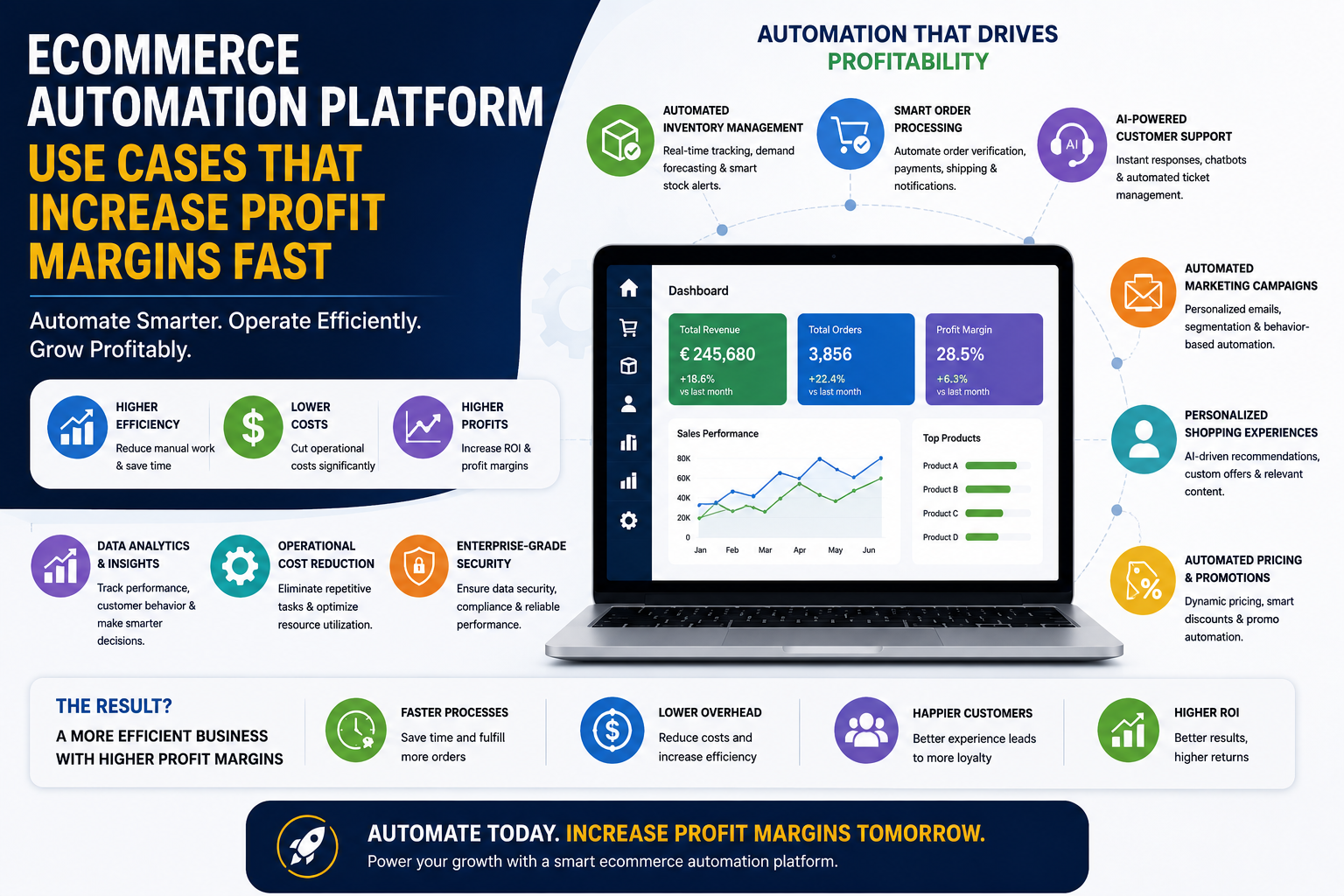
Use Case 1: Automated Inventory Management
Inventory management plays an important role in maintaining healthy profit margins.
Poor inventory decisions can lead to:
- Overstocking
- Product shortages
- Increased storage costs
- Lost sales opportunities
An ecommerce automation platform helps businesses monitor inventory levels in real time and automate stock-related processes.
Benefits include:
- Automatic stock updates
- Demand forecasting
- Low-stock alerts
- Improved inventory planning
By maintaining the right stock levels, businesses can reduce waste and improve profitability.
Use Case 2: Smart Order Processing Automation
Order management becomes more complex as ecommerce businesses grow.
Manual order processing can slow operations and create unnecessary costs.
Automation helps businesses manage:
- Order confirmation
- Payment verification
- Shipping updates
- Customer notifications
A modern enterprise ecommerce platform connects different parts of the order process and reduces manual involvement.
This improves speed, reduces errors, and creates a smoother customer experience.
Use Case 3: AI-Powered Customer Support
Customer support is essential for building loyalty, but maintaining large support teams can increase expenses.
An ecommerce automation platform enables businesses to use automated customer support tools.
These solutions can handle:
- Common customer questions
- Order tracking requests
- Product information
- Basic troubleshooting
Automation allows support teams to focus on complex issues while customers receive faster responses.
This improves satisfaction while lowering support costs.
Use Case 4: Automated Marketing Campaigns
Marketing efficiency directly affects ecommerce profitability.
Businesses often spend significant time creating campaigns, analysing results, and managing customer communication.
Automation improves marketing performance through:
- Personalised emails
- Customer segmentation
- Automated offers
- Behaviour-based campaigns
An enterprise ecommerce platform helps brands connect marketing activities with customer data.
This allows businesses to target the right customers at the right time and improve return on investment.
Use Case 5: Personalised Shopping Experiences
Customers expect brands to understand their preferences.
Generic shopping experiences often result in lower engagement and missed sales opportunities.
An ecommerce automation platform uses customer data to create personalised experiences.
Examples include:
- Product recommendations
- Personalised promotions
- Customised content
- Relevant product suggestions
Personalisation increases conversion rates and encourages repeat purchases.
Use Case 6: Automated Pricing and Promotions
Pricing decisions can directly influence profit margins.
Businesses need to balance competitive pricing with profitability.
Automation tools help brands manage:
- Dynamic pricing
- Promotional campaigns
- Discount strategies
- Product offers
An enterprise ecommerce platform can analyse market conditions and customer behaviour to support smarter pricing decisions.
This helps businesses increase revenue while protecting margins.
Use Case 7: Data Analytics and Business Insights
Successful ecommerce growth depends on accurate information.
Automation platforms collect and analyse business data to provide insights about:
- Sales performance
- Customer behaviour
- Product trends
- Operational efficiency
With better insights, businesses can make faster decisions and identify areas where costs can be reduced.
Data-driven strategies help brands improve profitability over time.
Use Case 8: Reducing Operational Costs Through Automation
One of the biggest advantages of ecommerce automation is cost reduction.
Automation reduces the need for repetitive manual work and improves team productivity.
Businesses can optimise:
- Employee workflows
- Resource management
- Customer communication
- Daily operations
An enterprise ecommerce platform creates a centralised system where businesses can manage multiple processes efficiently.
Future of Ecommerce Automation and Profitability
The future of ecommerce will depend heavily on intelligent automation.
AI, machine learning, and advanced analytics will continue improving automation capabilities.
Future ecommerce automation trends include:
- Predictive customer behaviour analysis
- Automated decision-making
- Smarter inventory planning
- AI-driven business optimisation
Companies that adopt automation early will have stronger advantages in a competitive digital market.
Conclusion
Increasing profit margins requires more than increasing sales. Businesses must improve efficiency, reduce costs, and create better customer experiences.
An ecommerce automation platform provides the tools needed to optimise operations, improve decision-making, and support scalable growth.
By combining automation with a powerful enterprise ecommerce platform, brands can create a more efficient business model and achieve stronger long-term profitability.
Call To Action
Improve your ecommerce performance with automation technology designed to reduce costs, increase efficiency, and maximise profit margins.