Enterprise Ecommerce Platforms That Help Businesses Scale Without Complexity
- June 5, 2026
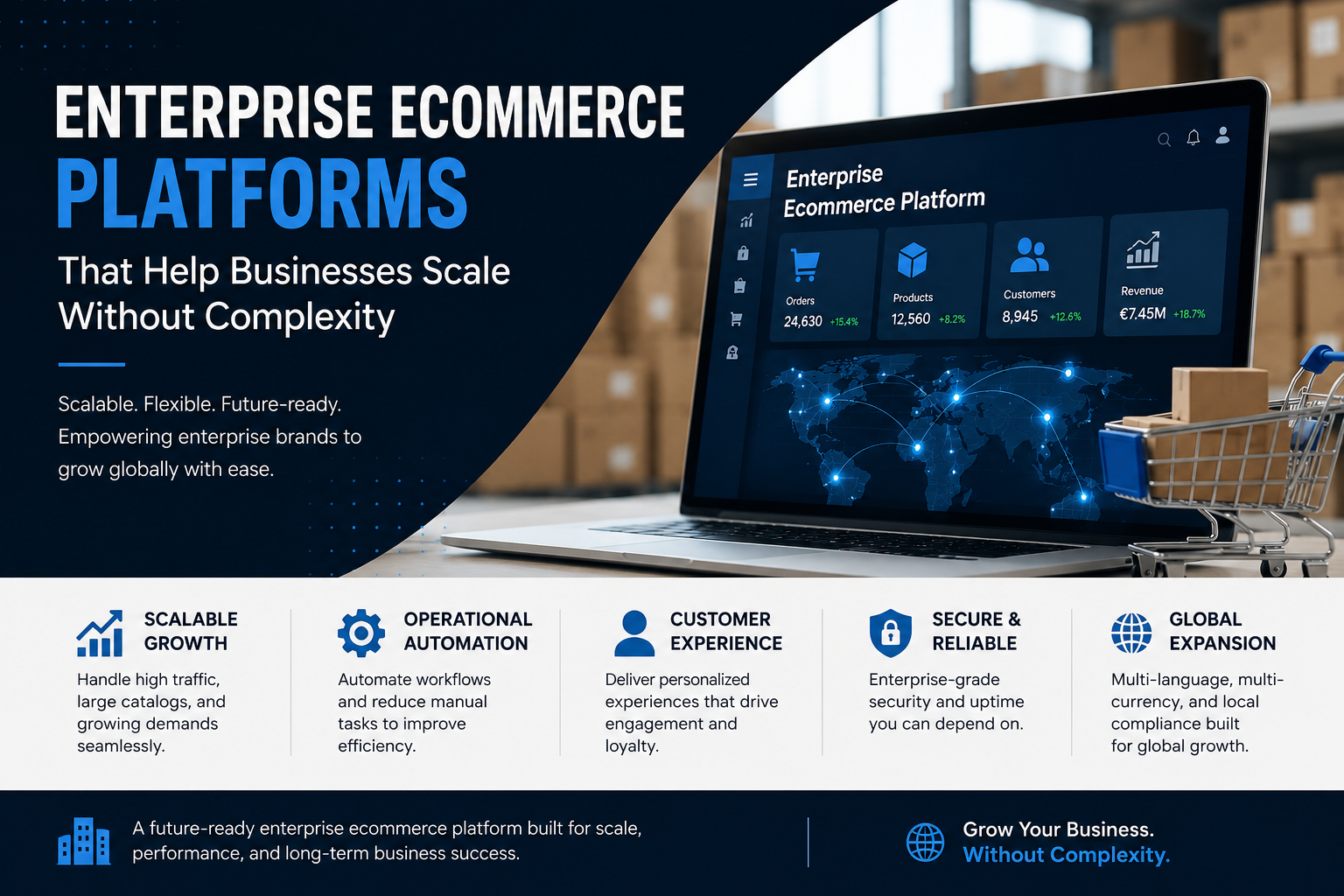
As ecommerce businesses grow, operational complexity often increases faster than revenue. Managing larger product catalogs, expanding into new markets, coordinating multiple sales channels, and meeting rising customer expectations can quickly overwhelm outdated systems.
This is why many growing brands are investing in an enterprise ecommerce platform that delivers scalability without adding unnecessary complexity. Modern businesses need technology that supports expansion while maintaining operational efficiency, customer satisfaction, and long-term profitability.
Choosing the right enterprise ecommerce solution allows organizations to streamline operations, automate repetitive processes, and create a strong foundation for sustainable growth.
Why Traditional Ecommerce Systems Struggle at Scale
Many businesses begin with simple ecommerce tools that work well during the early stages of growth. However, as order volumes increase and operations become more sophisticated, limitations start to appear.
Common challenges include:
- Disconnected systems and software
- Inventory management difficulties
- Slow website performance
- Limited customization options
- Inefficient reporting processes
- Growing operational costs
When these issues accumulate, businesses often spend more time managing technology than focusing on growth.
A modern enterprise ecommerce platform is designed specifically to solve these challenges while supporting long-term scalability.
What Defines a Modern Enterprise Ecommerce Platform?
An enterprise ecommerce platform goes beyond basic online store functionality. It acts as a centralized ecosystem that connects every aspect of ecommerce operations.
Key capabilities typically include:
Unified Business Operations
Instead of managing multiple disconnected tools, businesses can centralize:
- Product management
- Order processing
- Inventory control
- Customer data
- Marketing activities
- Analytics and reporting
This reduces operational complexity while improving visibility across the organization.
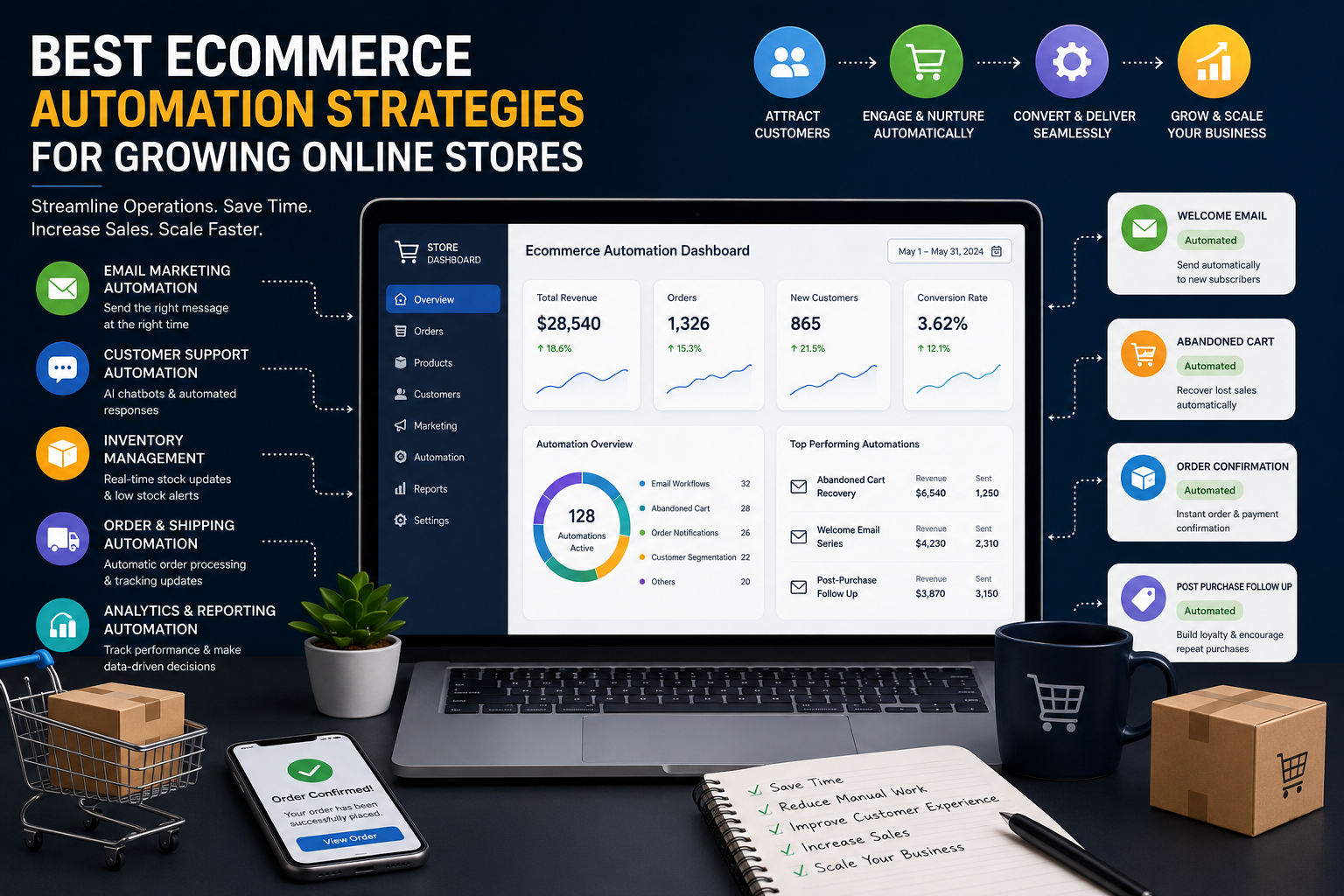
Advanced Automation
Automation plays a critical role in enterprise growth.
A powerful enterprise ecommerce solution can automate:
- Inventory updates
- Order routing
- Customer communications
- Marketing campaigns
- Pricing adjustments
- Performance reporting
By reducing manual workloads, teams can focus on strategic initiatives that drive growth.
Supporting Multi-Channel Commerce
Today’s customers interact with brands across numerous channels.
These include:
- Ecommerce websites
- Online marketplaces
- Social commerce platforms
- Mobile applications
- B2B purchasing portals
Managing these channels separately often creates inefficiencies and data inconsistencies.
An advanced enterprise ecommerce platform enables businesses to manage multiple channels from a single system while maintaining consistent customer experiences.
This approach simplifies operations and improves overall business performance.
Scalability Without Operational Bottlenecks
Growth should not require rebuilding infrastructure every few years.
The best enterprise ecommerce solution supports:
Large Product Catalogs
Enterprise businesses often manage thousands of products across multiple regions and categories.
Modern platforms are designed to handle extensive product databases while maintaining fast performance.
High Traffic Volumes
Seasonal promotions, product launches, and marketing campaigns can create sudden spikes in website traffic.
Enterprise-grade systems ensure stability, speed, and reliability even during peak demand periods.
Global Expansion
International growth requires support for:
- Multiple currencies
- Multiple languages
- Local payment methods
- Regional tax compliance
- Localized customer experiences
A scalable enterprise ecommerce platform makes global expansion significantly easier.
Improving Customer Experience Through Personalization
Customer expectations continue to evolve.
Generic shopping experiences are no longer sufficient for enterprise brands seeking long-term loyalty.
Modern enterprise ecommerce solutions leverage customer data to deliver personalized experiences, including:
Product Recommendations
Customers receive relevant product suggestions based on:
- Purchase history
- Browsing behavior
- Customer preferences
Personalized Marketing
Email campaigns, promotions, and offers can be tailored to individual customer segments.
Customized Shopping Journeys
Businesses can create dynamic experiences that increase engagement and improve conversion rates.
Personalization not only improves customer satisfaction but also increases average order value and retention rates.
Data-Driven Decision Making
Successful enterprise growth depends on accurate and timely insights.
An advanced enterprise ecommerce platform provides comprehensive analytics that help businesses understand:
- Customer behavior
- Product performance
- Sales trends
- Marketing effectiveness
- Inventory forecasting
Access to real-time data allows organizations to make informed decisions faster and reduce business risks.
Rather than relying on assumptions, leaders can use actionable insights to identify growth opportunities and optimize performance.
Security and Reliability for Enterprise Operations
Security becomes increasingly important as businesses scale.
Enterprise ecommerce systems handle large volumes of customer information, payment data, and operational records.
A reliable enterprise ecommerce solution should offer:
- Secure payment processing
- Data encryption
- Compliance support
- User access controls
- Regular security updates
- Disaster recovery capabilities
Strong security protects both the business and its customers while supporting regulatory compliance across multiple markets.
Future-Proofing Ecommerce Growth
The ecommerce industry continues to evolve rapidly.
New technologies, changing customer behaviors, and emerging sales channels require businesses to remain adaptable.
A flexible enterprise ecommerce platform provides the foundation needed to embrace future innovations such as:
- Artificial intelligence
- Advanced automation
- Predictive analytics
- Headless commerce
- Omnichannel experiences
Businesses that invest in scalable infrastructure today are better positioned to adapt to tomorrow’s opportunities.
How to Choose the Right Enterprise Ecommerce Solution
When evaluating platforms, businesses should focus on several critical factors:
Scalability
Can the platform support future growth without major disruptions?
Integration Capabilities
Does it connect easily with existing systems such as ERP, CRM, and marketing tools?
User Experience
Is the platform intuitive for both customers and internal teams?
Customization
Can it adapt to unique business requirements?
Security
Does it provide enterprise-grade protection and compliance features?
Choosing the right enterprise ecommerce solution should be viewed as a long-term strategic investment rather than a short-term technology purchase.
Conclusion
Enterprise growth does not have to create operational complexity. With the right enterprise ecommerce platform, businesses can scale efficiently while maintaining control, flexibility, and customer satisfaction.
Modern enterprise ecommerce solutions help organizations automate processes, centralize operations, improve personalization, and support global expansion without overwhelming internal teams.
As competition continues to intensify, businesses that invest in scalable ecommerce infrastructure today will be better equipped to achieve sustainable growth and long-term success.
CTA
Looking to scale your ecommerce business without increasing operational complexity? Explore enterprise ecommerce solutions designed to support growth, automation, and future-ready digital commerce strategies.