Why Digital Marketplaces Need Smarter AI Ecommerce Platform Integrations Today
- June 6, 2026
Digital marketplaces have transformed the way businesses sell products and connect with customers. From B2B procurement platforms to multi-vendor ecommerce marketplaces, the digital commerce landscape continues to evolve rapidly. As customer expectations increase and operational complexity grows, businesses can no longer rely on disconnected systems and manual processes.
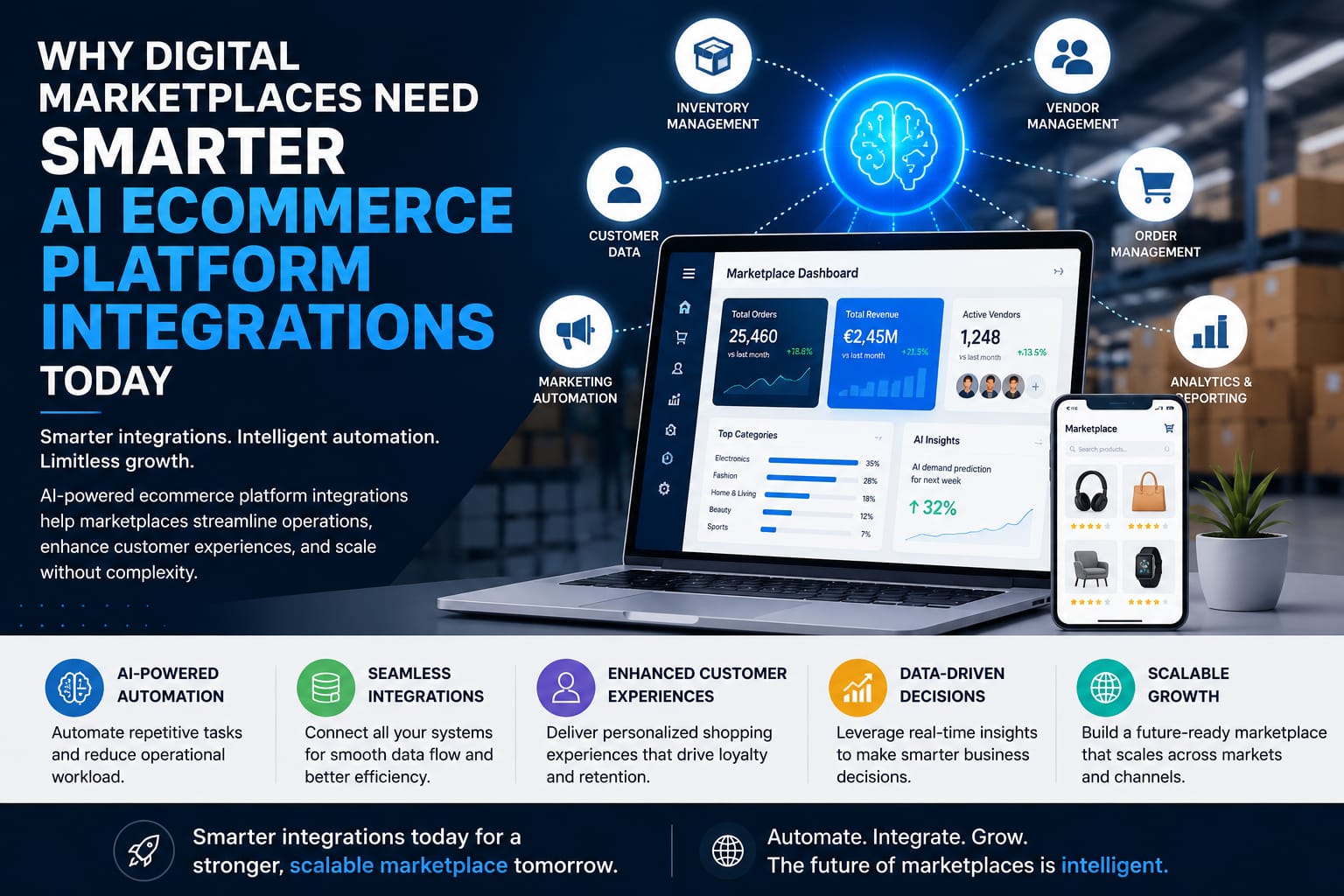
This is where a modern AI ecommerce platform becomes essential. Smarter integrations allow marketplaces to connect inventory, customer data, marketing tools, analytics, and operational workflows into a single intelligent ecosystem.
Today, successful digital marketplaces are investing in advanced ecommerce platform integrations to improve efficiency, enhance customer experiences, and create scalable growth opportunities.
The Growing Complexity of Digital Marketplaces
Modern marketplaces operate across multiple channels, regions, and customer segments. Managing these environments manually creates significant challenges.
Common marketplace challenges include:
- Inventory synchronization issues
- Vendor management complexity
- Inconsistent customer experiences
- Data silos across systems
- Slow operational workflows
- Limited business visibility
As marketplaces scale, these challenges often become barriers to growth.
A modern AI ecommerce platform helps eliminate these obstacles by creating seamless integrations across critical business systems.
Why Traditional Integrations Are No Longer Enough
Many marketplaces rely on basic software integrations that simply transfer information between systems.
While these integrations may solve short-term operational needs, they often lack intelligence and automation.
Today’s marketplaces require integrations that can:
- Analyze customer behavior
- Automate repetitive workflows
- Predict inventory requirements
- Personalize shopping experiences
- Generate actionable insights
This shift is driving demand for more intelligent ecommerce platform integrations powered by artificial intelligence.
How AI Ecommerce Platform Integrations Improve Marketplace Operations
Centralized Data Management
One of the biggest advantages of an AI ecommerce platform is the ability to unify data across multiple business functions.
Integrated systems can connect:
- Product catalogs
- Customer profiles
- Order management
- Vendor information
- Marketing platforms
- Analytics tools
This centralized approach improves accuracy while reducing operational inefficiencies.
Automated Workflow Optimization
Manual workflows often slow marketplace performance.
AI-powered integrations can automate:
- Inventory updates
- Order routing
- Customer notifications
- Vendor communications
- Product categorization
- Pricing adjustments
Automation reduces human error while allowing teams to focus on growth initiatives.
Enhancing Customer Experience Through Intelligent Integrations
Customer expectations continue to rise across European and global markets.
Consumers now expect:
- Fast product discovery
- Personalized recommendations
- Consistent shopping experiences
- Accurate inventory visibility
- Seamless checkout processes
An advanced AI ecommerce platform can leverage integrated customer data to deliver highly personalized experiences.
Smart Product Recommendations
AI analyzes customer behavior to suggest relevant products and bundles.
Personalized Marketing Campaigns
Integrated systems enable businesses to create targeted campaigns based on customer interests, purchase history, and engagement patterns.
Real-Time Customer Support
AI-powered integrations can improve support experiences through automated chat systems, intelligent routing, and faster response times.
Improving Marketplace Scalability
Scalability remains a critical challenge for growing marketplaces.
As transaction volumes increase, businesses require infrastructure capable of supporting expansion without increasing operational complexity.
Smarter ecommerce platform integrations allow marketplaces to scale efficiently by:
- Managing larger product catalogs
- Supporting more vendors
- Processing higher order volumes
- Expanding into international markets
- Integrating new sales channels
This flexibility creates a stronger foundation for long-term growth.
Data-Driven Decision Making
Modern digital marketplaces generate enormous amounts of data.
Without intelligent systems, much of this information remains underutilized.
An integrated AI ecommerce platform can analyze data in real time to identify:
- Emerging customer trends
- High-performing products
- Vendor performance opportunities
- Inventory forecasting needs
- Marketing optimization strategies
These insights help businesses make faster and more informed decisions.
The Role of AI in Marketplace SEO and Visibility
Organic traffic remains one of the most valuable acquisition channels for digital marketplaces.
AI-powered integrations can support SEO efforts through:
Technical SEO Automation
- Metadata generation
- Structured data implementation
- URL optimization
- Internal linking improvements
Content Optimization
AI can help marketplaces improve product descriptions, category pages, and content strategies to increase search visibility.
Localization Support
For marketplaces operating across Europe, localization is essential.
Advanced integrations can support:
- Multiple languages
- Regional content strategies
- Local search optimization
This improves visibility across diverse markets.
Future Trends in AI Ecommerce Platform Integrations
The future of digital marketplaces will be driven by intelligent automation and connected commerce ecosystems.
Emerging trends include:
Predictive Commerce
AI will increasingly forecast customer demand and purchasing behavior.
Hyper-Personalization
Marketplace experiences will become more individualized through real-time behavioral analysis.
Omnichannel Integration
Businesses will continue connecting websites, marketplaces, mobile apps, and social commerce platforms.
AI-Powered Vendor Management
Advanced systems will automate vendor onboarding, performance monitoring, and operational workflows.
Marketplaces that adopt these innovations early will gain significant competitive advantages.
Choosing the Right AI Ecommerce Platform
When evaluating solutions, marketplace operators should focus on:
Integration Flexibility
The platform should connect seamlessly with existing business systems.
Scalability
Infrastructure should support future marketplace growth.
Automation Capabilities
AI-driven automation should reduce operational workload.
Security and Compliance
Enterprise-grade security remains essential for protecting customer and business data.
Analytics and Reporting
Real-time insights help organizations optimize performance and accelerate growth.
Conclusion
Digital marketplaces are becoming increasingly complex, making intelligent technology more important than ever. A modern AI ecommerce platform combined with advanced ecommerce platform integrations helps businesses streamline operations, improve customer experiences, and support scalable growth.
As digital commerce continues to evolve, marketplaces that invest in smarter integrations today will be better positioned to compete, innovate, and grow in the future.
CTA
Looking to modernize your marketplace operations? Explore AI-powered ecommerce platform integrations that help automate workflows, improve customer experiences, and drive sustainable business growth.