Ecommerce Website Builder vs Custom Platform: What Growing Brands Need
- June 7, 2026
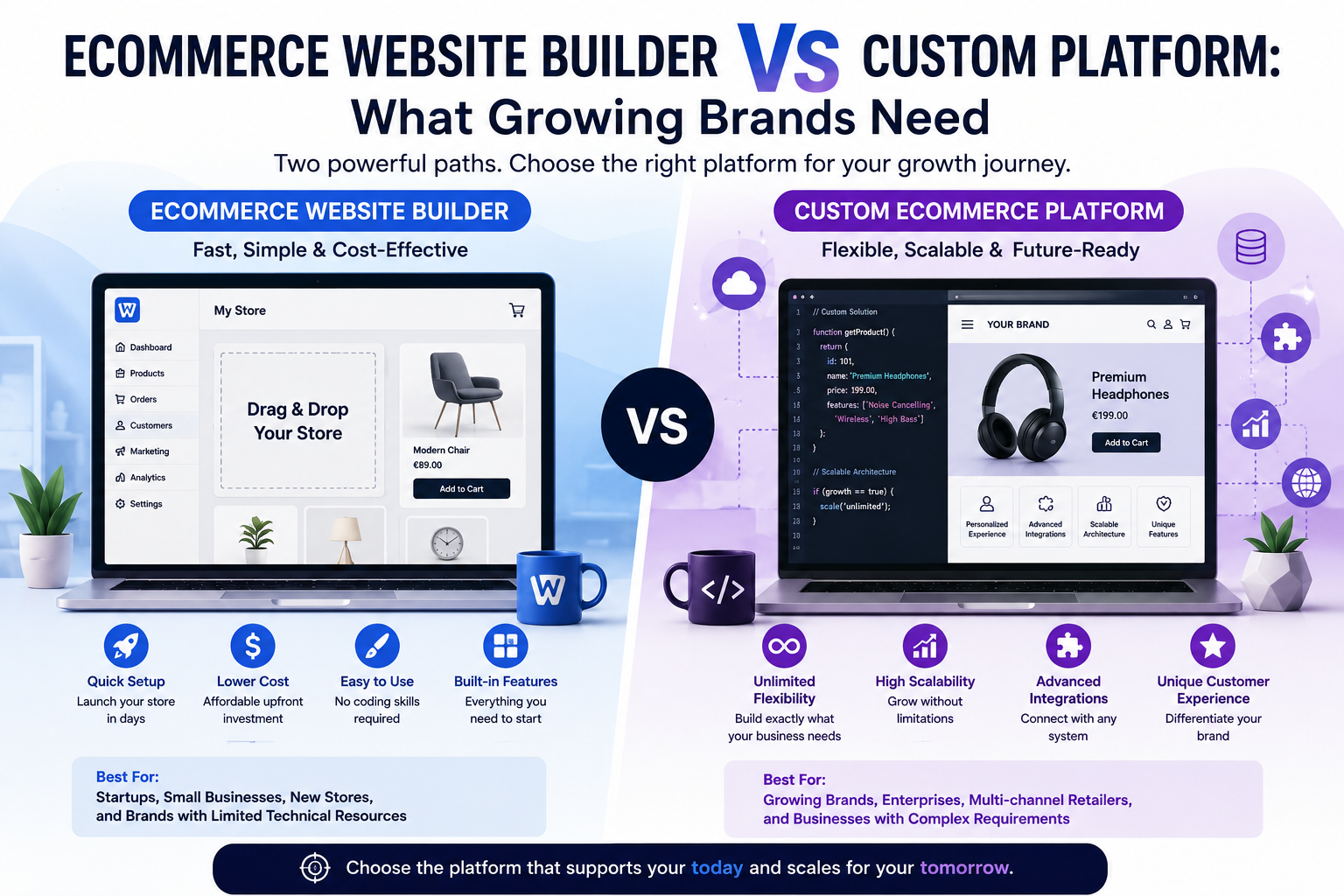
As ecommerce businesses grow, one of the most important technology decisions they face is choosing between an ecommerce website builder and a custom ecommerce platform. While website builders offer simplicity and speed, custom platforms provide flexibility and scalability that many growing brands eventually require.
The right choice depends on your business goals, growth plans, operational complexity, and customer experience requirements. Understanding the strengths and limitations of both options can help brands make smarter long-term decisions.
In today’s competitive ecommerce environment, selecting the right platform is not just a technical decision—it is a strategic investment in future growth.
Understanding Ecommerce Website Builders
An ecommerce website builder is a ready-made platform that allows businesses to create and manage online stores without extensive development work.
Popular website builders typically provide:
- Pre-built templates
- Drag-and-drop functionality
- Integrated payment systems
- Product management tools
- Basic marketing features
- Hosting and maintenance support
For startups and small businesses, these solutions offer a fast and affordable path to launching an online store.
Advantages of an Ecommerce Website Builder
Faster Launch Times
Businesses can often launch their stores within days rather than months.
Lower Initial Costs
Website builders eliminate many development expenses associated with custom solutions.
Ease of Use
Non-technical users can manage products, orders, and content without requiring dedicated developers.
Built-In Features
Most platforms include essential ecommerce functionality such as payment gateways, inventory management, and reporting tools.
These benefits make an ecommerce website builder an attractive option for businesses in the early stages of growth.
What Is a Custom Ecommerce Platform?
A custom ecommerce platform is built specifically around a business’s unique requirements.
Unlike template-based solutions, custom platforms provide complete control over:
- Design
- Functionality
- Integrations
- Customer experience
- Operational workflows
This approach allows businesses to create highly tailored ecommerce environments that support complex growth strategies.
Advantages of a Custom Ecommerce Platform
Unlimited Flexibility
Businesses can build features that align perfectly with their operational requirements.
Enhanced Scalability
Custom solutions can be designed to support future growth without platform limitations.
Better Integration Capabilities
A custom ecommerce platform can connect seamlessly with ERP systems, CRM software, marketing automation tools, and third-party applications.
Unique Customer Experiences
Brands can create differentiated shopping journeys that strengthen customer loyalty and improve conversion rates.
Comparing Ecommerce Website Builders and Custom Platforms
Development Speed
Ecommerce Website Builder
Website builders offer significantly faster deployment.
Most businesses can launch quickly using pre-built templates and existing functionality.
Custom Ecommerce Platform
Custom development requires planning, design, testing, and implementation.
Launch timelines are generally longer but provide greater flexibility.
Cost Considerations
Ecommerce Website Builder
Lower upfront investment makes website builders attractive for smaller businesses.
However, recurring subscription costs may increase over time.
Custom Ecommerce Platform
Development costs are higher initially.
However, long-term value may outweigh the investment for rapidly growing brands.
Scalability
Ecommerce Website Builder
Many builders support moderate growth but may create limitations as businesses expand.
Custom Ecommerce Platform
A custom ecommerce platform can be designed specifically for future scalability, larger product catalogs, higher traffic volumes, and international expansion.
Customization
Ecommerce Website Builder
Customization options are often limited by platform restrictions.
Custom Ecommerce Platform
Businesses maintain full control over functionality, workflows, and user experience.
This flexibility becomes increasingly valuable as operations grow.
Which Option Is Best for Growing Brands?
The answer depends on business maturity and growth objectives.
Ecommerce Website Builder Is Ideal For:
- Startups
- Small businesses
- New online stores
- Brands with limited technical resources
- Businesses seeking rapid market entry
These organizations often prioritize simplicity, affordability, and speed.
Custom Ecommerce Platform Is Ideal For:
- Fast-growing brands
- Enterprise ecommerce businesses
- Multi-channel retailers
- International ecommerce operations
- Businesses requiring advanced integrations
For organizations planning significant expansion, a custom ecommerce platform often provides greater long-term value.
The Role of Integrations in Modern Ecommerce
Today’s ecommerce success depends on connected systems.
Growing businesses increasingly require integrations with:
- ERP software
- CRM platforms
- Marketing automation tools
- Customer support systems
- Analytics platforms
- Inventory management solutions
While some ecommerce website builders support integrations, custom platforms generally provide greater flexibility and control.
As businesses scale, integration capabilities become increasingly important.
Future Trends Shaping Ecommerce Platforms
The ecommerce industry continues to evolve rapidly.
Several trends are influencing platform decisions:
Artificial Intelligence
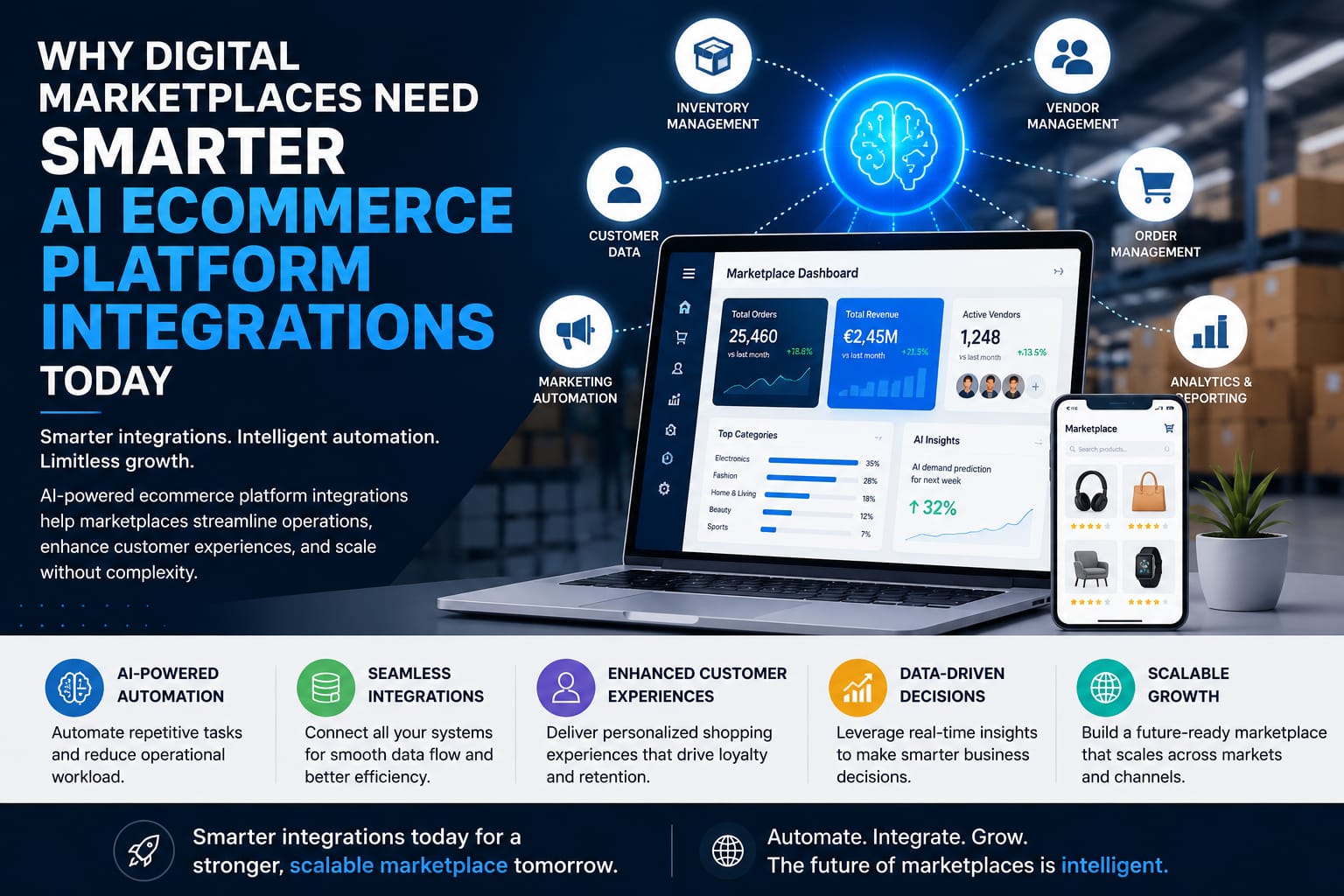
AI-powered personalization, automation, and predictive analytics are becoming standard requirements.
Headless Commerce
Businesses increasingly seek flexibility through decoupled frontend and backend architectures.
Omnichannel Experiences
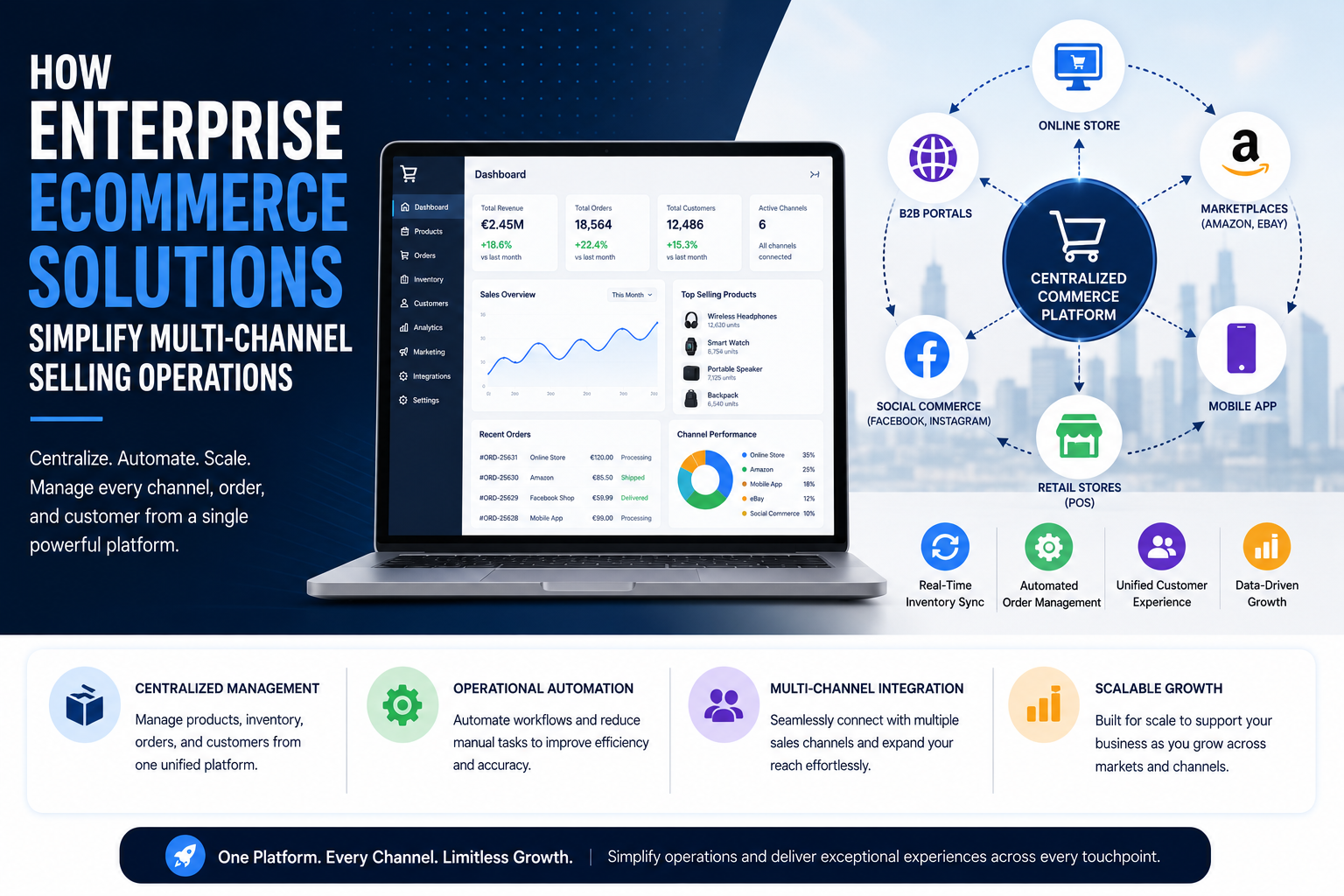
Customers expect consistent interactions across websites, marketplaces, mobile apps, and social commerce platforms.
Global Expansion
Multi-language and multi-currency support are becoming essential for growth-focused brands.
A future-ready custom ecommerce platform often provides greater adaptability to these evolving requirements.
How to Make the Right Decision
Before selecting a platform, businesses should evaluate:
Current Business Needs
What challenges need immediate solutions?
Future Growth Plans
Will the platform support expansion over the next three to five years?
Budget Requirements
Can the business support custom development investments?
Technical Resources
Does the organization have access to development expertise?
Customer Experience Goals
Will the platform help create a competitive advantage?
Answering these questions helps brands choose a solution aligned with both current and future objectives.
Conclusion
Choosing between an ecommerce website builder and a custom ecommerce platform is a critical decision for growing brands. Website builders offer affordability, speed, and simplicity, making them ideal for early-stage businesses. Meanwhile, custom platforms provide the flexibility, scalability, and integration capabilities required for long-term growth.
The most successful brands evaluate not only their current needs but also where they plan to be in the future. Investing in the right ecommerce foundation today can create significant competitive advantages tomorrow.
CTA
Ready to build an ecommerce platform that supports your growth goals? Explore scalable ecommerce solutions designed to deliver flexibility, performance, and long-term business success.