- June 17, 2026
The ecommerce industry is evolving faster than ever. Customer expectations, digital competition, and business complexity are pushing brands to rethink their technology infrastructure.
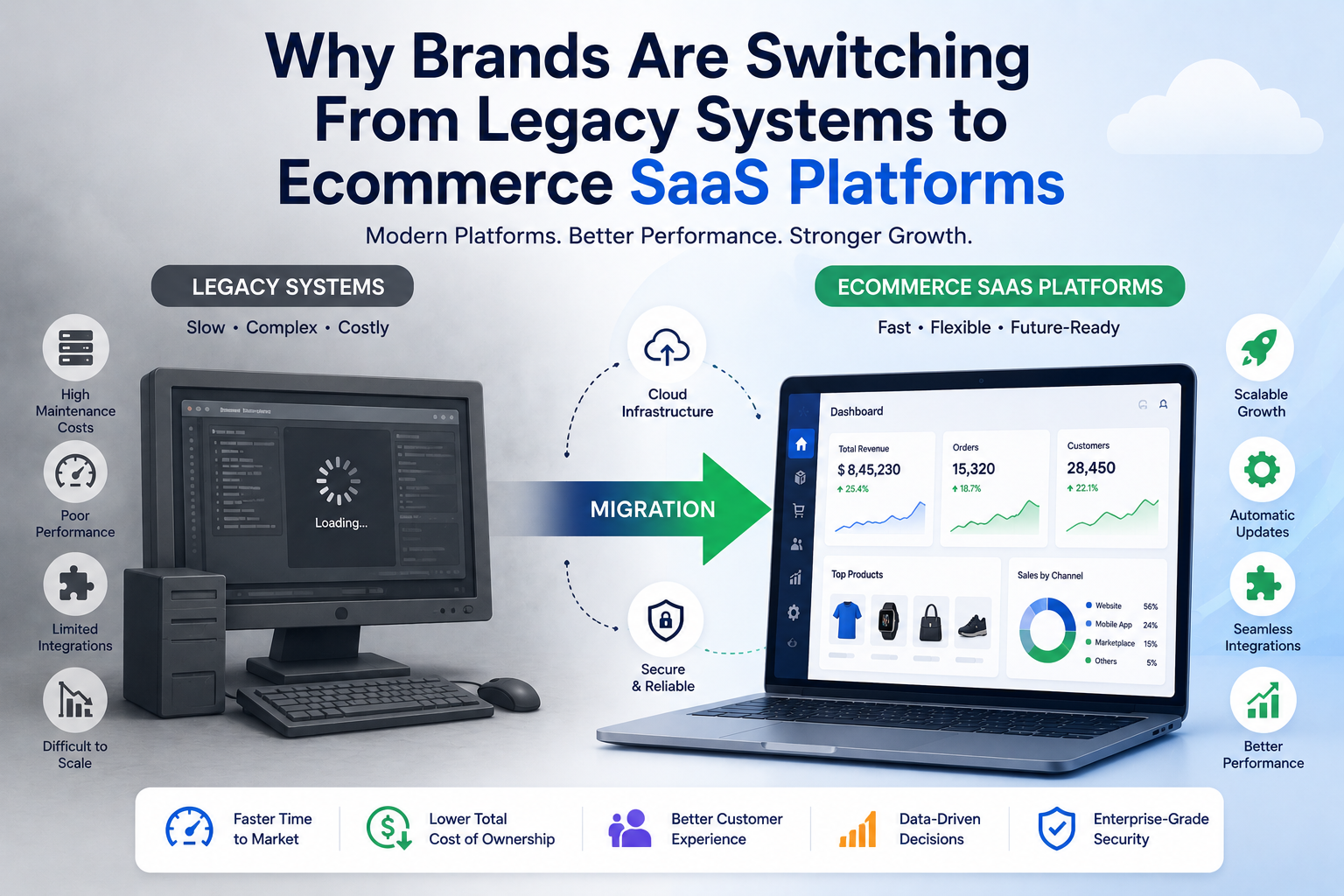
Many companies that started with traditional ecommerce systems now face challenges related to scalability, maintenance, performance, and flexibility. These limitations are encouraging businesses to move away from outdated legacy platforms and adopt modern solutions.
A powerful ecommerce SaaS platform provides brands with the flexibility, automation, and scalability needed to compete in today’s digital marketplace.
For growing organizations, upgrading to an enterprise ecommerce platform is becoming a strategic decision that supports long-term growth and operational efficiency.
What Are Legacy Ecommerce Systems?
Legacy ecommerce systems are older platforms that businesses have relied on for many years.
These systems were often built when ecommerce requirements were simpler.
Common characteristics include:
- Manual updates
- Limited integrations
- Complex maintenance
- Slow customization
- Dependence on technical resources
While legacy systems may continue to operate, they often struggle to support modern ecommerce demands.
As businesses grow, these limitations become more visible.
Why Legacy Platforms Create Growth Challenges
Growing brands require technology that can adapt quickly.
However, legacy systems often create problems such as:
Limited Scalability
Older platforms may struggle with:
- Increasing traffic
- Larger product catalogs
- Higher order volumes
- New market expansion
This creates performance issues and slows business growth.
High Maintenance Costs
Legacy platforms often require continuous technical support.
Businesses may spend more resources on:
- System updates
- Security improvements
- Bug fixes
- Infrastructure management
Instead of investing in growth, teams spend time maintaining outdated technology.
The Rise of Ecommerce SaaS Platforms
An ecommerce SaaS platform offers a modern approach to online commerce.
Unlike traditional systems, SaaS platforms are cloud-based and designed for continuous improvement.
They provide:
- Automatic updates
- Flexible scalability
- Built-in security
- Faster deployment
- Reduced maintenance requirements
This allows brands to focus on customers, products, and growth rather than technical complexity.
Key Reasons Brands Are Migrating to SaaS Ecommerce
1. Faster Innovation and Updates
Technology changes rapidly.
Legacy systems often require manual development to introduce new features.
An ecommerce SaaS platform provides regular updates that help businesses access:
- New ecommerce features
- Security improvements
- Performance enhancements
- Industry innovations
Brands can adapt faster without rebuilding their entire infrastructure.
2. Better Scalability for Growing Businesses
Growth requires a platform that can handle increasing demands.
A modern enterprise ecommerce platform supports:
- More customers
- More products
- More transactions
- More sales channels
This allows brands to expand confidently without worrying about technical limitations.
3. Reduced Operational Complexity
Managing an ecommerce system requires time and resources.
Legacy platforms often involve:
- Manual maintenance
- Server management
- Technical troubleshooting
SaaS solutions simplify operations through automation.
Businesses can reduce technical workload and focus on strategic activities.
4. Improved Customer Experience
Customer expectations continue to rise.
Modern shoppers expect:
- Fast websites
- Smooth checkout experiences
- Personalized recommendations
- Mobile-friendly shopping
An ecommerce SaaS platform helps brands deliver better experiences through advanced tools and integrations.
5. Stronger Integration Capabilities
Today’s businesses depend on connected systems.
Brands need integrations with:
- CRM platforms
- Marketing tools
- Payment systems
- Inventory software
- Analytics solutions
An enterprise ecommerce platform provides flexible integration options that connect different parts of the business.
This creates a more efficient digital ecosystem.
6. Enhanced Security and Compliance
Security is a major concern for ecommerce businesses.
Legacy systems may struggle with modern security requirements.
SaaS platforms typically provide:
- Regular security updates
- Data protection
- Secure payment support
- Compliance features
This helps protect customer information and maintain trust.
7. Easier Ecommerce Migration
Many businesses hesitate to move because they believe migration is complicated.
However, modern ecommerce migration strategies make the transition easier.
A successful migration process includes:
Platform Assessment
Understanding current system limitations and business needs.
Data Migration
Moving important information such as:
- Product data
- Customer records
- Order history
Testing and Optimization
Ensuring the new system works smoothly before launch.
With proper planning, businesses can transition without major disruption.
How Enterprise Ecommerce Platforms Support Growth
An advanced enterprise ecommerce platform provides capabilities designed for larger organizations.
These include:
Multi-Channel Selling
Managing multiple sales channels from one system.
Advanced Analytics
Understanding customer behavior and business performance.
Automation
Reducing repetitive tasks and improving efficiency.
Personalization
Creating customized shopping experiences.
These features help brands compete in a rapidly changing market.
Future of Ecommerce Technology
The future of ecommerce will continue moving toward intelligent, flexible platforms.
Important trends include:
Artificial Intelligence
AI will improve automation, personalization, and decision-making.
Headless Commerce
Businesses will gain more flexibility in creating digital experiences.
Automated Operations
More ecommerce workflows will become intelligent and automated.
Data-Driven Growth
Brands will rely more on real-time insights.
Businesses using modern platforms will be better prepared for these changes.
Choosing the Right Enterprise Ecommerce Platform
Before migrating, brands should evaluate:
Scalability
Can the platform support future expansion?
Flexibility
Can it adapt to business requirements?
Integration
Does it connect with existing systems?
Security
Does it protect customer and business data?
Support
Does the provider offer reliable assistance?
The right choice helps businesses create a strong foundation for long-term success.
Conclusion
Legacy ecommerce systems may support basic operations, but they often become barriers as brands grow. Increasing complexity, customer expectations, and market competition require more flexible technology.
Moving to an ecommerce SaaS platform helps businesses improve scalability, reduce maintenance challenges, and accelerate innovation.
For organizations planning future expansion, adopting an enterprise ecommerce platform can provide the foundation needed for sustainable digital growth.
CTA
Ready to modernize your ecommerce operations? Explore scalable ecommerce solutions designed to support migration, automation, and long-term business growth.