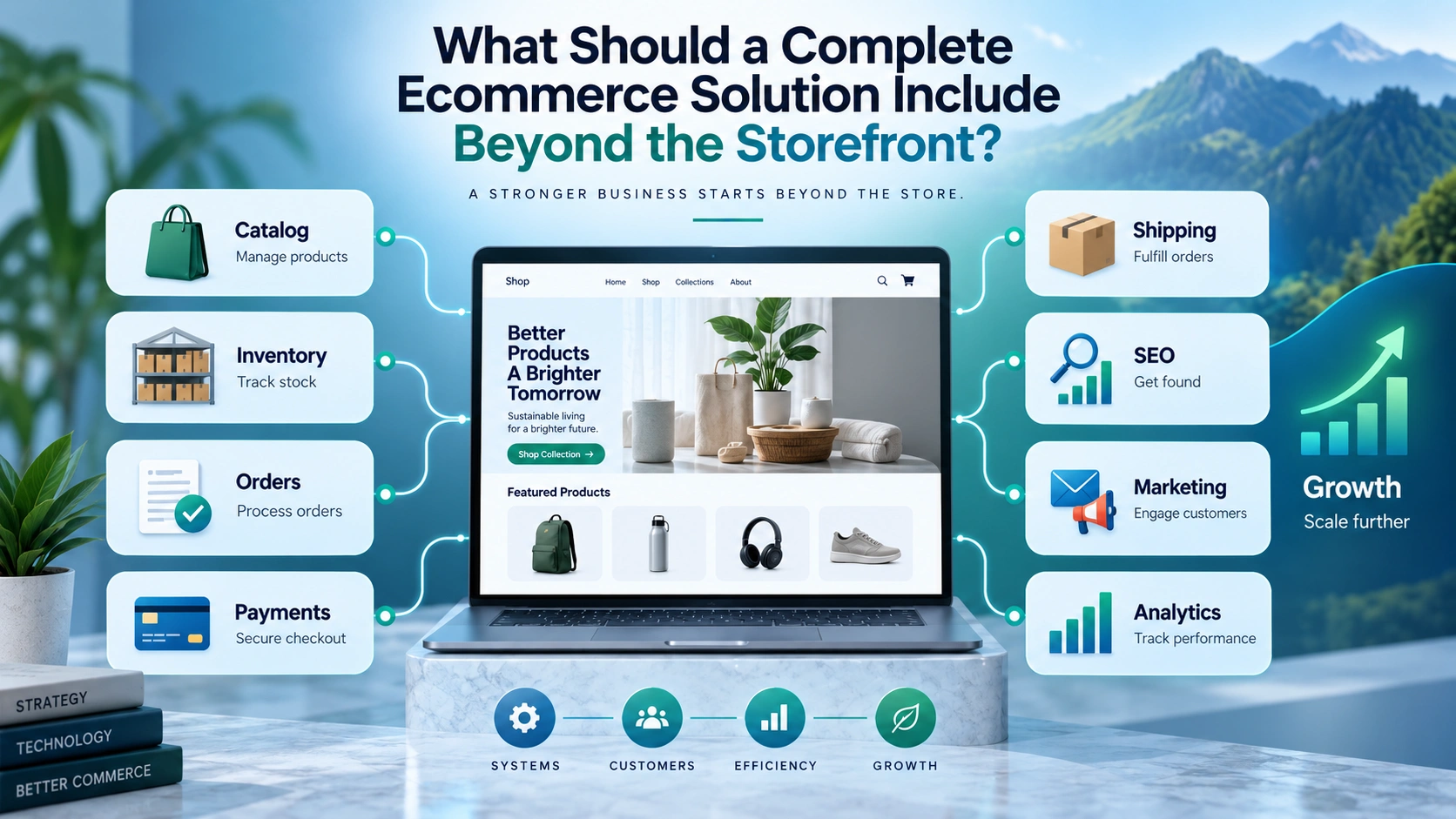
What Should a Complete Ecommerce Solution Include Beyond the Storefront?
September 14, 2026
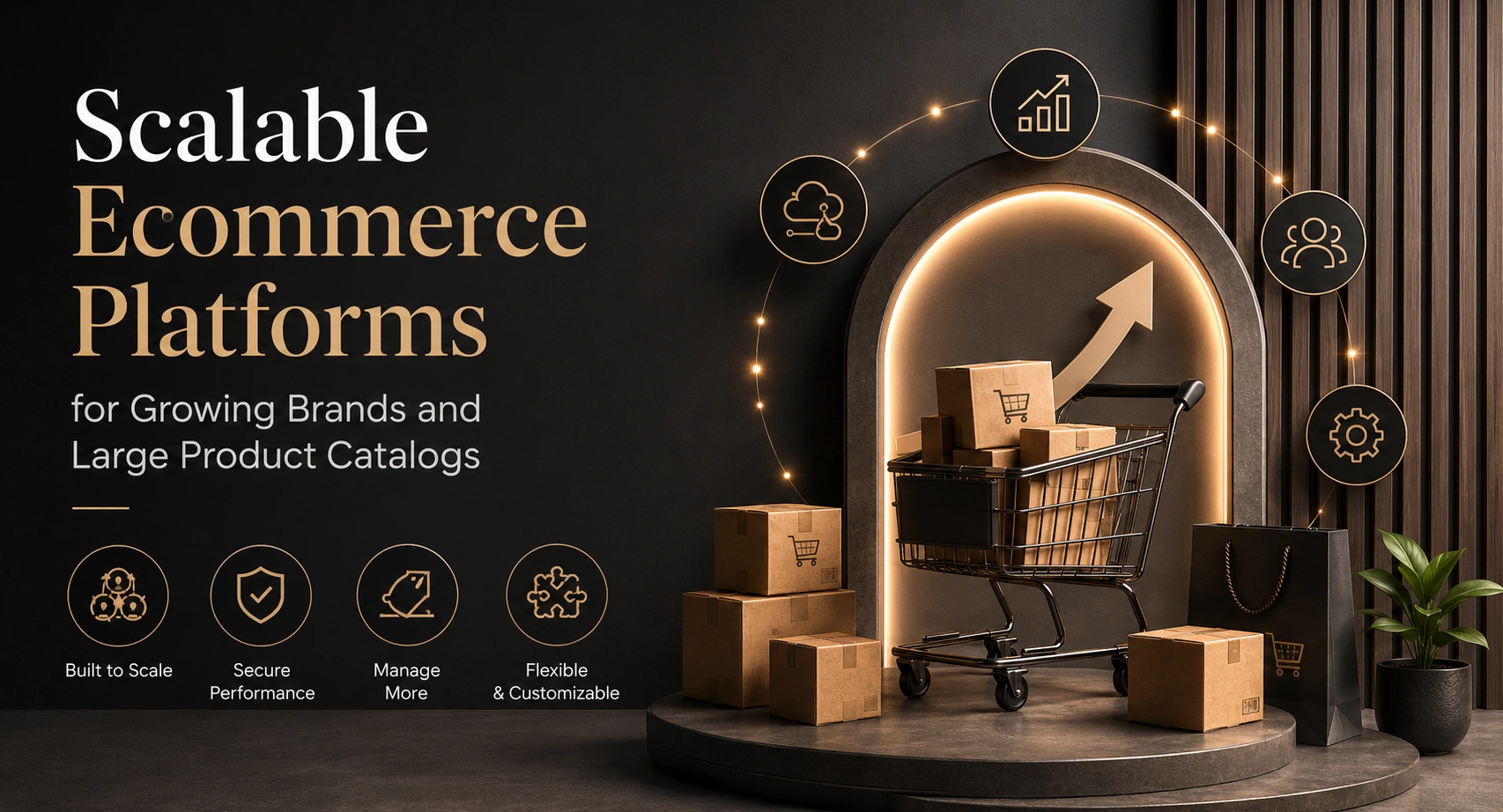
Managing a large product catalog is one of the biggest challenges for growing ecommerce brands. As businesses expand, the number of products, categories, customer segments, and sales channels continues to increase. Without the right technology, maintaining accurate product information and smooth operations becomes increasingly difficult.
A modern enterprise ecommerce platform helps brands manage complex product catalogs, automate workflows, and deliver better customer experiences at scale.
Unlike basic ecommerce solutions, an advanced ecommerce platform for brands is designed to handle thousands of products while supporting customization, automation, and long-term business growth.
Small ecommerce stores may manage products manually, but enterprise brands face much bigger operational demands.
Large catalogs often include:
Managing these elements manually can lead to:
This is why brands require powerful catalog management capabilities.
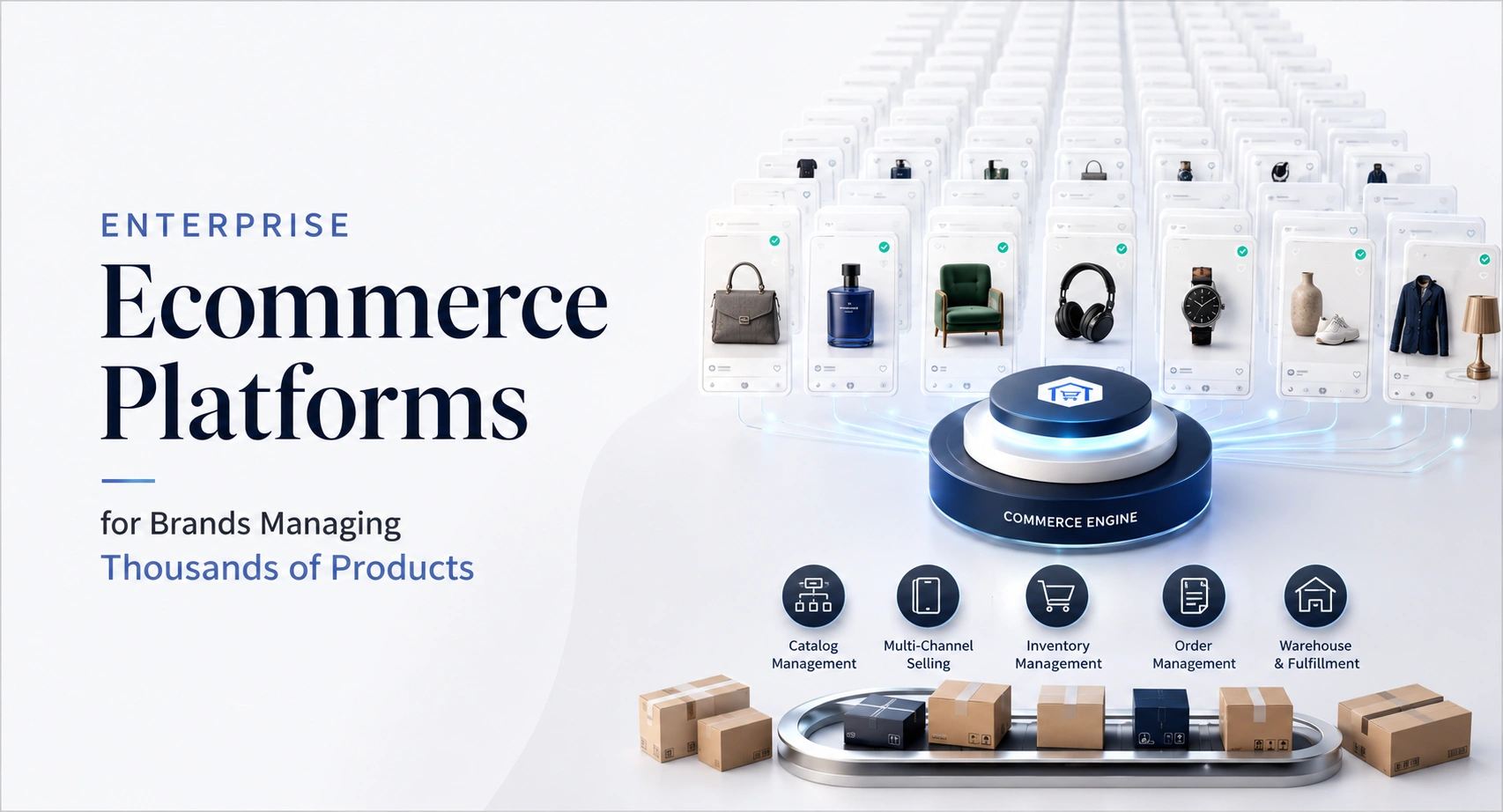
An enterprise ecommerce platform provides the infrastructure needed to manage large-scale ecommerce operations.
These platforms support:
For brands with extensive product ranges, the right platform becomes a foundation for efficient growth.
One of the most important features for large brands is enterprise catalog management.
A strong system allows businesses to organize, update, and control product information efficiently.
An ecommerce platform for brands helps businesses manage product data from one central location.
This includes:
Centralized management ensures consistency across all customer touchpoints.
Large product catalogs require automation.
An enterprise platform helps brands:
For example, when a product price or description changes, updates can be applied across multiple channels automatically.
This saves time and improves accuracy.
When customers browse large catalogs, finding the right product quickly becomes essential.
An enterprise ecommerce platform improves discovery through:
Advanced search features help customers find products using relevant keywords and filters.
Customers can narrow results based on:
AI-powered recommendations help customers discover relevant products.
Better discovery improves engagement and conversion rates.
Modern brands sell through multiple channels.
These may include:
Managing product information separately across channels creates complexity.
An ecommerce platform for brands allows businesses to synchronize:
This creates a consistent shopping experience everywhere.
As product catalogs grow, automation becomes essential.
Enterprise platforms automate:
Automation reduces repetitive work and allows teams to focus on strategic growth.
Customers expect accurate and complete product information.
A well-managed catalog improves:
Accurate product details increase confidence.
Clear information helps customers choose faster.
Better navigation creates smoother shopping journeys.
A strong catalog system directly contributes to higher customer satisfaction.
Large catalogs also create SEO challenges.
An enterprise ecommerce platform helps businesses improve SEO through:
Each product page can include:
Organized categories help search engines understand website content.
Brands can maintain SEO quality across thousands of pages.
This improves organic visibility and attracts more customers.
Data plays an important role in catalog optimization.
Enterprise platforms provide insights into:
These insights help brands improve product strategies and increase revenue opportunities.
The future of catalog management is becoming more intelligent.
Key trends include:
AI will help improve product descriptions, recommendations, and categorization.
Businesses will generate and optimize product content faster.
AI will help brands predict demand and manage stock better.
Enterprise platforms will integrate more deeply with business operations.
Brands adopting these technologies will have stronger competitive advantages.
When selecting a platform, brands should evaluate:
Can it handle future product growth?
Does it support large product databases?
Can it reduce manual work?
Can it connect with existing business tools?
Can it deliver fast customer experiences?
The right platform helps brands manage complexity while continuing to grow.
Managing thousands of products requires more than a basic online store. Brands need technology that can organize complex catalogs, automate workflows, and deliver consistent customer experiences.
An advanced enterprise ecommerce platform gives businesses the tools needed to manage large-scale operations efficiently. Meanwhile, choosing the right ecommerce platform for brands creates a strong foundation for long-term growth.
For businesses planning expansion, investing in enterprise-level catalog management technology can become a major competitive advantage.
Ready to manage your growing product catalog more efficiently? Discover enterprise ecommerce solutions designed to support automation, multi-channel operations, product growth, and scalable brand success.

Growing an online store often comes with a common assumption—you need to spend more on advertising to generate more...

The online shopping landscape is evolving — and one of the biggest game-changers in recent years has been the digit...
Having an online eCommerce website is crucial for business expansion in today’s digital environment. As more pe...