Luxury E-commerce: Create a Premium Online Shopping Experience
October 12, 2026
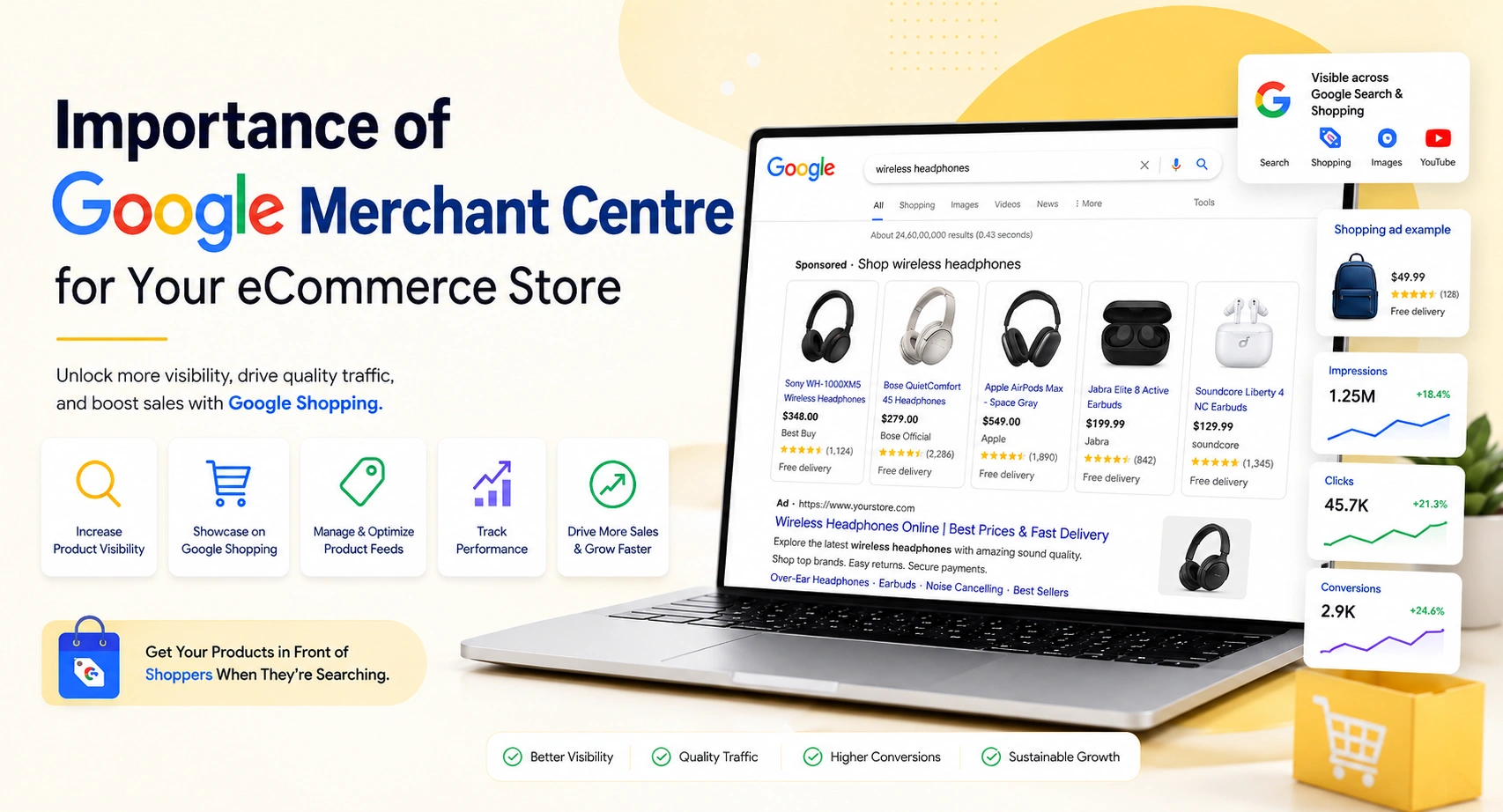
In today’s cutthroat e-Commerce environment, having an online store is just not sufficient anymore. Your products have to be discovered by your target audience. This is when Google Merchant Center may become helpful for the promotion of products on Google’s shopping services.
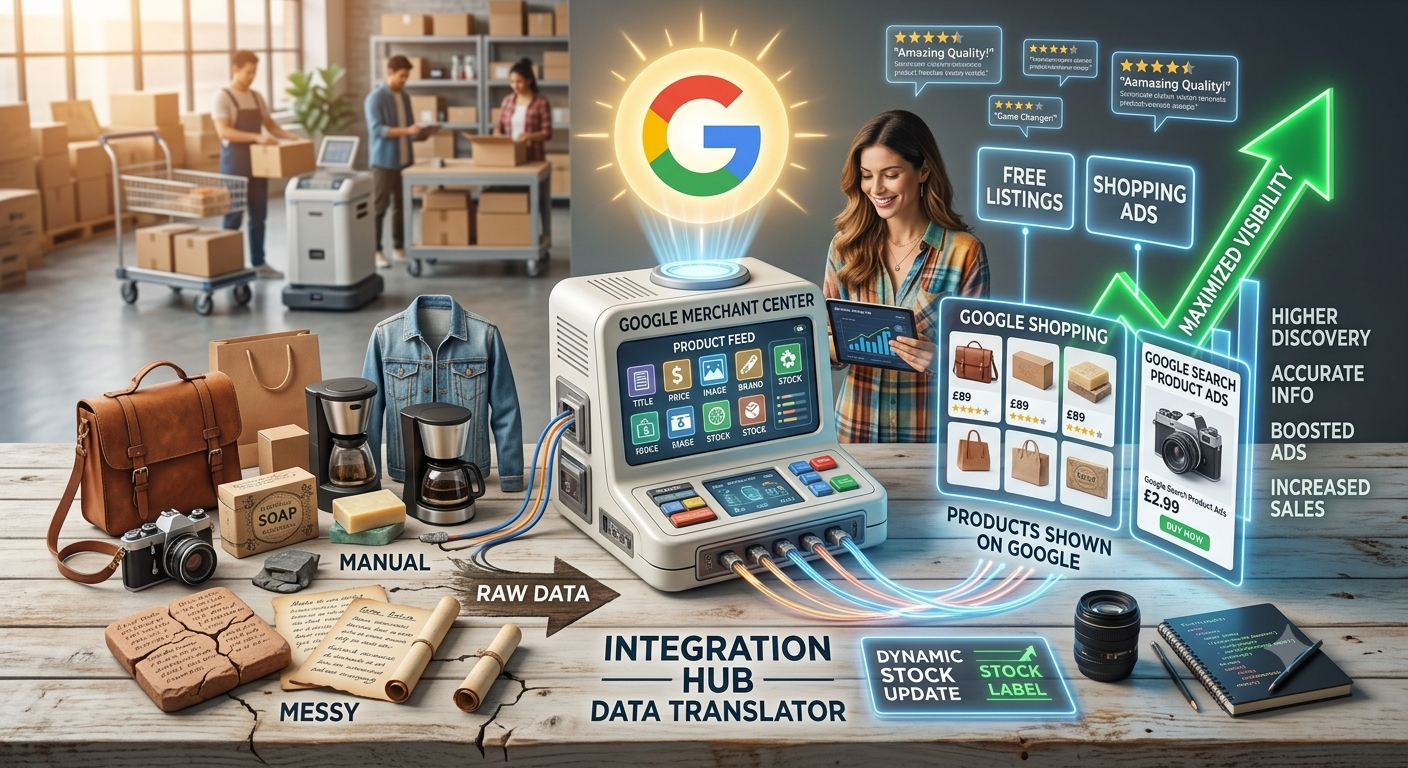
Through Google Merchant Center, you may share all the details related to your products like product titles, prices, availability, images, and other product attributes with Google. These product data may then be displayed in appropriate Google surfaces to help the shoppers discover and explore products from your online store.
For businesses that have already invested in an eCommerce solution, learning about Google Merchant Center is vital for creating a successful product visibility and digital marketing strategy.
What Is Google Merchant Center?
Google Merchant Center is a tool for uploading and managing product information in order to help Google understand and show the products through eligible shopping experiences.A product feed generally includes the following data:
Good and detailed product information will enable Google to know more about the products you have.
Why Does Your eCommerce Store Need Google Merchant Center?
Google happens to be one of the most popular platforms for finding products and conducting research before purchases. Connecting your store’s product catalog to Merchant Center will make your products eligible to appear on different Google shopping experiences.
These are some of the reasons why you need Google Merchant Center
1. Increase Product Visibility
One of the greatest strengths of Google Merchant Center is the chance that companies get to promote their products outside of their websites. Depending on the qualifications and existing schemes from Google, products’ data may be visible through Google channels including Shopping and other search experiences.
For an e-commerce company, increased visibility may lead to potential customers finding the company’s products through search experience.
2. Assist Customers in Identifying Products Using Google
Consumers generally start their search using the Google search engine. This search could be for a particular item, comparing brands, or for a specific product category. Using Merchant Center, businesses can supply structured data to Google in order to make Google more aware of the products available in their catalog.
Examples of information supplied by a fashion store using Merchant Center include: Name of Product, Color, Size, Price, Stock Availability, Product Image, Brand
This makes it easier for customers to identify the product before visiting the store.
3. Display Product Information Accurately
Shoppers seek important information before they click on a product link. Price, stock, pictures, and product information can play a role in whether a consumer decides to learn more about a product.
Accurate product information in the Merchant Center ensures that the product information provided by you is accurate and useful. This is especially true for those businesses that have a dynamic pricing, stock, or product catalog.
4. Promote Shopping Campaigns and Product Ads
Google Merchant Center is another essential tool in Google’s shopping advertising suite.Companies can link up their product information with the right Google ads to help advertise products to their target customers.
For instance, an online store dealing in electronic gadgets can advertise products such as phones, laptops, headphones, and accessories among others to the people who are looking for the same.
Paid campaigns will help companies reach customers who are ready to buy, while product information will be useful to Google in creating relevant shopping ads.
5. Link Your Product Feed to Your eCommerce Website
Working with a high number of products manually is challenging. Good eCommerce software will help to organize the product catalog of companies and link product data with marketing and shopping tools externally.
Using different technologies, it will be possible to automate or at least make easier the following processes:
Updating of product prices
Updating inventory
Updating of product descriptions
Updating images
Updating product URLs
Updating of product availability
The automation will help to minimize manual labor and discrepancies between your website and Merchant Center.
6. Keep Information About Products and Inventory Accurate
Think about a customer clicking on an item in Google but discovering it’s out of stock or not even the same price that you have on your site. These kinds of mismatches can result in a bad experience for your customer.
Updating your products regularly in Merchant Center will help with these problems. Your product feed should be accurate with regard to:
Price
Availability
Condition of product
Shipping details
Landing page for the product
Product IDs
As an e-commerce business grows larger, accurate product cataloging will become increasingly necessary.
7. Detect Product Data Problem
Merchant Center has various tools and reports that can assist merchants in detecting problems related to their product data. These problems can include lack of information, incorrect attributes, eligibility, policy requirements, and mismatch between provided data and web site information.
It is important for businesses to resolve such issues because it will allow them to have better managed product catalog and no interference with product visibility.Product Feed Issues.
These are some of the issues faced by businesses when managing product feed:
8. Enhance Your Product Data Strategy
Google Merchant Center recommends that companies keep detailed and structured product data. It may help the companies manage the catalog of products in a better way throughout the eCommerce process.
An effectively structured catalog should contain:
Product names
Product categories
Descriptions
Images
Prices
Inventory details
Attributes
Managing catalog data on multiple channels may also be made easy by having better product data.
9. Leverage Product Level Insights
The analysis of individual product performance is critical for the growth of eCommerce.Merchants are able to leverage available Google analytics and reporting services to obtain insight regarding product performance and shopping behavior based on the particular setup and capabilities of the merchant’s account.
Using such insights businesses will be able to discover:
Customer interested products
Highly-demanded product categories
Cataloging issues
Optimization potential
Better product information needs
Such an analysis can be used by merchants to improve product pages and their eCommerce strategies in general.
10. Enhance Your eCommerce Marketing Strategy
Google Merchant Center is not supposed to be perceived as a separate marketing solution. You can include it into a comprehensive eCommerce marketing strategy, which will incorporate elements of SEO, advertising, social media, content marketing, email marketing, and conversion optimization.
For instance, you may consider the following combination:
SEO + Google Merchant Center + Shopping Ads + Optimized Product Pages + Analytics
As your eCommerce business grows, managing visibility for the products on different platforms may become challenging.
A good e-Commerce platform can assist in centralizing product data management, inventory management, product optimization, and integration with marketing and shopping tools.
For small businesses, Merchant Center can be another channel to increase the visibility of their products. For bigger businesses, Merchant Center can serve as an element of a bigger product feed and performance marketing strategy.
Therefore, Merchant Center is especially useful for those who need scalable eCommerce solutions.
In general, getting started with Google Merchant Center will require you to follow several essential steps:
Step 1: Create a Merchant Center Account
Create your Google Merchant Center account and fill it in with business details.
Step 2: Enter Your Store Details
Enter your store information and set up any required business settings.
Step 3: Provide Your Product Data
Link your product catalog to the corresponding data source or feed.
Step 4: Review Product Details
Make sure that you have filled in all required information about products: their names, descriptions, pictures, price, availability, and other attributes.
Step 5: Correct Product Errors
Look through any product issues and make the required corrections.
Step 6: Link Google Services
As per the purpose of your business, link any required Google advertising and analytics services.
Step 7: Monitor Product Performance
Constantly monitor your product performance, diagnostics, and catalog data.
Google Merchant Center is a powerful resource that eCommerce businesses can use to increase product discoverability within the Google shopping network. With accurate product information, proper maintenance of inventory and prices, as well as the solution of product feed problems, businesses will lay the groundwork for product discovery.
Nevertheless, Google Merchant Center will only be beneficial when used within a larger eCommerce marketing strategy. Quality product listings, reliable platform, good SEO, proper product data, marketing, and positive customer experience are all factors contributing to the development of the online store.
Whether you launch a new online store or expand the existing one, integration of product listings within the shopping channels is a step towards the target audience.
1. What is Google Merchant Center?
Google Merchant Center is a Google platform that enables companies to upload and manage their product data, which makes the product eligible to appear on various Google shopping experiences.
2. Is Google Merchant Center free?
Google Merchant Center itself is free and helps companies manage product data. In addition, there are some other advertising features available from Google, but their availability depends on various factors.
3. Why should an eCommerce business leverage Google Merchant Center?
It enables companies to submit their product data to Google and make their products eligible to appear on various Google shopping surfaces.
4. What data is needed for Google Merchant Center?
Product data can be composed of information like the product name, description, image, price, availability, URL, brand, and more.