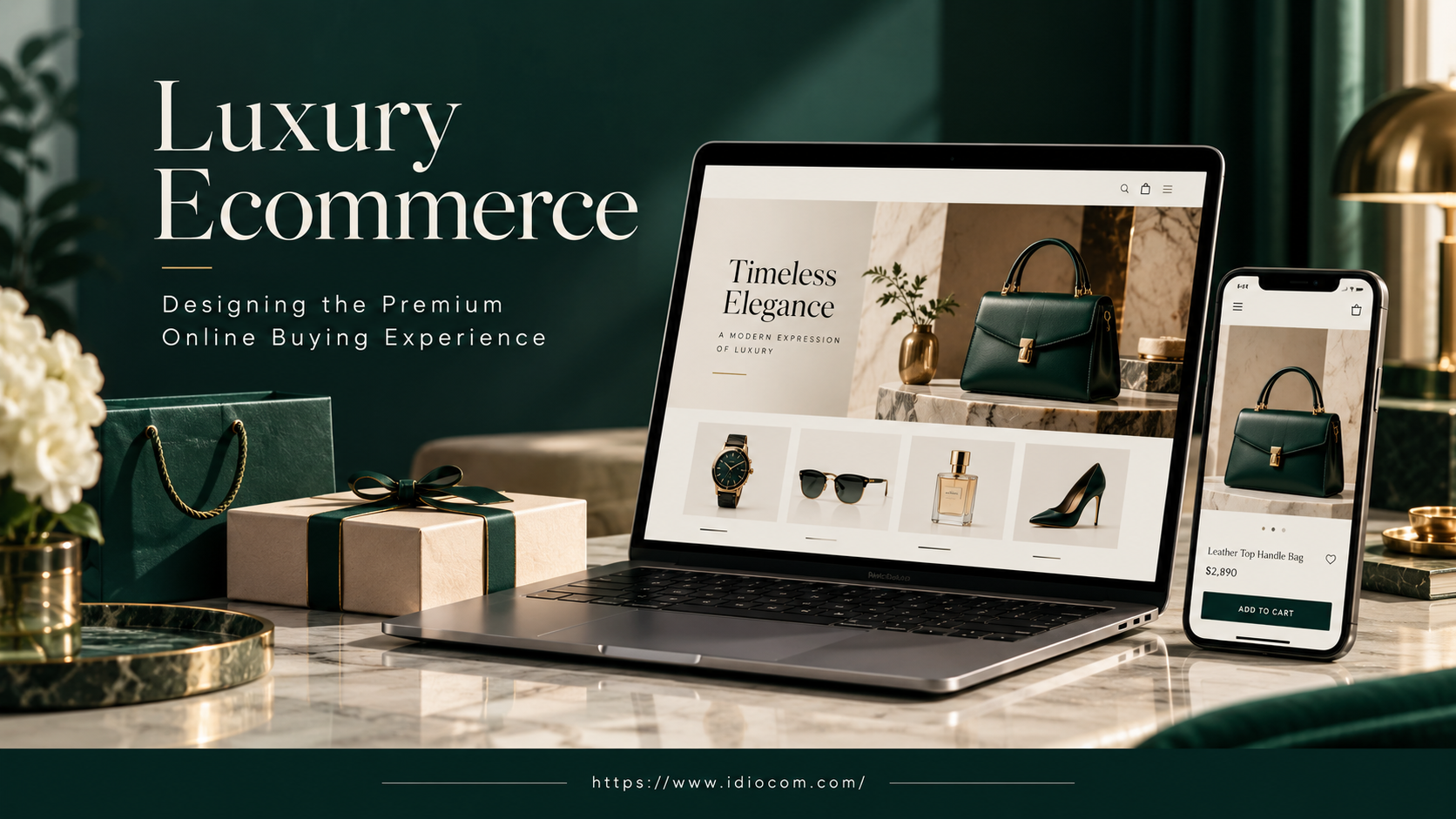
Luxury E-commerce: Create a Premium Online Shopping Experience
October 12, 2026
Luxury has always been defined by something other than the product alone. Buyers pay not just for the product but also for craftsmanship and luxury, which is associated with the product. When premium brands go omni channel, these expectations do not go away; rather they become more important.
For a luxury online shopping experience to be successful, it has to be more than simply showing luxury products on an attractive website. All digital interactions from the point of brand discovery to product display and checkout should convey the values of luxury.
For brands that adhere to luxury D2C model, e-commerce may serve as its flagship store. The challenge is to produce a digital shopping experience that conveys the sentiment behind the luxury product being offered.
What Sets Luxury E-commerce Apart?
Unlike conventional e-commerce, which values speed, savings and product availability, luxury commerce requires a different approach. Luxury customers desire not just the cheapest product but confidence that a brand, product, presentation, and services all contribute to the value of the product. Hence, unlike conventional e-commerce, luxury commerce puts much emphasis on customer perception.
A luxury online store needs to communicate the following messages:
1. Start With Premium, Differentiated Positioning
Before designing pages or checkout screens, companies need a defined Premium, differentiated positioning. The customers should understand right away what makes the brand different and why the products deserve to be charged a premium.
Positioning is based on high-quality production, materials, heritage, innovations, limited production, personalization, design philosophy, or extraordinary service.A luxury website must affirm that position without overwhelming the users with marketing messages.
Instead of saying that something is luxurious all the time, it is better to show it through images, typography, storytelling, products’ presentation, and digital experience.Good positioning makes the ecommerce website look confident instead of aggressive.
2. Add Visual Design Element into a Luxury Experience
Emotional as well as practical thinking influences the purchases of luxury customers. Therefore, visual design plays an important role in luxury shopping. Clean layout, proper fonts, enough white space, good quality photos, light motion design, and colors can immensely affect the perceived desire of the products.
It is important to refrain from cluttering the page with banners, discount announcements, pop-ups, or competing calls to action.The aim of luxury web design is to offer the products enough space.
High-quality lifestyle photography combined with a detailed product image and allows customers to visualize their lives with these products and understand their luxury in a better way.
3. Transform Product Pages to Online Showrooms
For several buyers, the product page serves as a substitute for the experience of touching and feeling the product at a store.Therefore, premium labels need to consider product pages as digital showrooms instead of merely online catalogs.
Quality product pages can comprise images of the product from various angles, close-up pictures, lifestyle images, videos, information about the material, craftsmanship details, dimensions, care and delivery information, as well as relevant stories of the products.
Due to the absence of retailers, luxury D2C brands can benefit from storytelling a lot because they can get in contact with their clients directly without relying on retailers.Rather than just providing a list of the features, indicate the meaning of these features. Clients should understand not only what they are getting but also why it is needed.
4. Develop Seamless Navigation While Preserving Exclusiveness
The luxury experience doesn’t have to be complicated. Clients like sophisticated design but do want a website that is easy to navigate.
A great luxury eCommerce should enable users to easily switch between categories, collections, products, ideas, and transactions. The navigation must be seamless across all devices.
A search option is also essential when a high-end brand has a number of collections.In general, the goal is clear, customers should enjoy the products, not the way the website works.
5. Customize the Luxury Shopping Experience
Luxury physical shops tend to work exceptionally well as they pay attention to their clients. Internet platforms are able to create some feelings of luxury by personalizing clients’ shopping experience.
Depending on the business model, brands may offer personalized recommendations, recently-located products, carefully selected items, private appointments, online consultations, wish lists, customer accounts, and first access to the releases.
All these aspects will change a regular buying process into a more personalized luxury shopping experience. But personalization must be with a low profile. Too many recommendations or aggressive automated messages can make even a luxury online shop look like an average online shop.
6. Establish Confidence During All Phases
When buying high-end goods, consumers often need more encouragement, particularly with online transactions.Therefore, trust signals should be evident on every page of the site.
In particular, messages about delivery, returns, warranties, authenticity, payment security, customer assistance, and after-sales support should be easily understood.Additionally, it shouldn’t take too long to locate contact details.
Any relevant customer testimonials, reviews, articles, certifications, or selected cases must serve as add-ons to the trust signal list when applicable.
7. Make the Checkout Process Simple and Easy
Customers will abandon a beautifully designed website when checkout is cumbersome.High-end businesses need to remove unnecessary sections and make steps simple and easy while including their trusted payment methods.
Customers need to understand their summary of orders, shipping options, shipping time, taxes, and total cost. Do not surprise customers with any additional fees during the last step of the process. For expensive products, companies can add options for their customers to ask questions before paying.
8. Expand Luxury Beyond Purchase
The customer experience should not stop as soon as payment has been made. Order confirmation, shipping notifications, product information, customer service, returns, and follow-up communication form the overall picture for the customer.
The stage is highly important for luxury D2C brands since their every interaction is under the direct control of the brand. If the brand engages in careful further communication and reliable after-sales service, they can turn the first-time buyer into a loyal customer.
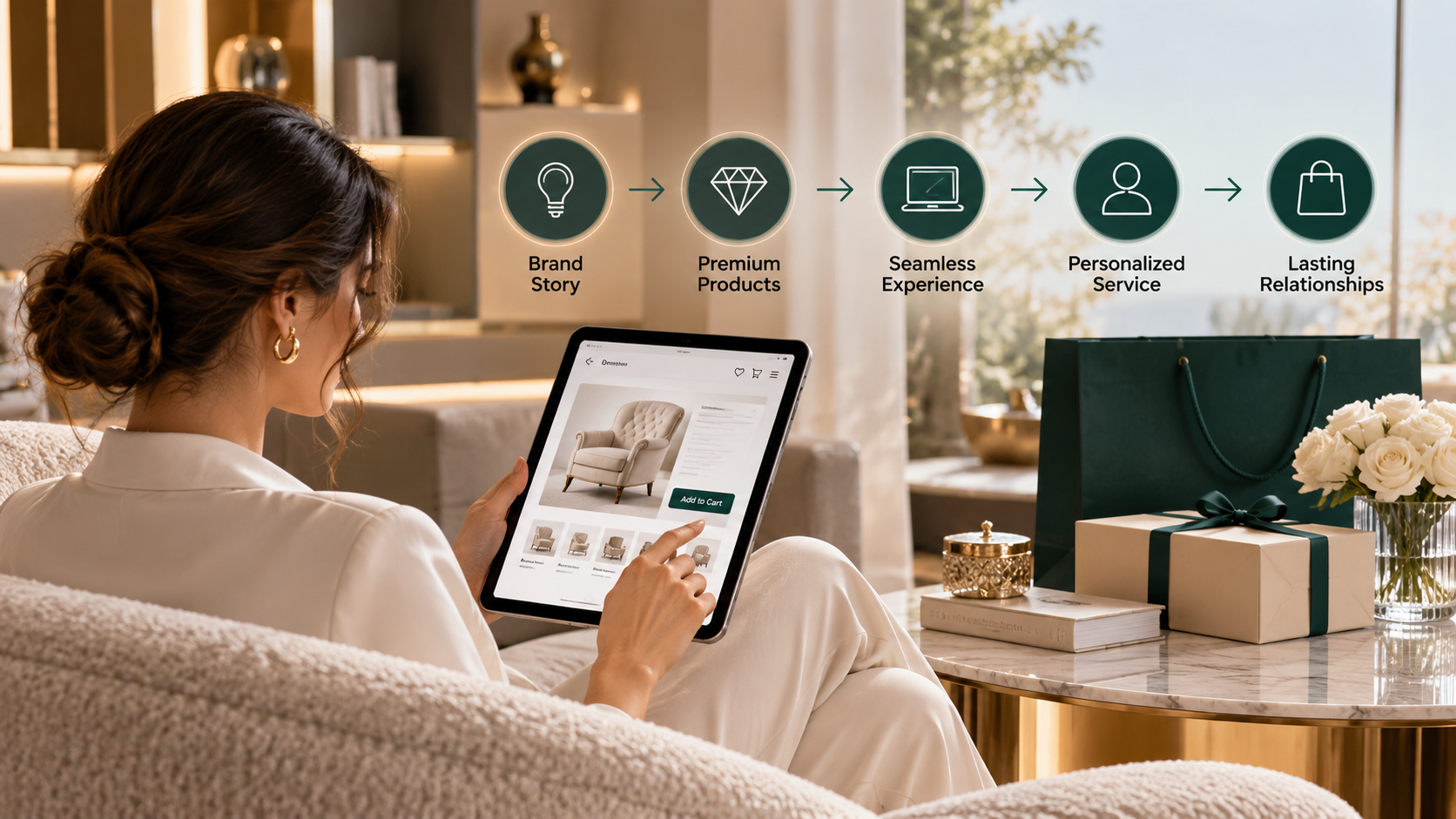
Achieving success in luxury online commerce doesn’t just mean having expensive items and a nice website. Rather, it is about developing a customer journey, where each component contributes to the brand’s values and identity.
From differentiation and reasonable brand presentation to personalization, trust-building, and post-sale service, the entire user experience needs to be designed in such a way that it reinforces the idea of premium quality.
The primary goal for companies that want to enter the market of luxury D2C should be recreating the feelings of confidence, interest, and emotional weight of a brick-and-mortar premium store in online space. When the right combination of technology, branding, user-friendliness, and storytelling are achieved, ecommerce transforms from just a selling tool into an important piece of the luxury experience.
What is luxury ecommerce?
Luxury ecommerce refers to the process of selling premium products via the internet, with the whole experience centered around concepts like exclusivity, quality, storytelling, sophisticated presentation, and superior customer service.
How does luxury ecommerce differ from traditional ecommerce?
Traditional ecommerce revolves largely around factors like price, convenience, discounts, and product variety. Luxury ecommerce differs in its focus on brand perception, craftsmanship and exclusivity, service and storytelling, as well as the shopping experience as a whole.
What does luxury D2C mean?
Luxury D2C refers to a situation when a brand sells its products directly to customers rather than relying entirely on retailers and marketplaces. This gives the brand more control over issues related to pricing, marketing, customer relationships, and data.
How to create a better luxury shopping experience in ecommerce?
Luxury brands can enhance the online shopping experience through premium visual design, professional product photography, storytelling, intuitive navigation, personalization, fair policies, smooth checkout process, and post-sale support.