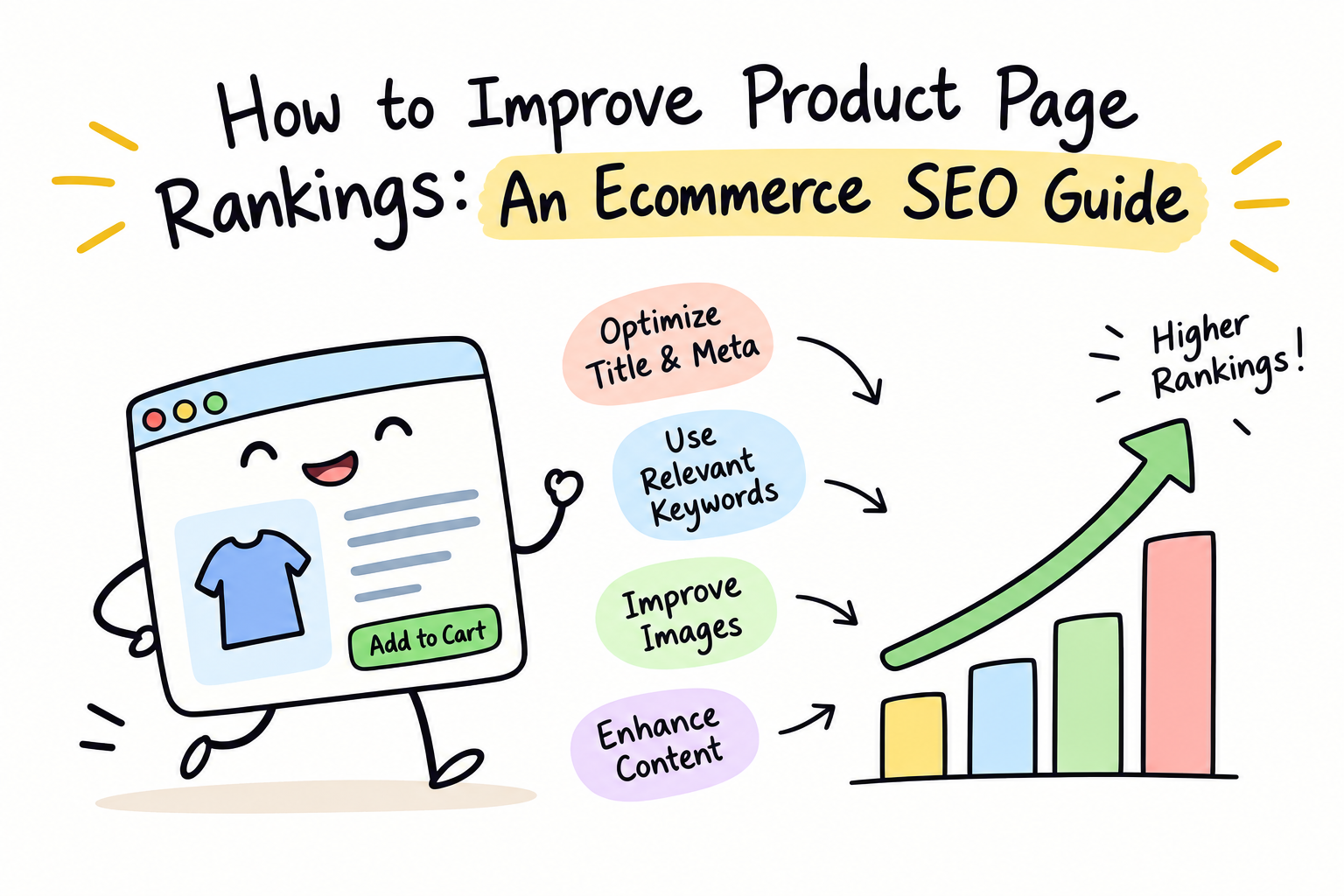
How to Improve Product Page Rankings: An Ecommerce SEO Guide
September 28, 2026

As an e-commerce business grows, managing products can quickly become one of its biggest operational challenges. Adding a few products is simple; managing hundreds or thousands of SKUs—with different images, attributes, variants, pricing, and descriptions—can consume hours of valuable team time. New collections take longer to launch, catalogs become inconsistent, and product teams get stuck doing repetitive work instead of focusing on growth.
This is where an AI Product Cataloging approach can make a meaningful difference. Instead of building every product listing manually, businesses can use AI to assist with product information, catalog creation, and product onboarding. Idiocom brings these capabilities into its ecommerce platform, helping businesses generate product information and organize catalogs with less manual effort.
For fashion brands launching new collections, jewelry businesses managing extensive catalogs, or growing retailers adding products regularly, AI-powered catalog creation can turn product onboarding from a time-consuming task into a faster, more scalable workflow.
Creating product listings manually is manageable with 50 products. However, it doesn’t work above the 5,000 mark. It doesn’t take a genius to figure it out: if an employee needs four or five minutes to research, write, format, and publish a listing, a catalog with 10,000 SKUs means hundreds of hours of work before a product ever sells.
The issue is more than about time and cost. The research on manual data entry processes across many sectors shows that businesses that heavily depend on manual processes lose much more than they expect each year due to hidden costs (for example, wrongful entries in their inventory data, reworking, delayed launches). It is generally true that the amount of time spent on manual data entry exceeds five hours per week. This means that the losses add up to a great amount. Changes in accuracy happen to coincide with the moments when accuracy is critical.
An automated product listing creates a pipeline based on rules that uses automation to allow merchants to automatically create and manage product descriptions instead of using simple copy and paste methods. This system allows for the following actions to be taken without any human intervention:
– The extraction of data about a product from databases or from pictures
– Formatting, categorizing, and linking attributes consistently
– The generation of product names, descriptions, and characteristics
– Marking incomplete or wrong entries for a human being’s review
– Publishing the listings
The significant difference is between the automations that involve supervision by humans and those that function entirely independently. The most advanced operations using a large database utilize AI technology for up to 80% of the work (setting up and preparing documents), and a small reviewing team undertakes any necessary proofreading. Evidence from independent studies on intelligent data processing systems backs this method; data entry systems that employ AI are demonstrated to be 99.99% correct, while human-only methods have a documented error rate of 1–4%. The difference between AI technological capabilities of 99% and human capabilities of 96%, which may cover a considerable number of records, can be between just a few requests for assistance and thousands of them.
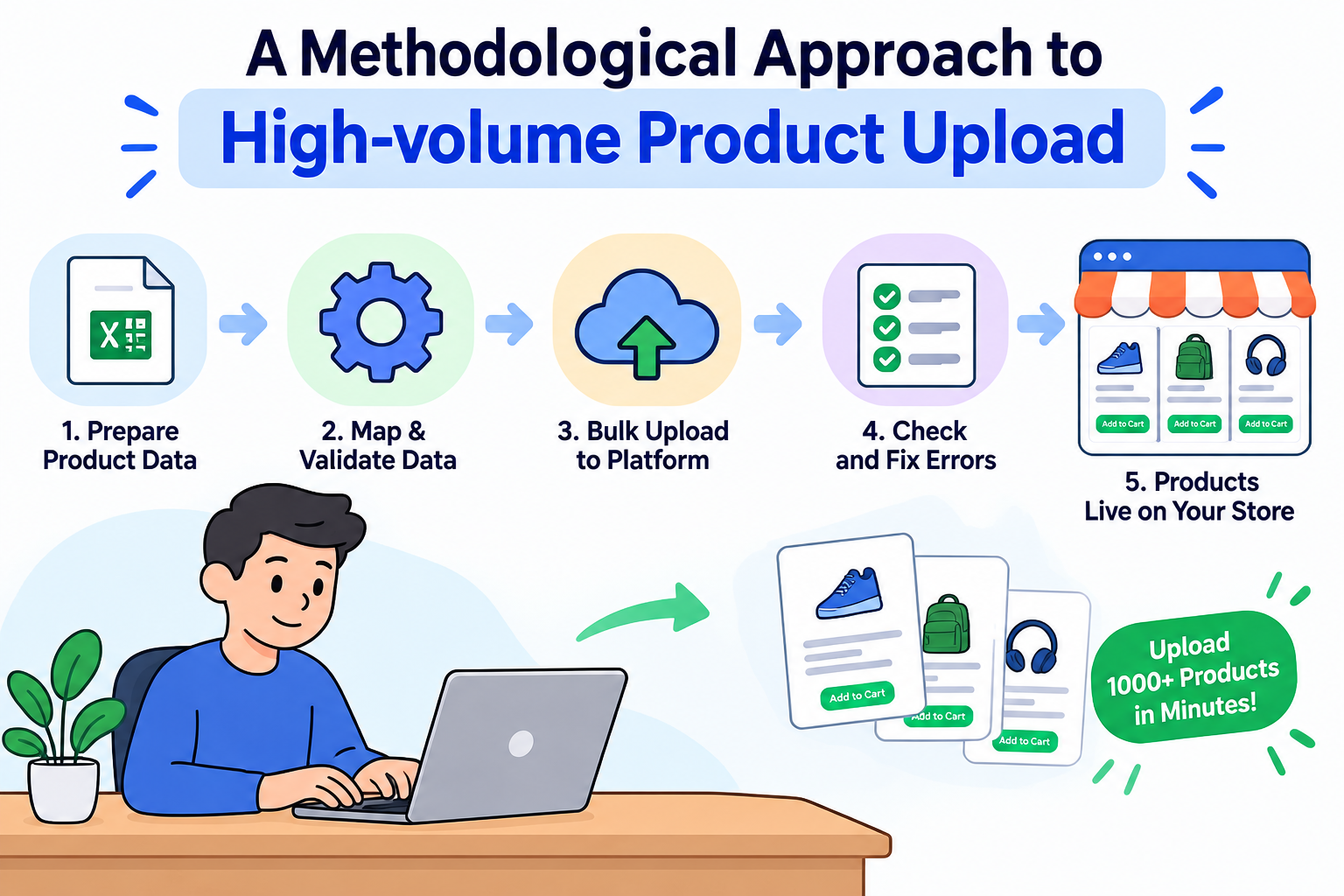
Sellers with large catalogs who effectively use automation to create listings are likely to follow the same process:
Step 1: Gather Basic Product Information: Start by collecting the essential information for each product, including the product name and a simple product image. Keeping the initial input straightforward makes it easier to process products in large quantities.
Step 2: Upload the Product Image: Add a clear product image to provide AI with a visual reference. This image can serve as the foundation for creating additional product visuals and improving the overall presentation of the listing.
Step 3: Generate Product Content with AI: Use Idiocom AI to assist in creating the information required for the product listing. Instead of preparing every listing manually, AI can help transform basic product information into more complete, store-ready content.
Step 4:Create Additional Product Visuals: Generate additional product views and presentation-ready images using AI. This helps create a more complete visual presentation without requiring multiple photoshoots for every product.
Step 5:Review and Refine the Generated Content: Before publishing, review the AI-generated content and visuals for accuracy, consistency, and relevance. Make any necessary edits to ensure that the final listing matches the actual product.
Step 6: Standardize the Product Listings: Apply a consistent structure across the catalog, including product information, descriptions, images, and other listing details. Standardization helps maintain a professional and organized storefront, especially when dealing with hundreds or thousands of products.
Step 7: Upload Products to the Storefront: Once the content and visuals have been reviewed, the products can be prepared for storefront upload. Following the same workflow for every product makes the overall catalog setup more systematic and scalable.
Step 8: Repeat the Workflow at Scale: Repeat the process across the product catalog: product name → basic image → AI-generated content → additional visuals → review → storefront-ready listing. This approach reduces repetitive manual work and helps accelerate high-volume product setup.
The productivity advantages are significant. Companies moving their huge catalogs to integrated, automated data systems have said they are able to reduce the time it takes to onboard and update products from weeks to hours. Research into implementation at catalog-based retailers tells the same story. Using centralized product data management not only increases overall efficiency by 80% but also enables users to manage millions of products more effectively than ever before with less effort than before.
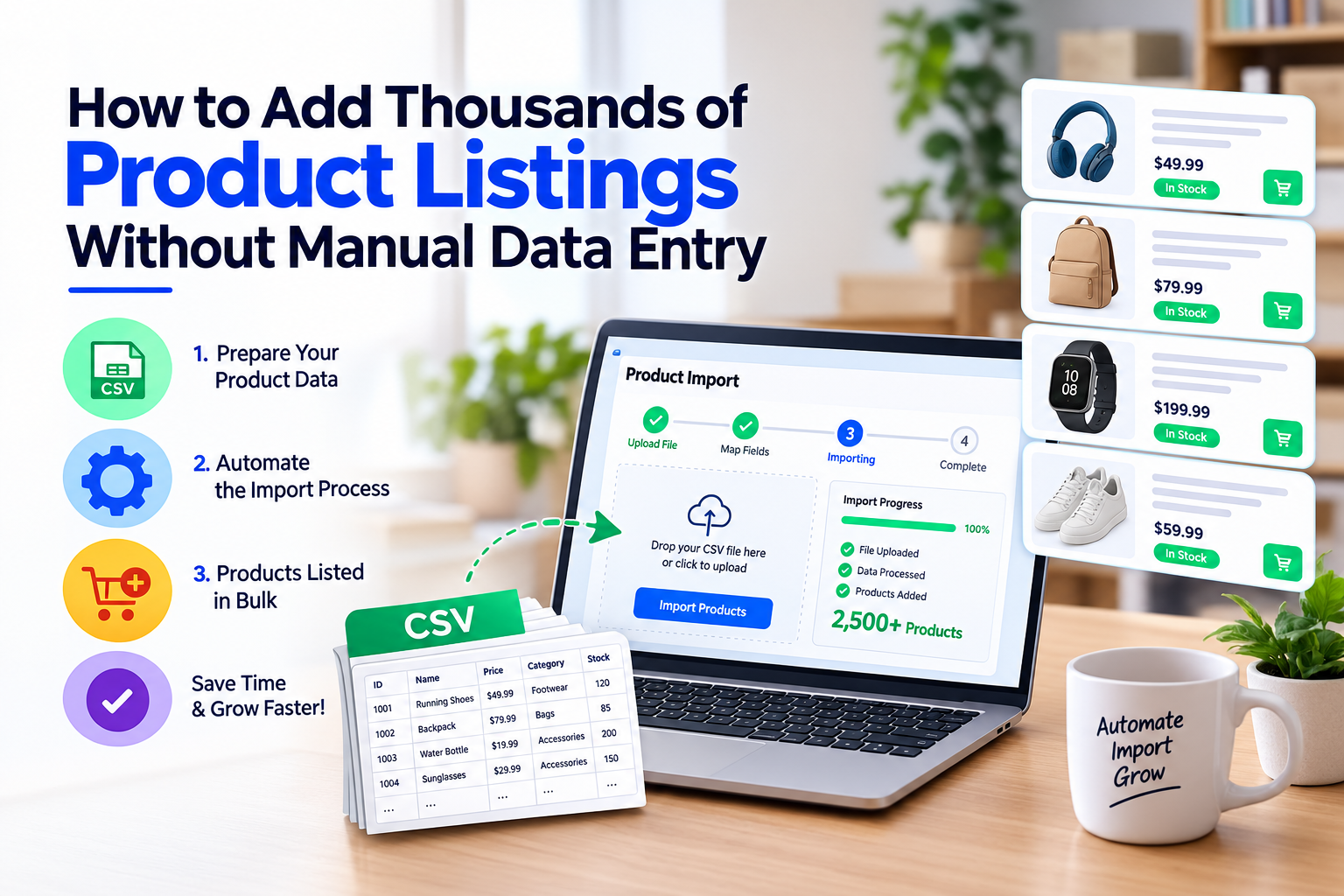
A real situation: Think of a company specializing in home decoration that is about to grow its product catalog from 300 to 4,000 products before the coming holiday season. The traditional way of doing things would take a small team plenty of time to enter data in a standardized way.
But thanks to an automated bulk upload process, which makes it possible to generate product details from the photos and use a standard template, it is now possible to finish such a job in a couple of days, rather than weeks.
This is the gap that the platforms such as Idiocom are filling, as AI technologies for catalog creation and bulk upload allow sellers to combine the two competing factors — the size of the catalog and the quality of the listings.
Conclusion
It is not the incapacity of teams that leads to failure in manual data entry, but the fact that the process does not follow a linear scale in accordance with catalog size. Automated listings of products supported by artificial intelligence and the well-organized process of mass uploading products make it possible for ecommerce companies to grow their catalogs without increasing the size of the data entry team proportionately. The successful sellers in the current large catalog industry are not those with the biggest teams, but rather those who took care of automating the significant 80% of catalog management.
High-volume product upload is the process of preparing and adding a large number of products to an online store efficiently. It typically involves creating product information, visuals, and listing details for multiple products.
Idiocom AI helps simplify product setup by using basic product information, such as a product name and product image, to assist with generating product content and additional product visuals.
You can start with two basic inputs: your product name and a simple product image. Idiocom AI can then assist with preparing additional content and visuals for the product listing.
Yes. Idiocom AI can assist in generating the information needed to create more complete product listings, reducing the amount of repetitive manual content preparation.
Yes. Idiocom AI can help generate additional product views and presentation-ready visuals based on the initial product image, helping create a more complete product presentation.