Ecommerce Automation Platforms That Save Time Across Inventory and Orders
- June 10, 2026
As ecommerce businesses grow, managing inventory and orders becomes increasingly complex. What starts as a manageable operation can quickly turn into a time-consuming challenge as product catalogs expand, order volumes increase, and customers expect faster fulfillment.
Many businesses still rely on manual processes for inventory tracking, order management, and stock updates. While this approach may work during early growth stages, it often creates inefficiencies that limit scalability and increase operational costs.
This is why modern organizations are investing in an ecommerce automation platform. By automating repetitive workflows and centralizing business operations, companies can save valuable time, reduce errors, and improve overall efficiency. For growing businesses, an advanced enterprise ecommerce solution is becoming essential for sustainable growth.
Why Manual Inventory and Order Management Creates Problems
As sales increase, operational complexity grows.
Businesses commonly face challenges such as:
- Inventory inaccuracies
- Stock shortages
- Overselling products
- Delayed order fulfillment
- Human errors in order processing
- Increased operational costs
These issues not only impact profitability but also damage customer trust and satisfaction.
An ecommerce automation platform helps eliminate many of these challenges by automating routine tasks and improving operational visibility.
What Is an Ecommerce Automation Platform?
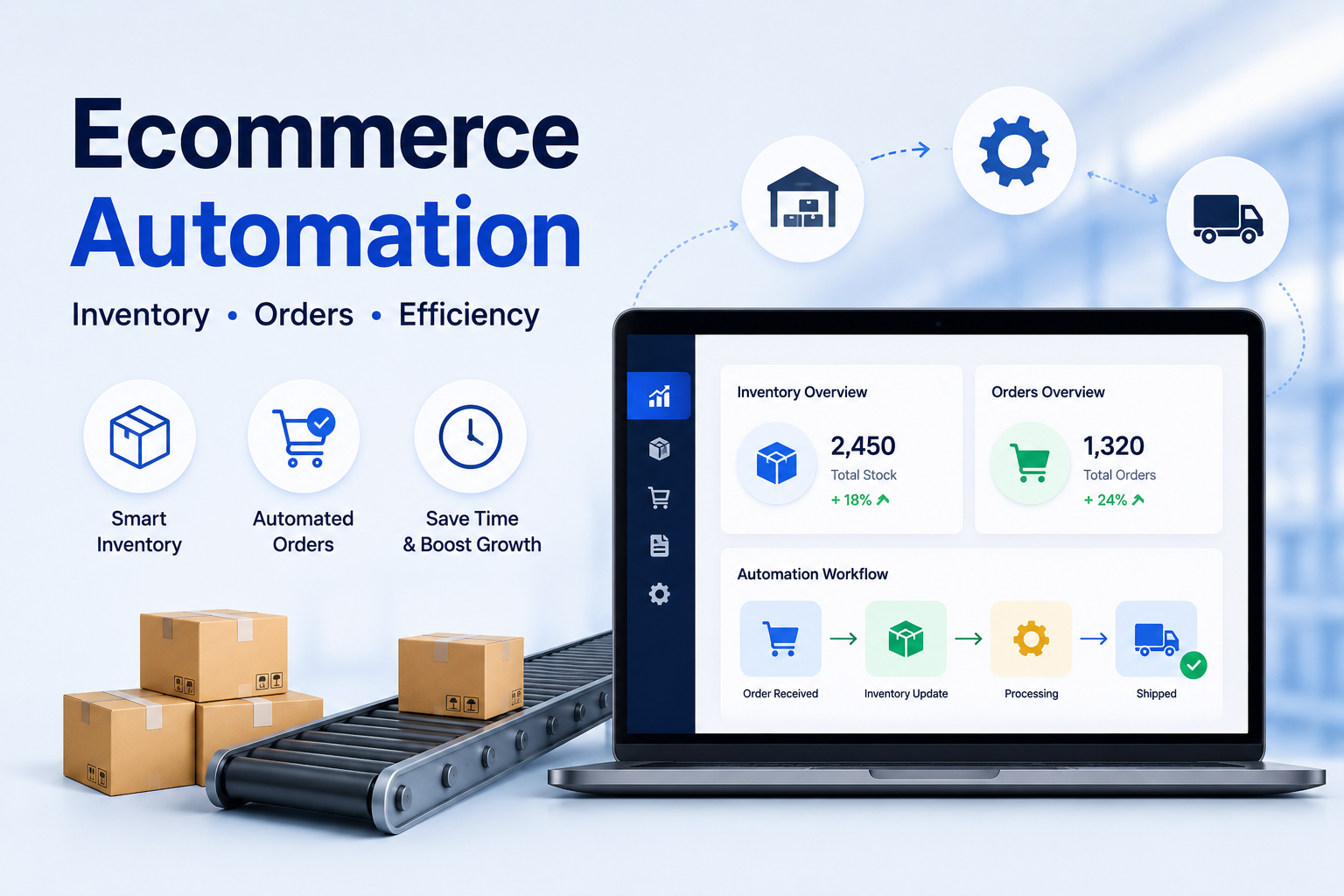
An ecommerce automation platform is a technology solution that streamlines and automates key ecommerce processes.
These platforms typically automate:
- Inventory updates
- Order processing
- Customer notifications
- Shipping workflows
- Reporting and analytics
- Multi-channel synchronization
Instead of relying on manual intervention, businesses can create intelligent workflows that operate automatically.
This allows teams to focus on strategic growth rather than repetitive administrative tasks.
How Automation Improves Inventory Management
Inventory management is one of the most critical aspects of ecommerce operations.
Without accurate inventory control, businesses risk losing sales and disappointing customers.
Real-Time Inventory Synchronization
An advanced enterprise ecommerce solution automatically updates inventory levels across all sales channels.
Benefits include:
- Accurate stock visibility
- Reduced overselling
- Better inventory planning
- Improved customer confidence
Automated Replenishment Alerts
Automation systems can notify teams when inventory reaches predefined thresholds.
This helps businesses:
- Prevent stock shortages
- Improve purchasing decisions
- Reduce emergency restocking costs
Demand Forecasting
Many modern platforms use AI and predictive analytics to forecast future demand based on sales trends and customer behavior.
This helps businesses optimize inventory investments while reducing waste.
Streamlining Order Management Through Automation
Order processing can quickly become overwhelming as order volumes increase.
An ecommerce automation platform simplifies this process by automating order workflows.
Centralized Order Management
Orders from multiple channels are consolidated into a single dashboard.
This provides greater visibility and simplifies operations.
Automated Order Routing
Orders can be automatically assigned to specific warehouses, fulfillment centers, or teams.
Benefits include:
- Faster fulfillment
- Reduced processing delays
- Improved operational efficiency
Automatic Status Updates
Customers receive automated notifications regarding:
- Order confirmations
- Shipping updates
- Delivery tracking
This improves customer communication while reducing support inquiries.
Multi-Channel Automation Improves Efficiency
Today’s businesses often sell through multiple channels.
These may include:
- Ecommerce websites
- Online marketplaces
- Social commerce platforms
- Mobile applications
- B2B portals
Managing these channels manually creates inefficiencies.
A modern enterprise ecommerce solution centralizes operations while synchronizing inventory, pricing, and orders across all connected channels.
This ensures consistency while reducing administrative workloads.
Automation Reduces Human Error
Manual data entry often leads to mistakes.
Common errors include:
- Incorrect stock counts
- Duplicate orders
- Shipping mistakes
- Pricing inconsistencies
An ecommerce automation platform minimizes these risks by reducing manual intervention and maintaining accurate data across systems.
The result is greater operational reliability and improved customer satisfaction.
Customer Experience Benefits of Ecommerce Automation
Automation not only improves internal operations but also enhances customer experiences.
Faster Order Fulfillment
Automated workflows help businesses process and ship orders more quickly.
Better Communication
Customers receive real-time updates throughout the purchasing journey.
Improved Product Availability
Accurate inventory management reduces out-of-stock situations.
Consistent Experiences
Automation ensures consistent service quality across all customer touchpoints.
These improvements strengthen customer loyalty and increase repeat purchases.
Data-Driven Decision Making
Modern ecommerce success depends on accurate business insights.
An advanced enterprise ecommerce solution provides real-time visibility into:
- Inventory performance
- Order trends
- Fulfillment efficiency
- Customer behavior
- Revenue opportunities
This data helps businesses identify operational bottlenecks and optimize performance continuously.
Future Trends in Ecommerce Automation
Automation capabilities continue to evolve rapidly.
Key trends shaping the future include:
Artificial Intelligence
AI-powered automation will improve forecasting, personalization, and workflow optimization.
Predictive Commerce
Businesses will increasingly anticipate customer demand and purchasing behavior.
Autonomous Operations
More business processes will operate with minimal manual involvement.
Connected Commerce Ecosystems
Enterprise platforms will integrate inventory, logistics, marketing, and customer service into unified systems.
Organizations that adopt these innovations early will gain significant competitive advantages.
Choosing the Right Enterprise Ecommerce Solution
When evaluating automation platforms, businesses should consider:
Workflow Flexibility
Can workflows be customized for unique business needs?
Scalability
Can the platform support future growth?
Integration Capabilities
Does it connect with existing systems?
Analytics and Reporting
Does it provide actionable operational insights?
Automation Depth
How many manual processes can be automated?
Selecting the right solution helps maximize efficiency while supporting long-term business growth.
Conclusion
Managing inventory and orders manually becomes increasingly difficult as ecommerce businesses grow. An advanced ecommerce automation platform helps eliminate operational bottlenecks by automating repetitive workflows, improving inventory accuracy, and streamlining order management.
For businesses seeking scalability and efficiency, investing in a modern enterprise ecommerce solution provides the automation capabilities necessary to save time, reduce costs, and support sustainable growth.
CTA
Ready to simplify inventory and order management? Explore ecommerce automation platforms designed to streamline operations, reduce manual workloads, and accelerate business growth.