E-commerce Website Builder vs Shopify: Key Differences to Know
October 24, 2026
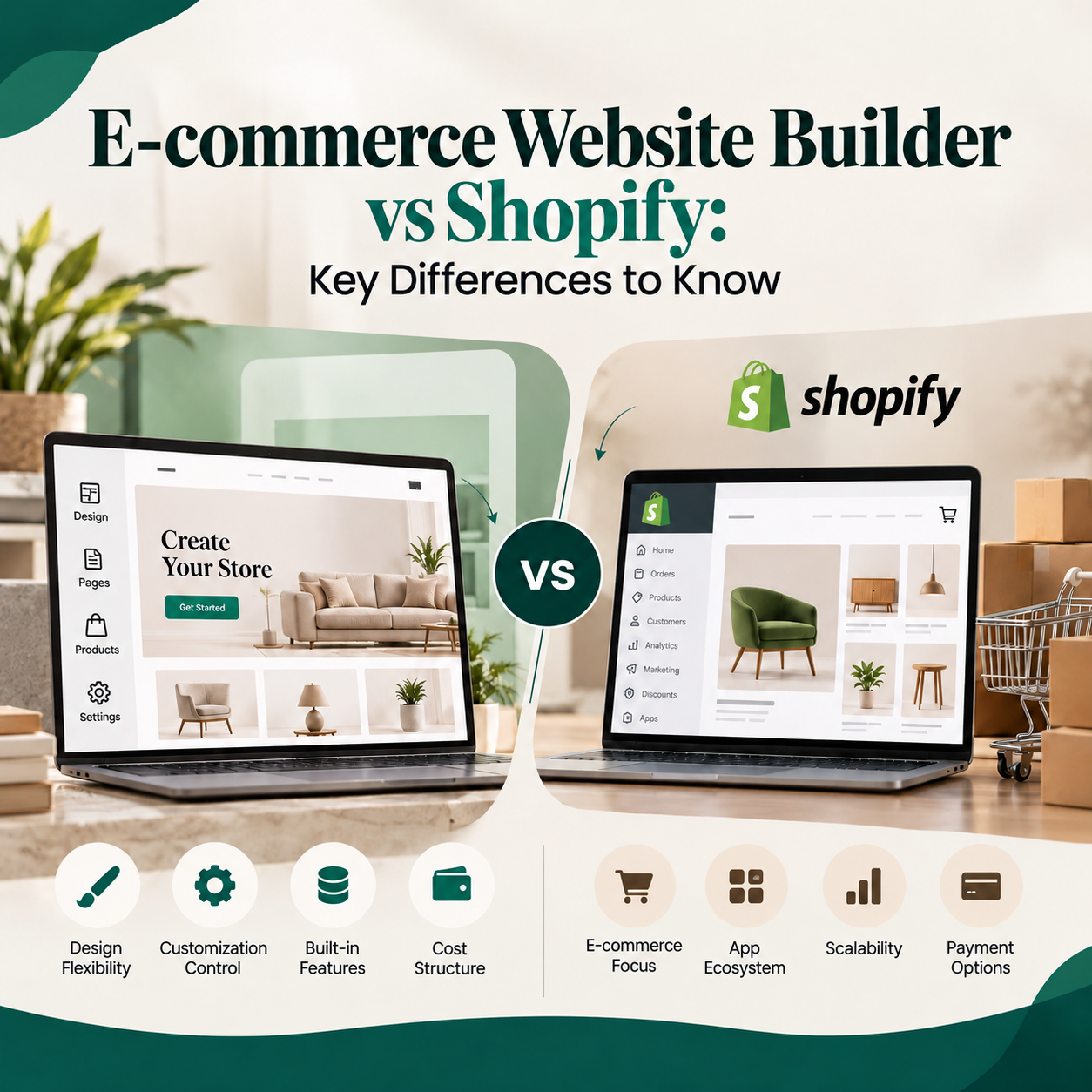
Selecting the appropriate platform is among the critical tasks in the process of launching or growing an online store. For many companies, there are 2 alternatives when selecting a platform: opting for a comprehensive e-commerce website builder or choosing a well-established e-commerce platform such as Shopify.
Both alternatives enable businesses to have an online presence, sell goods, deal with customer payments, and process information. Nevertheless, they vary greatly in terms of customization, price structure, scalability, integration potential, ownership, and how much control do businesses have over their online stores. This is why it is important to learn all the differences to understand if Shopify suits your needs or you need to search for other possibilities apart from Shopify.
An e-commerce website builder refers to a software application that facilitates the construction and running of online retail stores without needing to build a complete website from the start. Latest e-commerce stores include functionalities:
Some platforms specialize in ease of use while others provide advanced features enabling companies to perform e-commerce efficiently without any complicated tasks enabled through e-commerce software. The choice of the provider of online store builders is very much dependent on the needs of the business.
Shopify is a dedicated e-commerce platform created for the purpose of assisting businesses establish their online stores.It gives hosted e-commerce framework, themes, product management, checkout functionalities, payment integration, apps, analytics, and other tools required for running an online venture.
The benefits that Shopify offers make it more appealing to merchants, as it has centralized everything concerning e-commerce in one ecosystem.
Nonetheless, businesses should still contrast its functionality, pricing models, customization options, and possible use of third-party applications with other alternatives on the market before reaching any decisions.
Control, flexibility, and operational support for the business are the points of significant difference. Simplicity in Store Setup
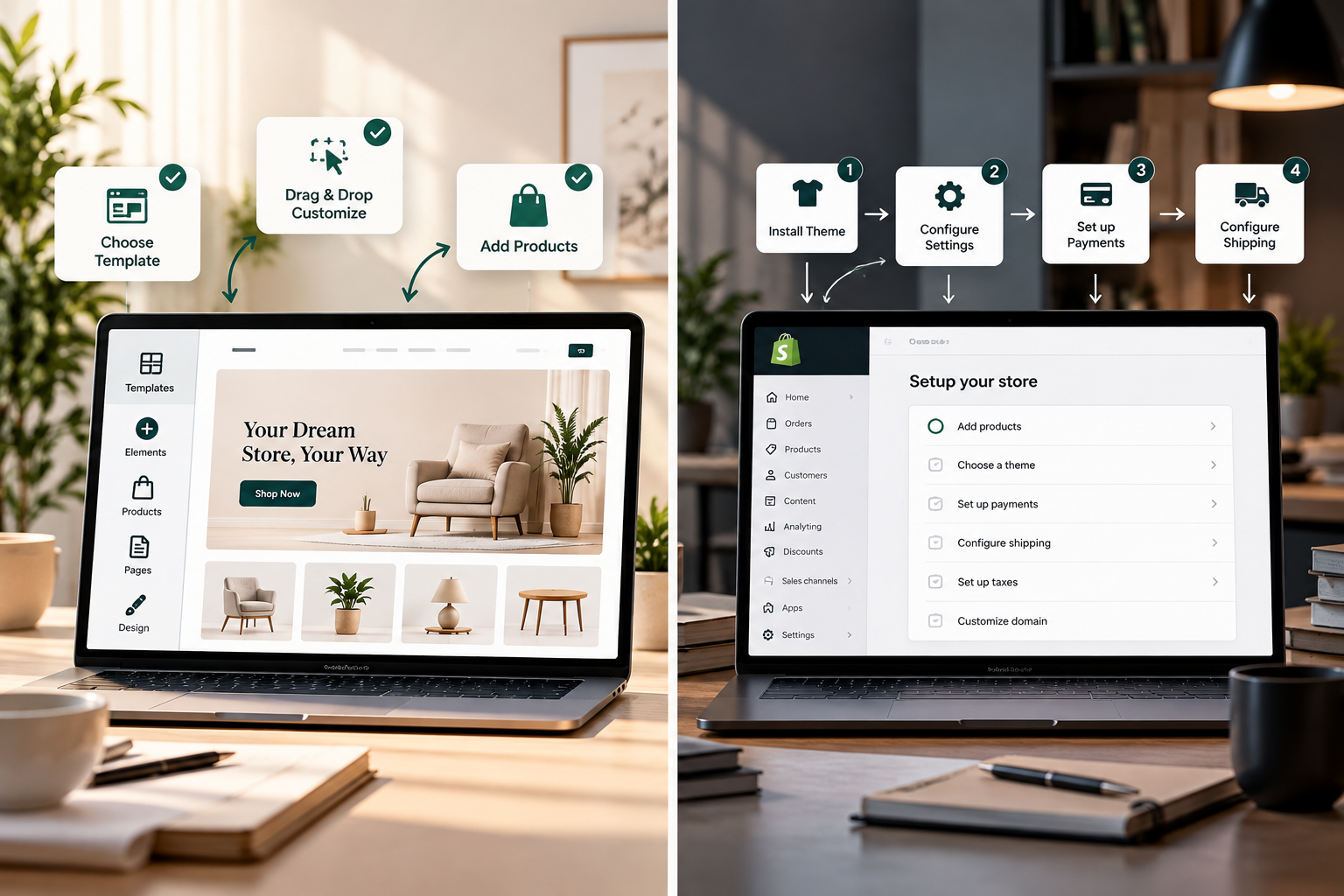
One of the benefits of most e-commerce website builders is speed. E-commerce store builders can supply you with stock templates, drag-and-drop editors, preset e-commerce functions, and help in setting up an online shop. Shopify, too, aims to make it easy for the small business to set up a store. When it comes to a simple e-commerce business, either method makes the process easier than developing a customized website from scratch.
When it is essential to deal with unique processes, specific types of products, custom routes, or complex integrations, the difference in e-commerce website builders becomes apparent.
There is a considerable amount of variation in how flexible design is on different e-commerce platforms. Some platforms give businesses a lot of scope to modify their layout, sections, product pages, navigation, colors, and branding through a visual editor.Some platforms will require developers to make advanced changes.
Shopify is particularly well known for its theme availability and customization options, but complicated requests can require theme building, app development, or custom programming. When comparing an e-commerce builder with Shopify, you may want to ask yourself:
Can my platform provide me with the required customer experience while minimizing the need for developers? This may actually hold more significance than counting the number of themes.
Significant importance when comparing platforms are included features. Business might require features such as:
– Product reviews
– Email marketing
– Upselling
– Loyalty programs
– Advanced search
– Support for multiple languages
– Subscription functionality
– Analytics
– Affiliate management
– Marketplace integration
Some platforms come with a number of features included in the subscription fees, while others require obtaining third-party applications. Although applications can indeed be helpful, having too many subscriptions can be costly and increase technical dependencies.
When comparing Shopify alternatives, analyze the entire feature set, not only basic price of the subscription.
A subscription fee for an ecommerce platform often does not reflect its true cost.In fact, some hidden expenses include:
– Theme costs
– Apps
– Development
– Payment processing
– Integration
– Maintenance
– Marketing tools
– Technical support
In fact, a cheaper ecommerce plan may ultimately become more expensive if businesses still require numerous paid apps to provide the basic functionalities.
On the contrary, e-commerce solution that initially costs more could offer better value, since it already includes multiple tools needed for business.
Payment plays an integral role in any e-commerce business. When comparing Shopify with other store builders, it’s essential to consider payment gateways available, transaction procedures and methods, refund policies, and ways to assist international customers.
Companies extending to other markets should also think of the software’s compatibility with local payment options or currencies. Don’t consider payment features only from the viewpoint of the current market.
The term scalability refers to how accommodating a making platform is in terms of its number of successful operations every month. The scalability of a platform includes not only its ability to handle a growing number of transactions, but also the following:
– A big range of products
– A high influx of customers
– A variety of different work zones
For some companies that have grown to fully-fledged businesses, it may be wise to look for alternatives to Shopify as they get more demanding than the platform’s capabilities can accommodate.
Organizations operating in the ecommerce sector nowadays hardly rely on a single system. Your online shop will require a connection with:
It is imperative to determine what integrations are crucial to your operations before opting for a particular builder.The importance of the compatibility of your platform with your other programs is greater than the design possibilities of the platform in case your company relies on a particular software. The failure of a program to communicate with other systems may cause manual work and stagnant performance.
E-commerce sites must attract clients and handle transactions at the same time. Understand how platforms work with:
– Page titles
– Meta descriptions
– URLs
– Redirects
– Canonical tags
– Image optimization
– Structure of content
– Blog functions
– Analytics
– Advertising integration
Ecommerce website software should give proper SEO control to promote growing organically in the long run. Marketing departments should be capable of administrating trackings, campaigns, landing pages, promotions, and consumer correspondence without excessive help from developers.
Another key distinction to note is the level of control a business prefers over its ecommerce space. Hosted solutions lessen the business’s technical burden through third parties taking care of web hosting, infrastructure and many software updates. However, the downside is that the business is restricted to the confines of the technology used by the platform.
There are businesses that benefit from this model.On the other hand, some businesses require a greater level of control over data, operations, and processes. This is often the reason companies begin looking for replacements for Shopify.
Before asking whether Shopify is better than any other ecommerce solution, make a list of essential business requirements:
Only after this step, the comparison of respective ecommerce platforms can begin.However, this system is much more effective than simply comparing the list of features of the ecommerce platforms.
The distinction between Shopify and other ecommerce website builders encompasses more than just who has more functionalities. The best option depends on the way you want to run, customize, administer, and expand your ecommerce business. Shopify provides a well-established ecommerce ecosystem with numerous tools,
while different Shopify alternatives offer different combinations of built-in features, customization options, cost, integrations, and business assistance.When making a decision about an ecommerce system, think about the total cost, user experience, business requirements, capacity of growth, and future business plans.
In the end, the best ecommerce store builder is the one that allows your team to reach the biggest results today without being an obstacle tomorrow.