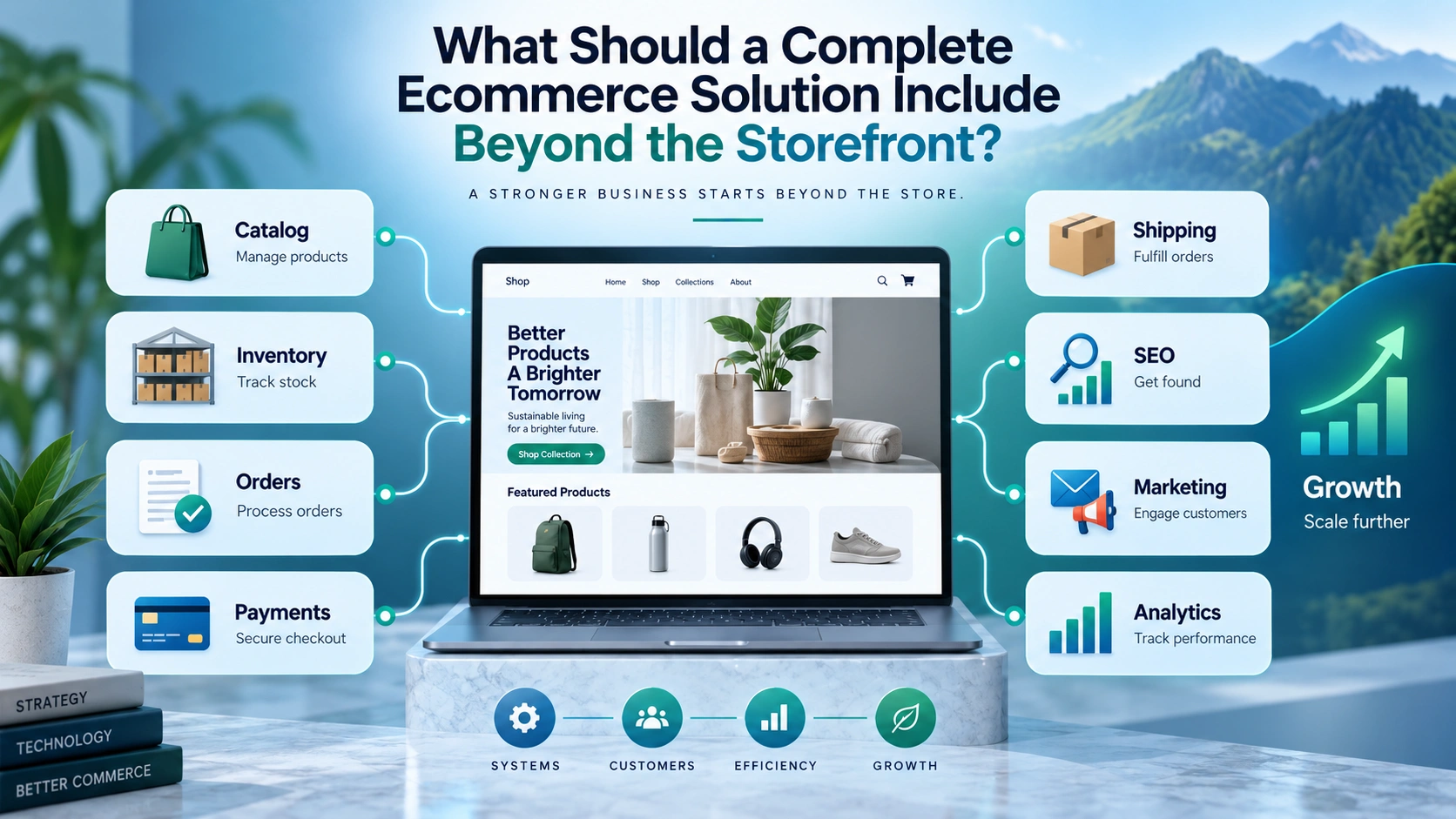
What Should a Complete Ecommerce Solution Include Beyond the Storefront?
September 14, 2026

Launching an online store is an exciting step for any business, but choosing the right platform is just as important as selecting the products you sell. Many entrepreneurs start with a basic solution, only to realize later that it cannot support their growing business. That’s why selecting the right ecommerce platforms for small businesses is essential from the beginning.
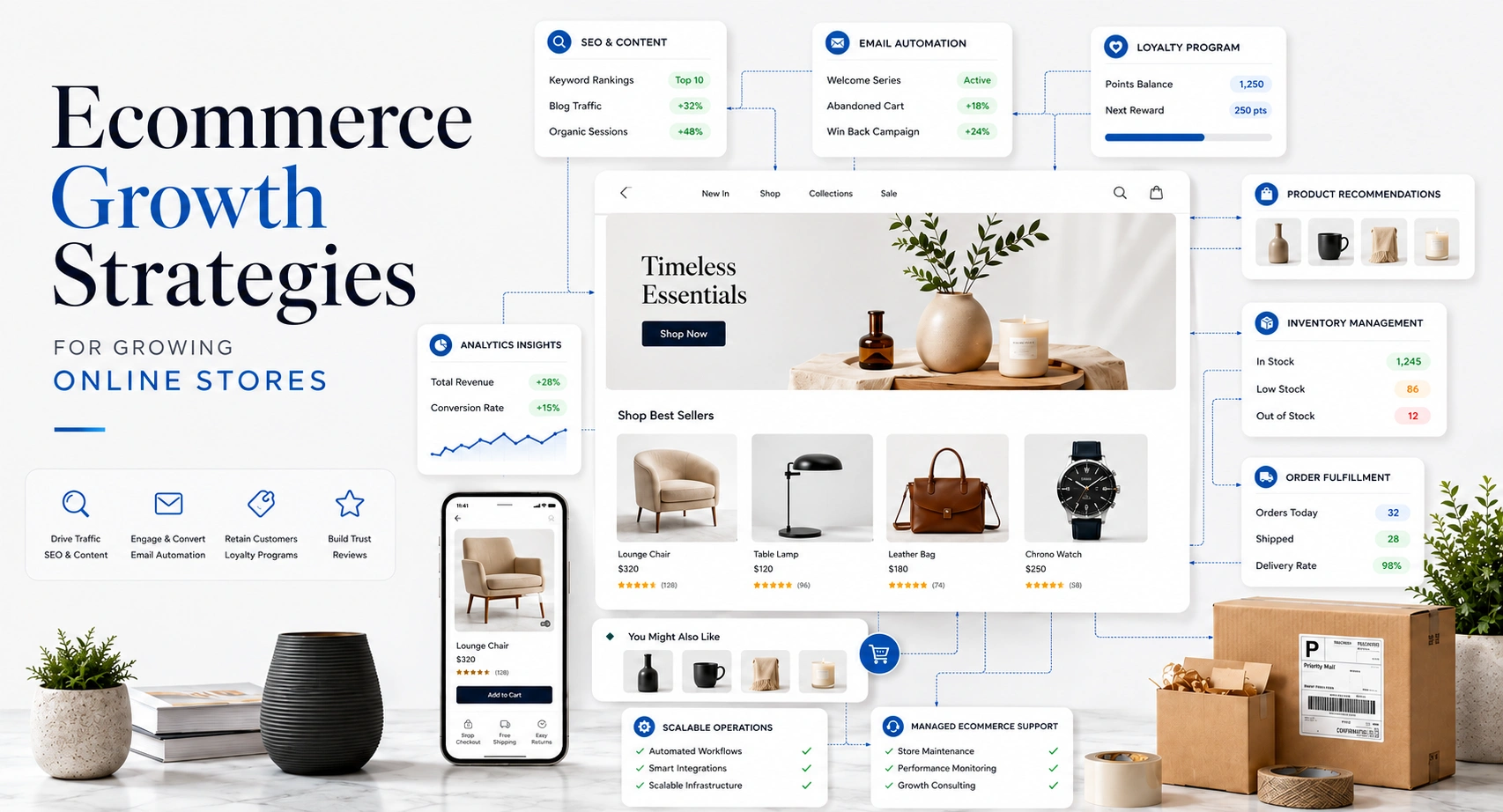
The best ecommerce platforms for small businesses provide more than just website creation tools. They help businesses manage products, improve customer experiences, increase sales, and support long-term growth. Whether you’re a startup founder, an online retailer, or a growing D2C brand, investing in a scalable ecommerce platform can make future expansion much easier.
This guide explores the features that matter most when choosing an ecommerce platform and explains what growing businesses should look for before making a decision.
Your ecommerce platform serves as the foundation of your online business. It affects everything from website speed and customer experience to inventory management and marketing capabilities.
As your business grows, your platform should be able to support:
Choosing one of the right ecommerce platforms for small businesses reduces the need for expensive migrations later and helps your business scale more efficiently.
Not every ecommerce platform offers the same capabilities. Growing businesses should focus on features that improve operations today while supporting future growth.
A good ecommerce platform should make daily management simple. Business owners should be able to add products, update prices, track inventory, and manage orders from one dashboard.
Easy management saves time and allows teams to focus on sales and customer service.
Growth is impossible without a scalable platform.
The best ecommerce platforms for small businesses should handle increasing traffic, larger product catalogs, and higher sales volumes without affecting website performance.
Choosing a scalable ecommerce platform ensures your business can grow without technical limitations.
Most online shoppers now browse using smartphones.
Your ecommerce platform should provide responsive website templates that automatically adjust to different devices. A mobile-friendly store improves customer experience and supports better search engine rankings.
Website speed has a direct impact on customer satisfaction and conversions.
An ecommerce platform should include optimized hosting, image compression, caching, and fast-loading pages to create a smooth shopping experience.
Fast websites also perform better in search engine results.
Organic traffic is one of the most valuable sources of customers.
The best ecommerce platforms for small businesses should include built-in SEO tools that help improve search visibility.
Important SEO features include:
These tools help search engines understand your website and increase your chances of ranking for relevant searches.
A strong ecommerce platform makes SEO easier, even for businesses without technical expertise.
As product catalogs grow, managing inventory becomes more challenging.
An ecommerce platform should allow businesses to:
Efficient inventory management reduces errors and improves customer satisfaction.
For growing businesses, automation can save significant time and improve operational efficiency.
Customers expect safe and reliable online transactions.
A professional ecommerce platform should provide:
A secure checkout builds trust and reduces cart abandonment.
Businesses that provide convenient payment options often experience higher conversion rates.
Growing businesses need more than just an online store.
The best ecommerce platforms for small businesses include marketing features such as:
These tools help businesses attract new customers and increase repeat purchases.
A modern ecommerce platform should support both sales and long-term customer engagement.
As businesses expand, they often rely on additional software for accounting, customer management, shipping, and marketing.
A flexible ecommerce platform should integrate with:
Strong integrations improve workflow efficiency and reduce manual work.
Customer experience plays a major role in ecommerce success.
The best ecommerce platforms for small businesses help create positive shopping experiences through:
Happy customers are more likely to return and recommend your business to others.
Improving customer experience also contributes to long-term brand growth.
Before selecting an ecommerce platform, take time to evaluate your current business needs and long-term growth plans. The right platform should not only meet your requirements today but also provide the flexibility and features needed as your business expands.
Consider the following factors:
Choose an ecommerce platform that matches your current business size while offering the ability to grow. A scalable platform allows you to add more products, handle increased traffic, and support higher order volumes without affecting performance.
Look beyond the monthly subscription cost when comparing platforms. Consider additional expenses such as transaction fees, premium features, third-party integrations, customization, and ongoing maintenance to understand the total cost of ownership.
A user-friendly ecommerce platform makes daily store management much easier. Look for an intuitive dashboard that allows you to manage products, process orders, update inventory, and make changes without requiring advanced technical skills.
Every business has unique branding and customer expectations. Choose a platform that offers flexible design options, customizable product pages, and the ability to create a shopping experience that reflects your brand identity.
Reliable customer support is essential, especially as your business grows. Look for an ecommerce platform that provides responsive technical assistance, helpful documentation, and regular updates to ensure your store runs smoothly.
Choosing the right ecommerce platform today can save time, reduce future costs, and provide a strong foundation for long-term business growth.
Many businesses make avoidable mistakes when selecting an ecommerce platform.
Common mistakes include:
Avoiding these mistakes helps businesses build a stronger ecommerce foundation.
Choosing among the many ecommerce platforms for small businesses is one of the most important decisions for long-term success.
The right ecommerce platform should provide scalability, strong SEO capabilities, fast performance, secure payments, marketing tools, and an excellent customer experience.
Whether you are launching your first online store or preparing for rapid growth, investing in a scalable ecommerce platform will help your business adapt to changing customer needs and market opportunities.
By focusing on long-term growth instead of short-term convenience, small businesses can build a stronger online presence, increase sales, and create a sustainable path toward ecommerce success.
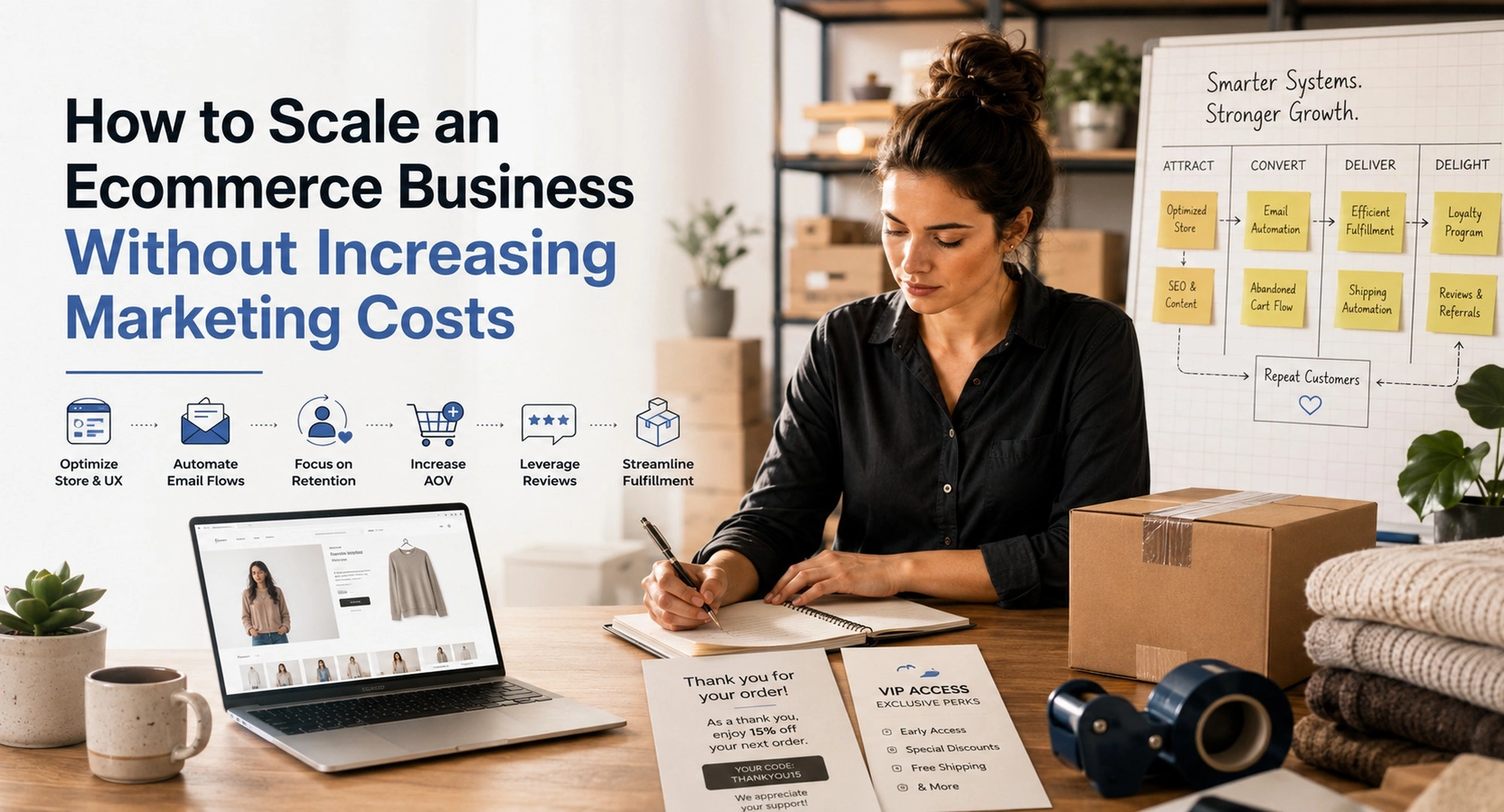
Growing an online store often comes with a common assumption—you need to spend more on advertising to generate more...

Breaking into the world of online business isn’t easy—especially for e-commerce startups trying ...
Growing an online store takes more than adding new products and launching marketing campaigns. As competition increas...