No-Code Ecommerce Website Builders: What They Simplify and What They Do Not
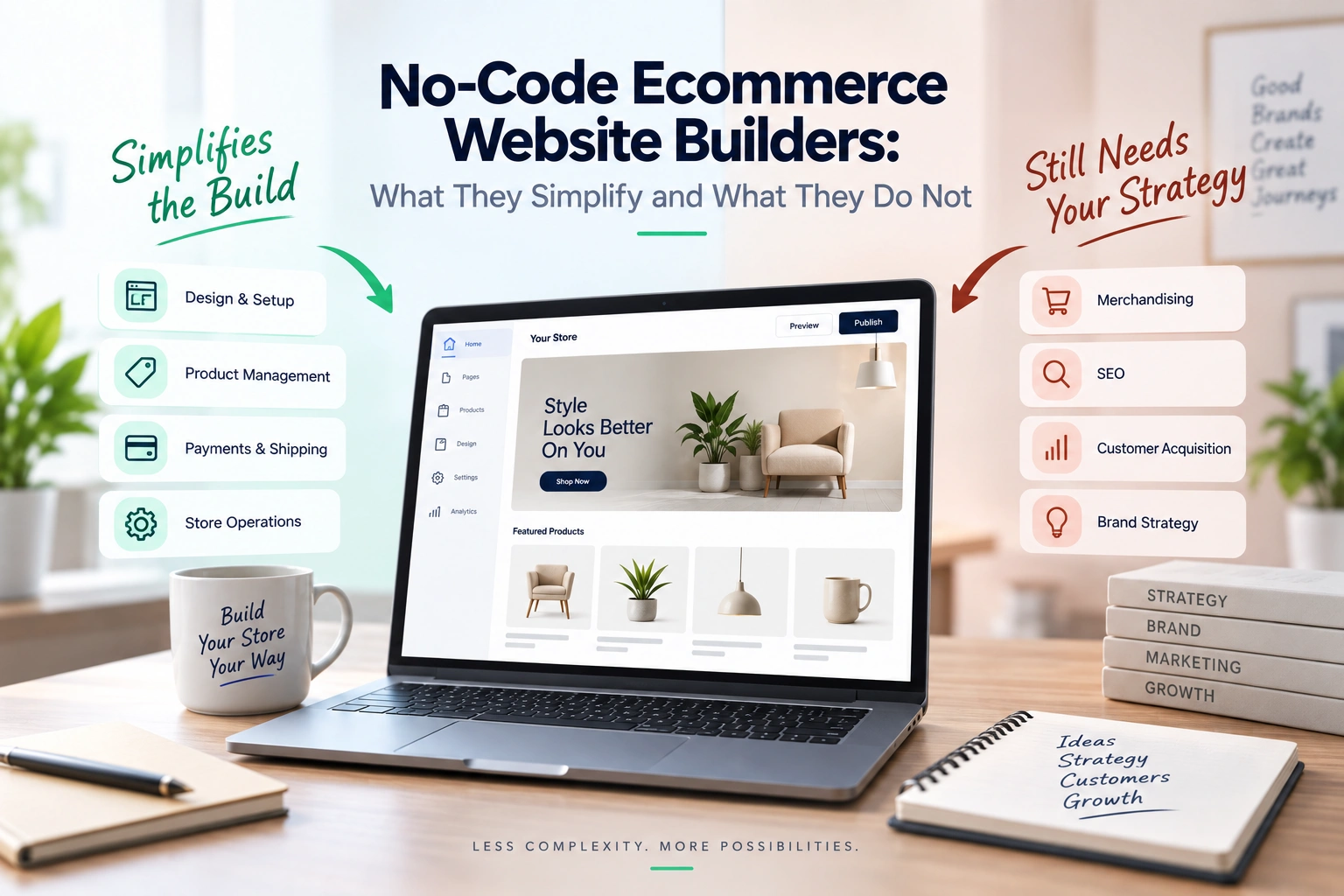
The construction of an ecommerce store no longer needs all business owners to know how to code, work with databases, and develop websites. A current online store builder may be able to help a business simplify some of the technical aspects of running an online business. Everything from building pages, listing products, and managing store content can now be done through no-code technology.
But no-code does not mean that there are no difficulties. No-code technology can make it easier for businesses to create their stores, but they will still have to make decisions about branding, products, inventory, payment systems, shipping, customer experience, marketing, SEO, and growth. The technology may help with implementation, but it cannot create an ecommerce strategy.
Understanding the capabilities and limitations of a no-code platform is thus important before choosing an ecommerce solution.
What is a No-Code Ecommerce Website Builder?
A no-code ecommerce website builder is a tool that enables businesses to build an ecommerce site without writing any coding languages. Users don’t have to build everything from scratch but usually deal with visual tools, templates, configurable settings, and ecommerce capabilities.
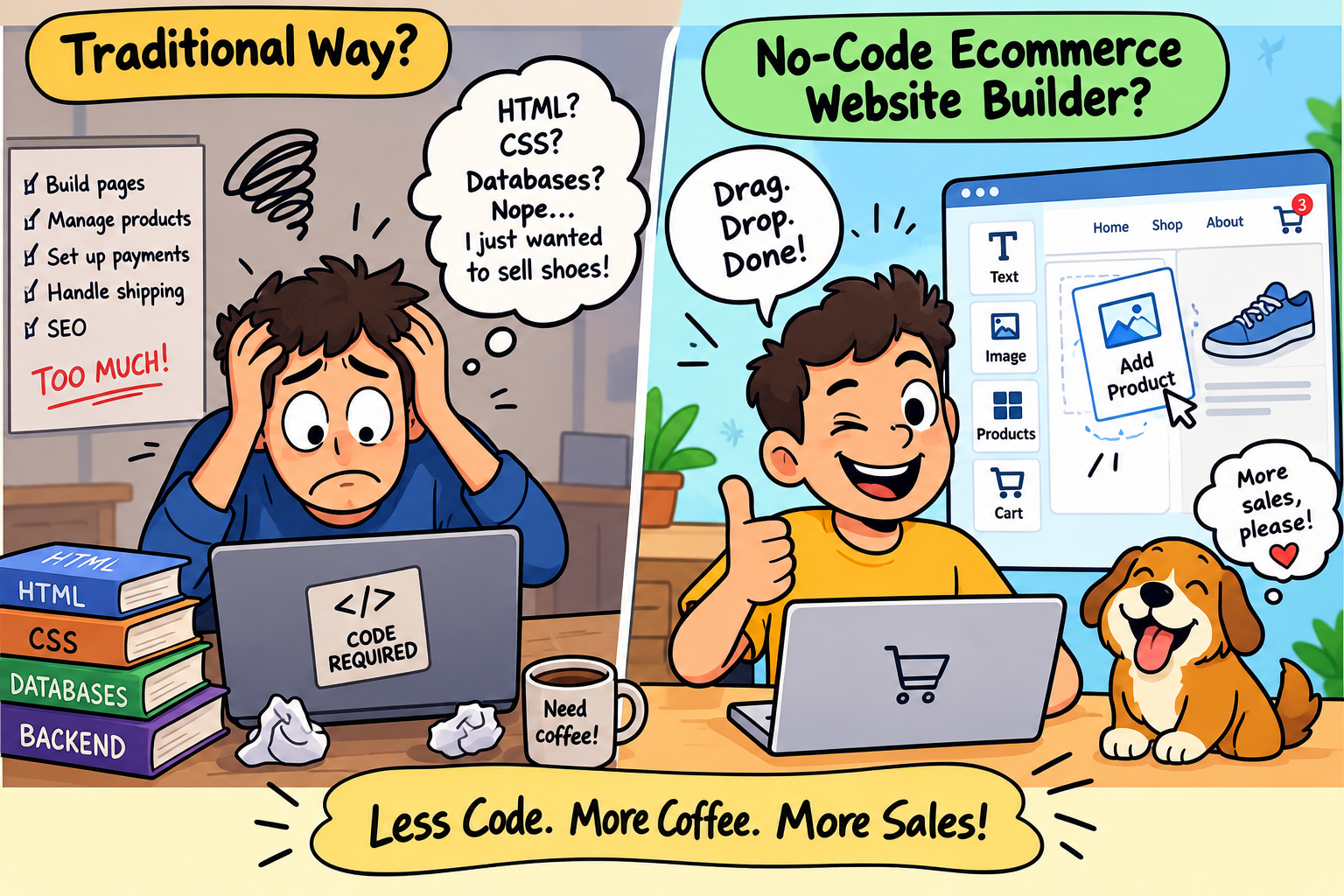
For instance, a drag and drop ecommerce builder will allow users to drag and drop elements on the site, edit layouts, and make other adjustments.
It may be especially beneficial for small companies, entrepreneurs, retailers, and direct-to-consumer (D2C) brands that need to go online without having a dedicated development team to handle all the changes on their website.
Still, different platforms may have different features, which is why it’s important to look into the actual workflow of each one.
What Does No-Code Technology Make Easier?
Rapid Store Setup
One of the key benefits of using no-code technology is the reduction of the technical effort needed to launch an online store. Regular ecommerce site development can include designing, front-end development, backend configuration, hosting, integrations, and testing. No-code technology allows many of those requirements to be brought into a more organized framework.
That way, it becomes possible to develop an ecommerce site without any coding for many of the regular use cases. This is not about creating a fully functional store in minutes but rather about making the development process much easier.
Visual Store Design
It is possible to make store design simpler for business users by means of a visual approach. In this case, they will be able to make changes to layout, structure elements, customize templates etc., without any programming involved thanks to drag-and-drop functionality.
This allows businesses to have greater freedom in changing their stores. It should be remembered that even visual editing will not guarantee proper customer experience automatically.
Management of Product and Catalogs
The ecommerce website needs much more than just web pages. The organizations will need to add products, categorize, make product collections, manage prices, add images, and work on product variations.
A new era website builder for ecommerce sites will ensure that all these tasks come into one place and catalog management become more convenient to non-technical personnel. It is even more critical for organizations having big catalog sizes.
Storefronts Compatible with Mobile Devices
Consumers can view ecommerce stores on mobile devices as well as laptops and desktops. The good news is that most contemporary ecommerce systems support responsive storefronts to ensure that companies do not have to build totally new sites for each device.
However, even responsive design must be tested. The company must assess navigability, images, buttons, forms, cart and checkout on real mobile devices.
Website Update Processes
A no-code tool will minimize reliance on the developers for the changes that come day-to-day. It is quite likely that making changes like updating a picture of a product, updating content, adding an item into the portfolio, updating promotion section, or altering page layout might be handled within the system itself.
Marketing and ecommerce teams could operate faster as everything will be easier for them.
What No-Code Does Not Simplify
Ecommerce Strategy
A platform may offer the technology, but it will not help you figure out what products your business should sell or how it should compete. This requires understanding of the target audience, pricing, positioning, product line, promotions, customer acquisition, and retention strategy.
Choosing an ecommerce website builder, therefore, is just one part of setting up an ecommerce business.
Product Content and Merchandising
While no-code technology can help in the publication of products, businesses will still require quality product content.The customers require quality descriptions, images, prices, specifications, sizing where applicable, and purchase information.
Just like that, choosing which products to highlight, how to organize the collections, and which products to promote is an aspect of merchandising. Technology assists in making such decisions; it does not dictate them.
Inventory & Fulfillment
A storefront does not constitute an ecommerce business. Companies will have inventory, order management, shipping, returns and fulfillment to deal with regardless. The significance of these operations becomes even more pronounced as order volume increases.
Before deciding on a no-code page builder for their ecommerce store then, companies must go past merely building their storefront and investigate the platform’s ability to facilitate ecommerce operations.
Marketing and Customer Acquisition
A website alone does not ensure traffic. Companies still require customer attraction using methods like SEO, content marketing, social media marketing, email marketing, paid advertising, collaborations, and so on.
While an AI-based store builder or no-code platform might offer marketing functionalities, companies would still require a knowledge of their target customers and acquisition strategies.
Technology can be used for executing campaigns. However, it is not capable of determining whether or not a particular campaign will resonate with its target customers.
SEO
Although a no-code tool might make some technical aspects of SEO easier, search engine visibility is far more than tweaking page titles. Content, well-made landing pages, site structure, good internal links, backlinks when needed, and customer satisfaction are all still required. The tool should offer a good technical basis, but SEO will always be a process.
How AI Plays a Role in No-Code E-commerce
AI is adding an additional layer to the no-code e-commerce experience.A store builder based on AI could enable businesses to expedite processes like building product descriptions, arranging catalogues, creating particular types of web content, or automating processes.
Such solutions can come in handy if a business has many products or scarce resources.It should also be remembered that AI-generated content needs to be reviewed by humans. There is a need for accuracy and consistency in the product data, price information, specifications, claims, and brand messaging.
No-Code Is Not Unlimited Customization
This is probably one of the most crucial limitations. A no-code platform usually offers you some level of customization based on the architecture of the platform itself. This is helpful for the basic requirements of ecommerce, but any advanced requirements would still require some sort of customization or integration.
In case you are a company that has very specific needs or workflows or has some unique backend needs, you would eventually need features that exceed the boundaries of a no-code platform. It is important to find out the critical requirements before going ahead with the choice of a platform.
When Would a No-Code Ecommerce Platform Make Sense?
No-code ecommerce platforms would work well in situations where a company would want to:
Get started selling online without the need for a lot of tech staff
Handle regular updates on its own
Keep it simpler from a technological perspective
Begin with basic ecommerce features
Easily create and maintain product catalogs
Offer the chance to test out new product lines
Allow marketing teams more control over the storefront
They would work especially well for expanding companies that need to operate fast without making things too complicated from the ecommerce standpoint.
Evaluating a No-Code Platform
Asking simply, “Does the platform have my necessary feature?” will give a much smaller evaluation picture than assessing a whole workflow process.
Is it easy for your team to make a product? To update the storefront? To let customers easily find products in the store? To manage your inventory? To analyze the information? Is the platform able to help you run marketing efforts? How about scaling your product catalog and orders?
That is how you’ll gain a more objective look at the practicality of the platform. It goes without saying that the platform for creating ecommerce websites should be convenient for making things easier on the technical part of ecommerce while not limiting you in handling the business side of the operation.
How Does Idiocom Support No-Code Ecommerce?
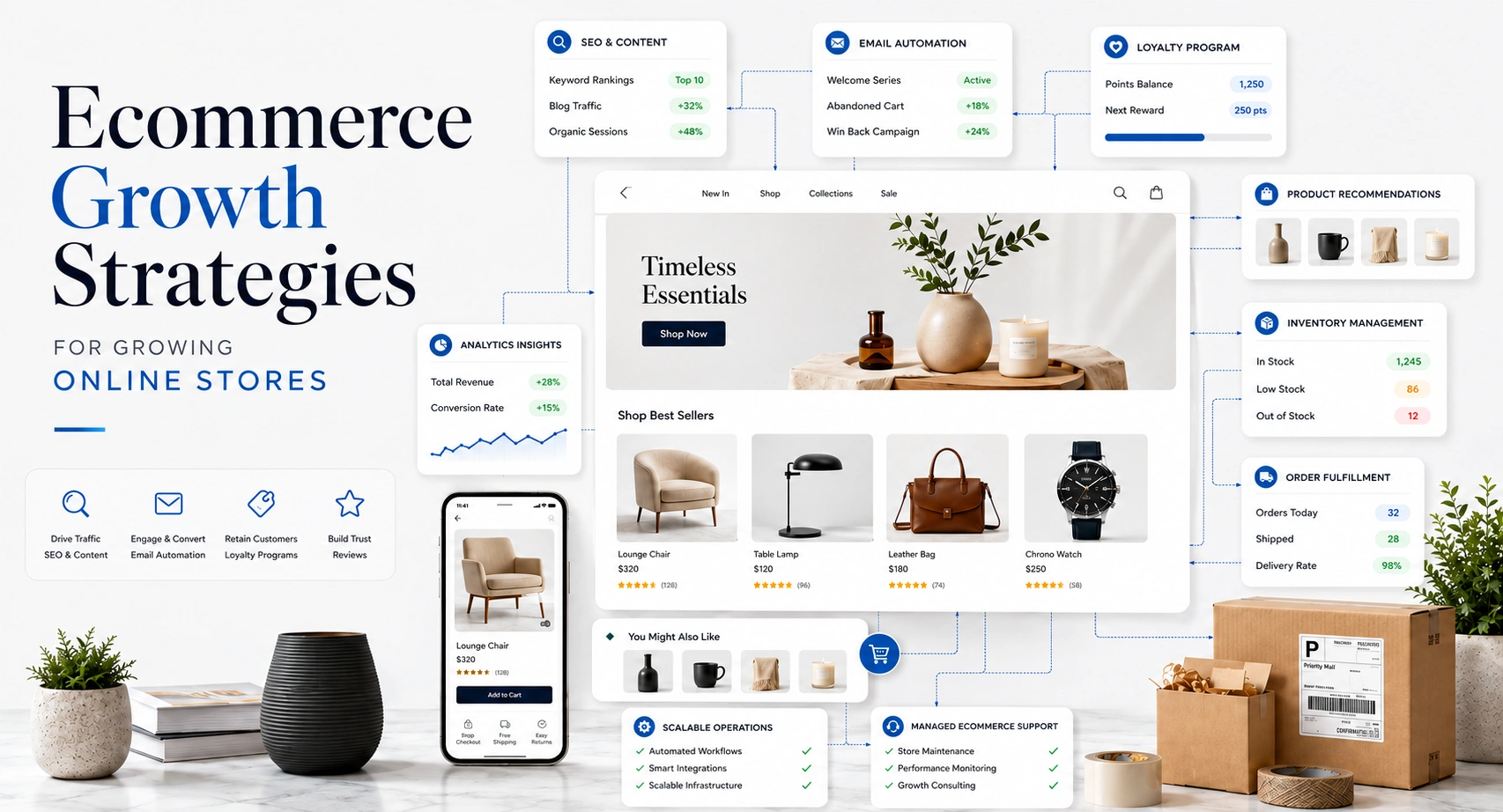
Idiocom presents itself as an ecommerce growth platform which not only allows the user to create a storefront but also helps in managing ecommerce operations.
Idiocom’s platform is designed to allow for no-code store creation, visual page building, responsive storefronts, custom theme management, product/catalog management, variations, inventory, orders, payments, marketing, analytics, and AI-driven catalog management functions.
This wider set of capabilities indicates a crucial difference: the creation of a website is merely the first thing to be done. Once launched, the store would require the technology to be used in managing products, processing orders, providing better experiences, and tracking performance.
Conclusion
No-code ecommerce technology has revolutionized the way in which businesses go about building their own online stores. The advanced online store builder can help to make the design process, product management, content updating, and other ecommerce functions easier without having to rely too much on technical capabilities.
However, there are limits to this technology.Using a no-code platform will not automatically result in a successful brand, marketing strategy, product catalog, fulfillment operation, or customer base. These still require decisions on the part of the business itself.
The most effective tactic would be to leverage no-code technology for its strengths and continue to focus on strategy, operations, and marketing.
FAQs
Can I make my ecommerce website without coding?
Yes. There are no-code ecommerce platforms that would enable people to create online storefronts, as well as do many ecommerce tasks, without writing code.
What is the difference between the no-code website builder and ecommerce website builder?
The no-code website builder may only deal with the task of creating websites and web pages. The ecommerce website builder offers additional functions aimed at selling items, such as catalog management, shopping carts, payment options, order management, etc.
Will the drag and drop ecommerce website builder suit my expanding company?
This option depends on many factors but in general, if you choose the right ecommerce platform with all required functions, including online store building, product catalog, inventory, orders, marketing, and even scalable infrastructure, then yes, it will suit you.
Does no-code mean that I do not need any developers anymore?
Maybe, because the standard ecommerce requirements do not imply the use of any code. However, highly customized solutions can require development work.