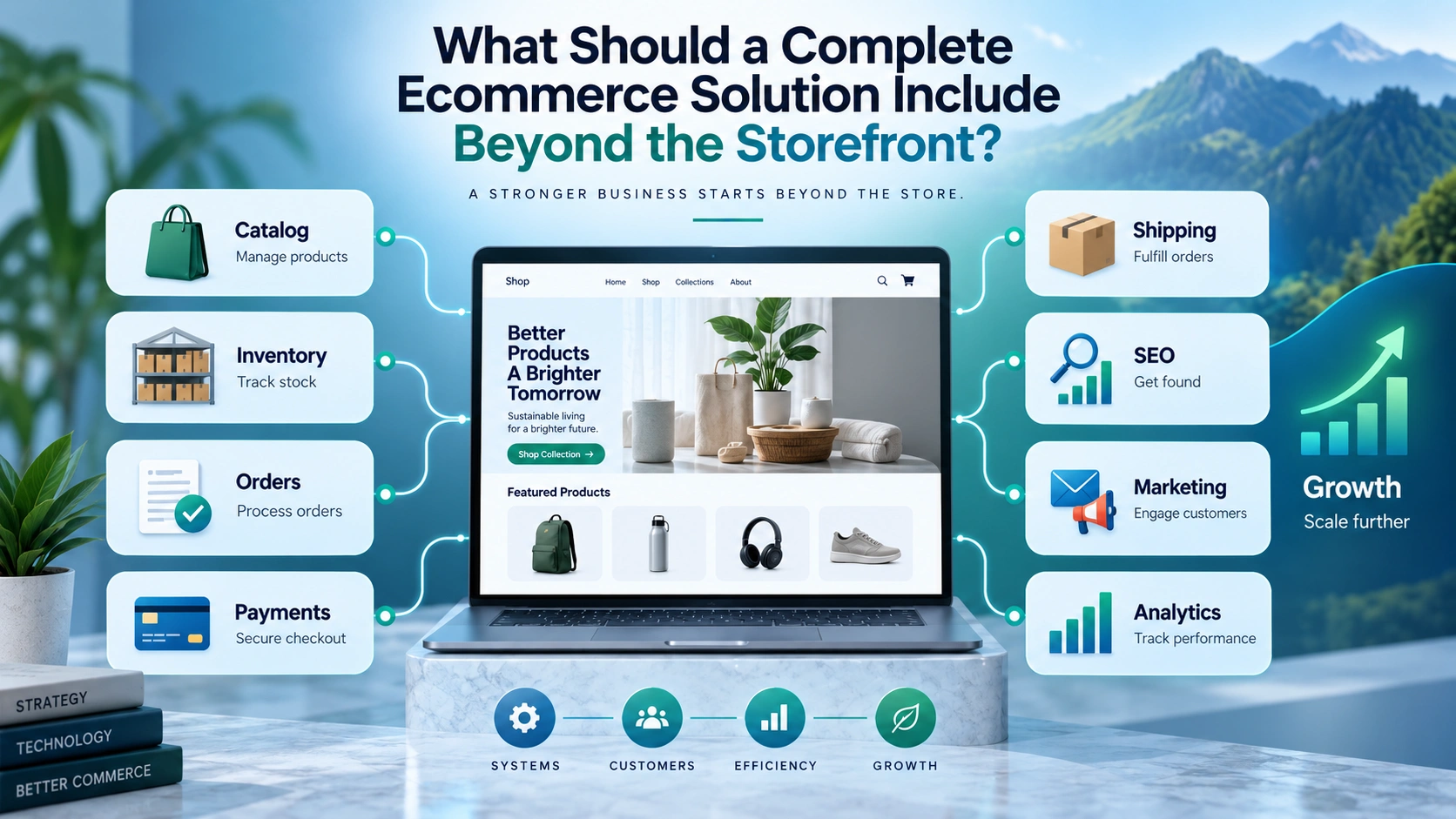
What Should a Complete Ecommerce Solution Include Beyond the Storefront?
September 14, 2026

In today’s competitive online marketplace, customers have more choices than ever before. A successful online store is not only about selling products; it is about creating a memorable experience that builds trust and encourages repeat purchases. This is where ecommerce branding plays an important role.
Ecommerce branding helps businesses create a unique identity through design, messaging, customer experience, and consistent communication. A strong brand makes it easier for customers to recognize a business, connect with its values, and choose it over competitors.
For growing ecommerce brands, branding is no longer optional. It directly impacts customer loyalty, engagement, and long-term business success. A well-developed brand experience can increase conversions, improve customer retention, and support overall ecommerce growth.
In this article, we will explore how ecommerce branding improves customer experience and helps businesses increase revenue.
Ecommerce branding is the process of creating a unique identity for an online store. It includes everything customers see and experience, from website design and product presentation to communication style and customer support.
A strong ecommerce brand focuses on:
Unlike traditional branding, ecommerce branding happens completely through digital interactions. Every website visit, product page, email, and social media interaction contributes to how customers view the brand.
A consistent brand experience helps businesses create stronger relationships with their audience.
Trust is one of the biggest factors influencing online purchases. Customers want to buy from businesses that appear reliable and professional.
Effective ecommerce branding helps build trust by creating:
When customers see a consistent identity across all platforms, they feel more confident about purchasing.
A trusted brand also encourages customers to return and recommend the business to others.
Customer experience is one of the most important factors in ecommerce success. Customers expect smooth browsing, easy navigation, and a personalized shopping journey.
Ecommerce branding improves customer experience by creating:
A consistent design across your website, packaging, emails, and social media helps customers easily recognize your brand.
A clear brand voice helps businesses communicate with customers in a way that feels authentic and reliable.
Strong brands create emotional connections with customers. When people relate to a brand’s story and values, they are more likely to become loyal customers.
A positive customer experience leads to higher satisfaction and supports long-term ecommerce growth.
Branding directly influences purchasing decisions. Customers often choose brands they trust, even when similar products are available elsewhere.
Strong ecommerce branding helps increase sales by:
A recognizable brand reduces hesitation during the buying process. When customers already trust a business, they are more likely to complete purchases.
This makes branding a powerful tool for increasing revenue.
Ecommerce growth requires more than attracting new visitors. Businesses need strategies that turn visitors into loyal customers.
A strong brand supports ecommerce growth by helping businesses:
When customers connect with a brand, they are more likely to return and make additional purchases.
This creates sustainable growth instead of relying only on one-time sales.
A successful ecommerce brand requires consistency across every customer touchpoint.
Important elements include:
Your logo, colors, typography, and website layout should create a recognizable identity.
High-quality images, detailed descriptions, and attractive product pages improve customer confidence.
A strong story helps customers understand what makes your business different.
Emails, advertisements, and social media content should reflect the same brand personality.
A consistent identity helps customers remember your business and builds stronger connections.
Direct-to-consumer brands depend heavily on strong customer relationships. Without traditional retail stores, the brand experience happens entirely online.
Ecommerce branding helps D2C businesses create:
For D2C brands, branding is one of the biggest advantages in a crowded market.
A memorable brand can help smaller businesses compete with larger companies.
Customer loyalty is essential for long-term profitability. Acquiring new customers often requires more effort than retaining existing ones.
Ecommerce branding improves loyalty by creating:
Loyal customers often become brand advocates who share recommendations and help attract new buyers.
This creates a cycle of trust, growth, and increased revenue.
Branding is not only a marketing activity; it is a business growth strategy.
Strong ecommerce branding can improve revenue through:
Customers are often willing to pay more for brands they trust and value.
A strong brand creates long-term business value beyond individual transactions.
Businesses can strengthen their online brand by focusing on:
Research your audience’s needs, preferences, and buying behavior.
Keep your design, messaging, and customer experience consistent across all channels.
Create a fast, simple, and user-friendly shopping experience.
Tell customers why your business exists and what makes it unique.
Use customer opinions to improve products and services.
These steps help create a stronger connection between brands and customers.
In a competitive ecommerce environment, products alone are not enough to create lasting success. Customers want experiences, trust, and meaningful connections.
Ecommerce branding helps businesses create stronger customer relationships, improve shopping experiences, and increase revenue. From building trust to supporting ecommerce growth, a strong brand identity provides long-term advantages.
For growing ecommerce businesses, investing in branding is an investment in customer loyalty, business reputation, and sustainable success.


In 2025, Your product page is the most important component of your online store in the rapidly expanding field of eCo...
Having an online eCommerce website is crucial for business expansion in today’s digital environment. As more pe...

Growing an online store often comes with a common assumption—you need to spend more on advertising to generate more...