Build Your E-commerce Website in a Day: Advanced E-commerce Platforms
September 16, 2026
Choosing the best ecommerce website builder is often presented as a comparison of features, pricing plans, templates, and app marketplaces. However, a successful online store depends on much more than the number of tools included in a platform. A builder that looks impressive on paper may still create challenges if it makes product management difficult, limits SEO control, slows down checkout improvements, or becomes difficult to scale. The right choice depends on how well the platform supports the complete ecommerce journey: building the store, attracting customers, converting sales, managing operations, and growing over time. According to the U.S. Census Bureau, ecommerce continues to represent a significant and growing part of retail, with online sales increasing year over year. (census.gov) For entrepreneurs and growing brands, evaluating an ecommerce website builder should therefore focus on real business workflows rather than feature checklists.
Most ecommerce platforms advertise similar capabilities: product pages, payment integration, themes, analytics, marketing tools, and inventory management. The difference appears when businesses actually use those capabilities.
A founder launching a small fashion store, for example, may need a simple setup process and attractive storefront quickly. A growing brand with hundreds of products may care more about bulk editing, SEO structure, staff permissions, integrations, and operational efficiency.
The important question is not:
“How many features does this platform have?”
The better question is:
“How effectively do these features support the way my business operates?”
A practical evaluation should consider the complete experience from store creation to customer retention.
The first test of an ecommerce builder is how quickly and confidently a business owner can create a functional store.
A good online store builder should allow users to set up product categories, add products, customize layouts, configure payments, and prepare shipping settings without requiring advanced technical knowledge.
However, simplicity should not mean limited control.
A platform should provide guided setup while still allowing businesses to customize important areas such as:
Many businesses underestimate setup complexity. A store may appear ready after selecting a template, but successful ecommerce requires thoughtful decisions about product organization, customer journeys, and conversion paths.
The best evaluation approach is to create a test store during a trial period. Add real products, configure actual categories, and observe where the process becomes complicated.
Templates create the first impression, but customer experience determines whether visitors become buyers.
A strong ecommerce website builder should help merchants create:
Mobile experience deserves special attention. According to Statista, mobile commerce continues to represent a major share of digital commerce activity globally, making responsive design essential for modern online stores. (statista.com)
A platform should not only provide mobile-compatible templates but also make mobile optimization practical. Check product pages, menus, filters, images, and checkout flow from an actual smartphone.
A visually attractive desktop store that becomes difficult to use on mobile can lose potential customers.
Checkout is where customer interest becomes revenue.
A platform should provide a smooth purchasing process with:
Baymard Institute’s checkout research shows that unnecessary complexity is one of the major reasons shoppers abandon purchases. Its research identifies checkout improvements as one of the biggest opportunities for reducing friction. (baymard.com)
When reviewing a platform, complete several test purchases. Evaluate:
A builder should make buying easier, not simply make selling possible.
A store cannot grow efficiently if customers cannot discover it.
A reliable no code website builder should still provide meaningful SEO controls. Technical optimization should not require developers for every basic improvement.
Important SEO capabilities include:
Google recommends structured product data to help search engines understand ecommerce information such as pricing, availability, reviews, and product details. (developers.google.com)
During evaluation, check whether SEO settings are available directly inside the platform. If every optimization requires custom coding, long-term growth may become slower and more expensive.
Payment and shipping are not just technical settings. They directly affect customer confidence.
Different businesses require different combinations:
DHL’s ecommerce research highlights the importance of delivery flexibility, with delivery expectations playing a significant role in purchase decisions. (dhl.com)
A platform should support current requirements while allowing expansion into new regions and customer segments.
A common mistake is choosing a builder based only on website appearance and discovering later that payment or shipping limitations restrict growth.
A modern ecommerce business rarely operates through one system.
Growing stores often connect with:
A large app marketplace does not automatically mean better functionality. What matters is whether important workflows work reliably.
Create a list of your essential integrations before comparing platforms. A smaller number of well-connected tools is often more valuable than hundreds of optional extensions.
Many businesses begin in one market but later expand.
If international growth is part of the plan, evaluate:
A platform that supports multilingual ecommerce from the beginning can prevent expensive restructuring later.
Similarly, businesses increasingly sell through multiple channels, including social platforms, marketplaces, and direct websites. According to DHL’s 2025 ecommerce trends research, many ecommerce businesses now operate across multiple online channels. (dhl.com)
The right builder should help maintain consistent product information across these channels.
Software is only one part of ecommerce success.
As businesses grow, they often need support with:
This is where ecommerce solutions become different from simple website builders.
A platform should provide a path for businesses that move from self-management to requiring more strategic support. Growth often creates new challenges that cannot be solved by adding more features alone.
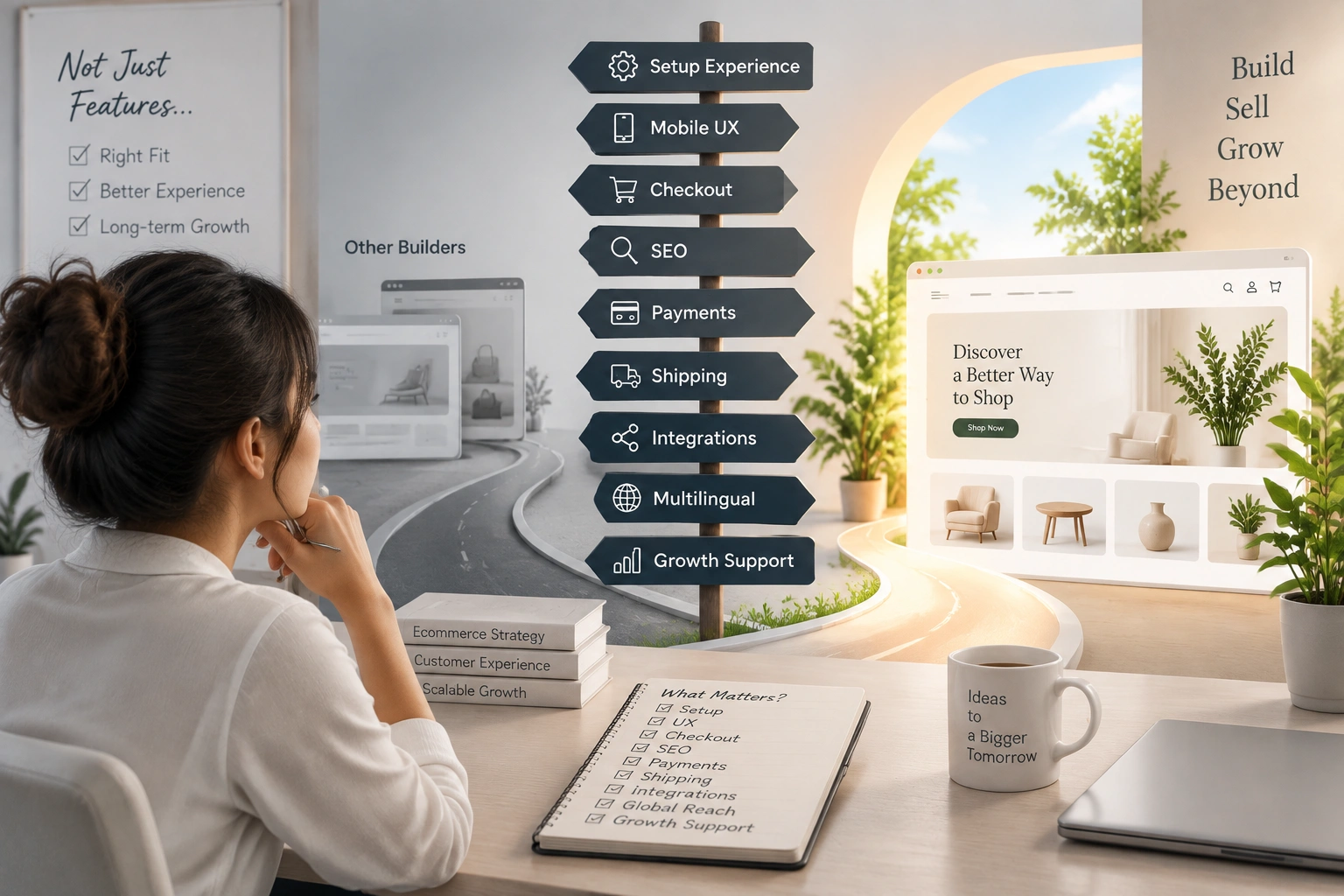
Instead of comparing feature lists, score platforms across six business areas:
Can the team create and update the store efficiently?
Does the platform help customers find, trust, and purchase products easily?
Can the business manage products, orders, inventory, and fulfillment effectively?
Does it support SEO, analytics, and marketing growth?
Can it support new products, markets, channels, and team members?
What will the platform cost when the business grows?
This framework provides a more realistic picture than comparing the number of features available.
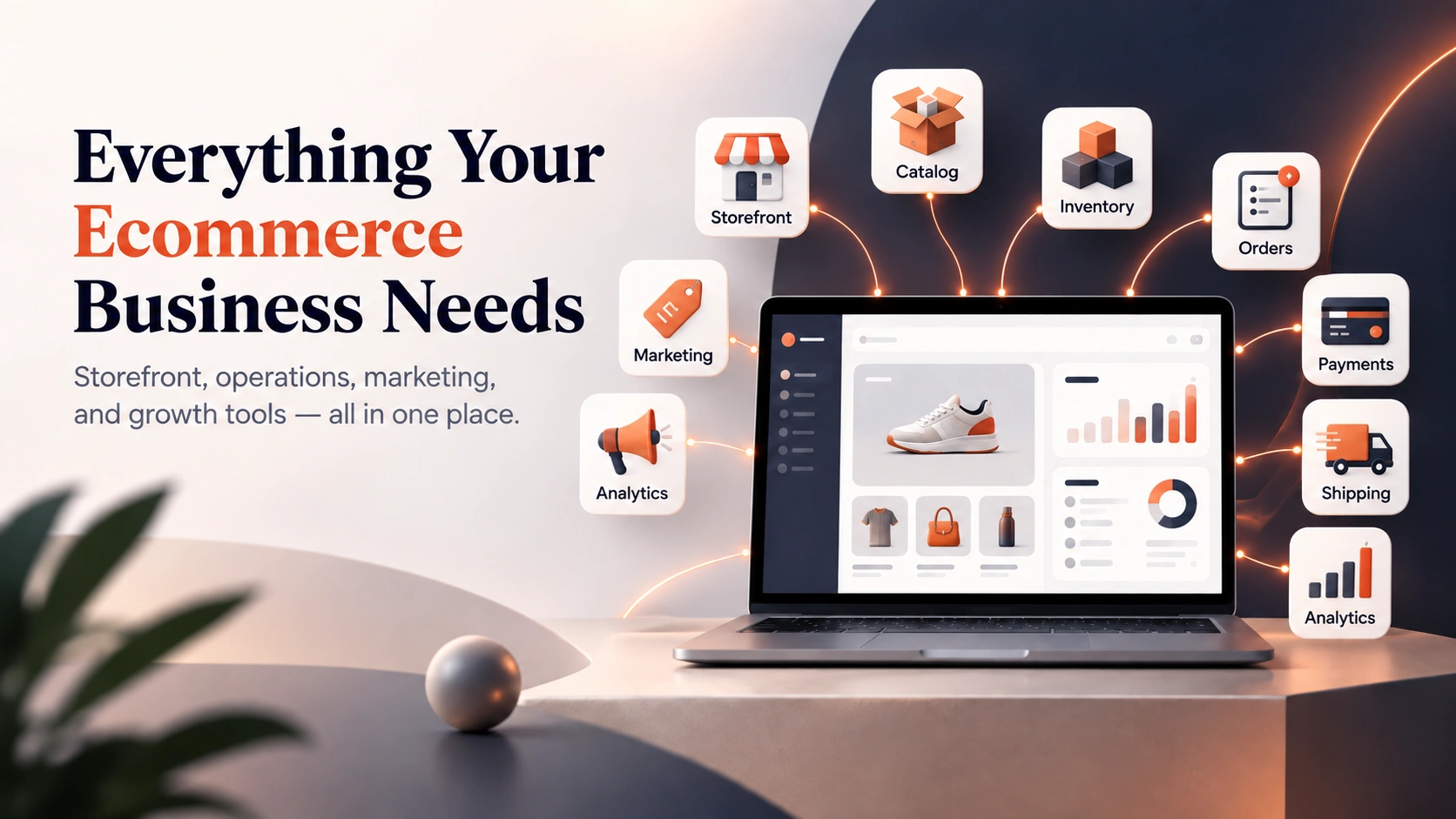
Idiocom follows a connected ecommerce approach by combining store creation with essential business operations such as product management, orders, SEO, analytics, marketing capabilities, and growth support.
For businesses evaluating an ecommerce website builder, this type of connected approach helps reduce the gap between launching a store and managing a complete ecommerce operation.
However, every business should evaluate platforms based on its own requirements, including catalog complexity, workflows, integrations, growth plans, and customer expectations.
The best ecommerce website builder is not necessarily the one with the largest feature list or the lowest starting price. It is the platform that helps your business operate efficiently today while supporting future growth.
Evaluate the complete journey: setup, customer experience, checkout, SEO, payments, shipping, integrations, languages, analytics, and ongoing support.
A successful ecommerce platform should do more than help you create an online store. It should provide the foundation needed to attract customers, manage operations, and build a sustainable digital business.