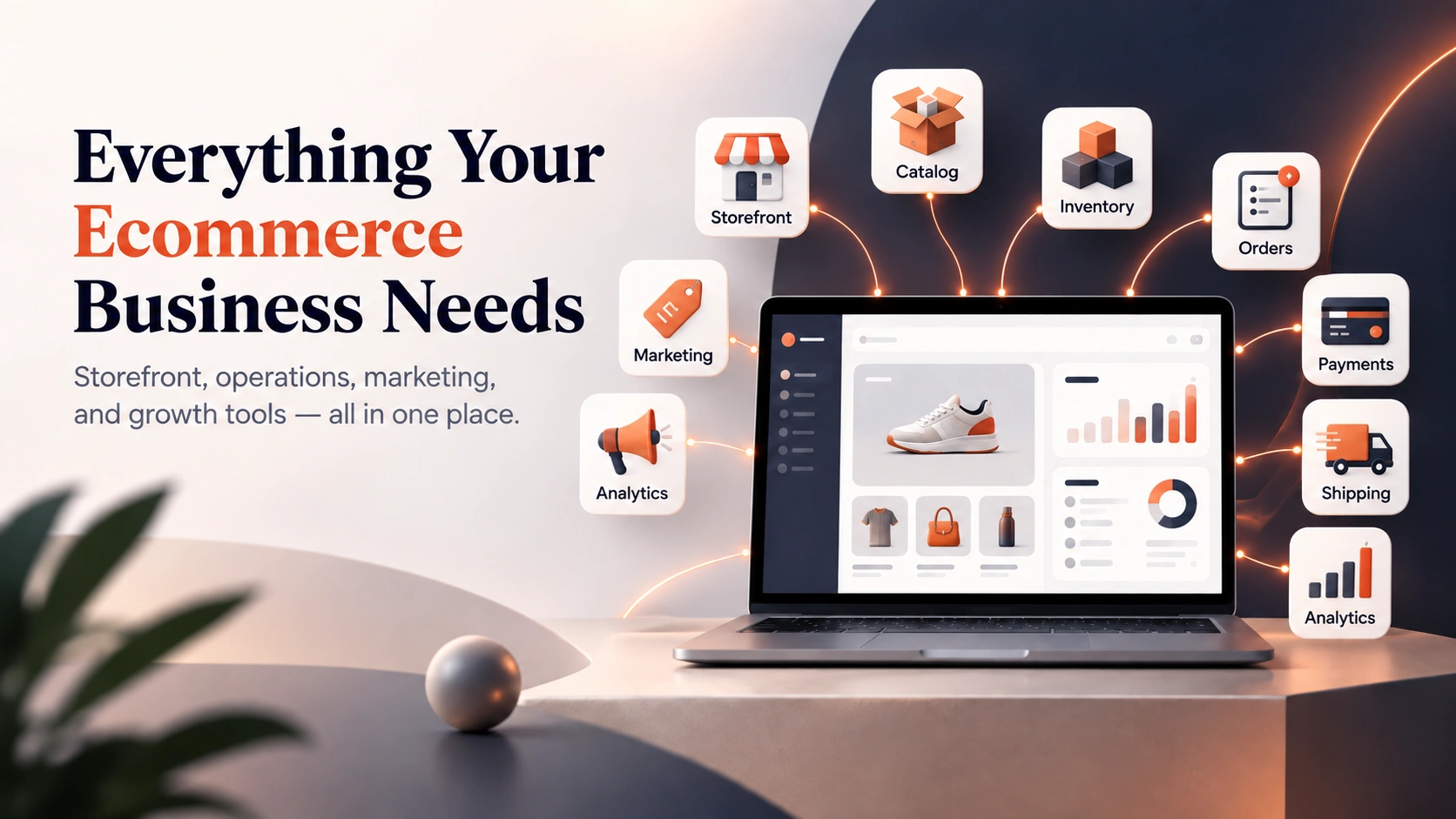
How to Choose the Right Ecommerce Platform for a Growing Business
September 15, 2026
Choosing the best ecommerce platform is rarely about finding the software with the longest feature list. For a growing business, the right choice is the platform that fits today’s operating reality while leaving enough room for tomorrow’s catalog, channels, team, and customer expectations. That matters because ecommerce is still expanding: U.S. retail ecommerce sales reached $340.2 billion in the second quarter of 2026, up 12.2% year over year, according to the U.S. Census Bureau. Growth, however, usually brings complexity. A founder managing 80 products through one warehouse has very different requirements from a brand managing 8,000 SKUs, multiple languages, wholesale pricing, marketplace feeds, and several staff roles. The goal is not to buy for every possible future scenario, but to avoid predictable constraints that make growth expensive. This guide explains how to compare ecommerce solutions by business stage, catalog scale, operations, SEO controls, integrations, team access, performance, and long-term cost—without assuming that one platform is automatically “best” for every merchant.
Platform comparisons often begin with themes, transaction fees, apps, or monthly price. Those matter, but they are secondary to fit.
A better starting point is to map the business across three dimensions: what you sell, how you operate, and how you expect to grow. A direct-to-consumer brand with 50 products may benefit from simplicity. A manufacturer with thousands of variants, trade customers, regional pricing, and multiple warehouses needs a different architecture.
The practical rule: buy for the next stage of complexity, not for the largest company you can imagine becoming.
Early-stage businesses usually need speed, manageable cost, straightforward product setup, secure checkout, basic marketing tools, and enough SEO control to build organic visibility.
As the business grows, ask whether the platform can handle larger catalogs, more orders, more staff, stronger promotions, multiple sales channels, and better reporting without creating manual work.
More mature businesses may need B2B pricing, multilingual storefronts, advanced permissions, ERP or warehouse integrations, international tax logic, and custom workflows.
This is why choosing an ecommerce website builder purely because it is easy to launch can become expensive later. Ease of setup matters, but so does the platform’s ability to support the next operating stage.
Catalog scale is not just product count. Complexity comes from variants, attributes, bundles, categories, pricing rules, media, inventory locations, and update frequency. A business with 300 configurable products may have a harder catalog than one with 3,000 simple SKUs.
Before choosing a scalable ecommerce platform, test bulk imports, variants, filters, inventory by location, product feeds, structured data, media handling, and redirects.
Google recommends clear ecommerce URL structures, unique URLs for paginated pages, appropriate canonicalization, and crawlable internal links. Those are platform-level considerations, not details a merchant should have to rebuild after launch.
A useful test is to upload 50–100 representative products during a trial, including your most complicated products.
A store can look excellent while its operations remain inefficient.
Walk through a real transaction from stock availability to payment, fulfillment, tracking, cancellation, return, refund, and customer support. Identify every point where someone must copy information into another system.
Growing businesses should examine shipping rules, payment methods, tax handling, inventory synchronization, returns, customer notifications, and warehouse connectivity.
DHL’s 2025 global shopper research found that 81% of surveyed shoppers would abandon a purchase if their preferred delivery option was unavailable. Delivery capability is therefore not merely a logistics feature; it can influence conversion.
Strong ecommerce solutions reduce the gap between what customers see and what operations can actually deliver.
Organic visibility becomes more important as competition grows, so SEO flexibility should be examined before committing to a platform.
At minimum, merchants should be able to control page titles, meta descriptions, headings, canonical tags where needed, redirects, indexation, category content, image alt text, product schema, sitemaps, internal links, and meaningful URLs.
Google’s ecommerce guidance emphasizes site structure, crawlable links, product structured data, and merchant listing data. Product markup can help Google understand information such as price, availability, shipping, and returns.
This becomes especially important for large catalogs, where filters, duplicate variants, discontinued products, and pagination can generate thousands of URLs.
Ask the vendor how the platform handles these cases by default. “SEO-friendly” is not enough; request to see the actual controls.
A large integration marketplace sounds impressive, but the useful question is whether the platform connects reliably to the systems your business actually uses.
List critical workflows: accounting, CRM, email, advertising, payment gateways, shipping carriers, marketplaces, customer support, inventory systems, analytics, and product feeds. Then classify each integration as native, third-party, custom, or manual.
DHL’s 2025 business research found that 63% of surveyed ecommerce businesses sold on at least three online platforms. A growing brand may therefore need product and inventory data to move consistently across several destinations.
The best architecture is not the one with the most channels. It is the one that prevents expansion from turning into repeated data entry and reconciliation.
Founder-led stores often begin with one administrator login. That becomes impractical as the company hires marketers, support staff, warehouse operators, agencies, or finance teams.
Evaluate staff accounts, permission levels, approval workflows, and activity history. A growing business should not have to give every employee full control over products, payments, customer data, or site configuration.
Also test usability. During a trial, ask a non-technical team member to add a product, issue a refund, update content, and check an order. Powerful software that only one technical person can operate becomes a bottleneck.
Platform performance affects user experience and commercial results. A 2026 web.dev case study of Nuvemshop reported that storefront performance improvements were associated with an 8.9% increase in conversion rate among mobile visitors from Google organic search in the cohort studied. That is a platform-specific result, not a universal promise, but it shows why speed deserves attention.
Test representative product and category pages with realistic images, scripts, tracking tools, and apps installed—not only a clean demo template.
Analytics should cover the buying journey. Google Analytics supports ecommerce events such as view_item, add_to_cart, begin_checkout, purchase, and refund.
If these events are difficult to implement or unreliable, the business may struggle to understand where revenue is being won or lost.
Monthly pricing is only one component of platform cost.
Add payment fees, themes, apps, plugins, development, maintenance, integrations, agency support, staff seats, international features, transaction charges, migration work, and the internal time required to manage disconnected systems.
Model those costs at your expected order and catalog volume 12–24 months from now. The cheapest platform at launch can become expensive if growth requires multiple paid add-ons or recurring developer intervention.
A useful buying question is:
“What new cost appears when we double products, orders, users, markets, or channels?”
That question often reveals more about scalability than the headline subscription price.
Instead of asking which platform is generally best, score each option against your priorities.
Weight catalog, operations, storefront, SEO, integrations, analytics, team access, support, scalability, and total cost. Then score each platform from one to five using evidence gathered during demos and trials.
Do not award points for features you are unlikely to use. Weight what would genuinely block growth.
For example, a business planning international expansion may assign greater importance to multilingual SEO, currencies, regional feeds, and tax handling. A wholesaler might prioritize B2B pricing, account permissions, bulk ordering, and ERP connectivity. A content-led consumer brand may put more weight on SEO flexibility, merchandising, analytics, and marketing integrations.
This turns platform selection from a feature contest into a business decision.
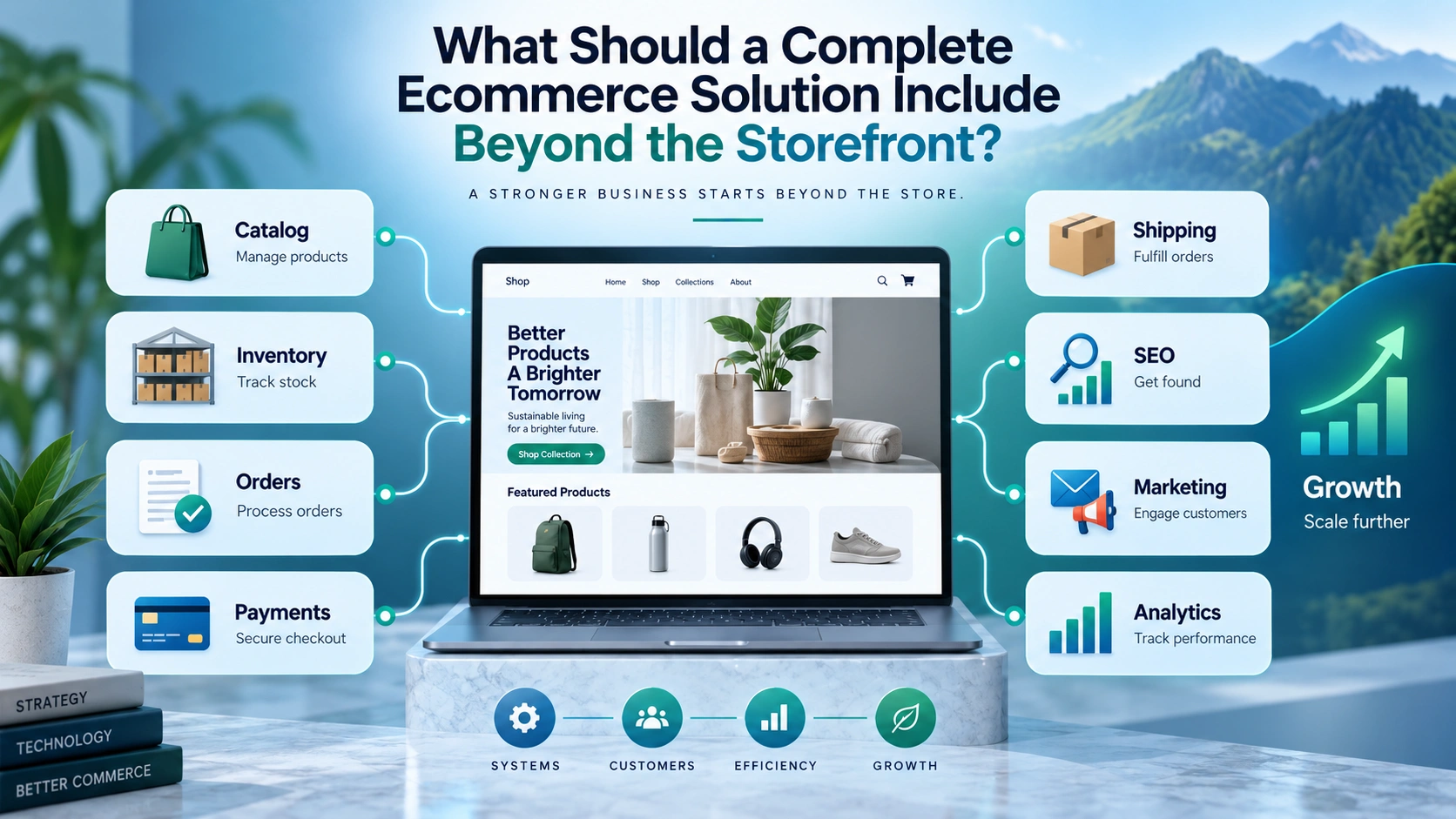
For businesses considering Idiocom, the comparison extends beyond storefront creation. Idiocom currently combines a no-code store builder with product and inventory management, orders, shipping, SEO capabilities, analytics, marketing tools, multichannel features, and optional managed support.
Its current plans also differentiate by factors such as catalog size, multilingual capabilities, B2B functionality, SEO features, support, and managed growth services, illustrating why platform requirements can change as a merchant moves from startup to growth and scale stages.
That model can suit founders looking for ecommerce technology and growth support within a connected operating environment. It should still be assessed against the same criteria as any platform: catalog requirements, integrations, control, cost, team workflow, and future complexity.
There is no defensible universal answer to the question, “What is the best ecommerce platform?”
The better question is which platform creates the least operational friction while giving your business enough control to grow.
Document your next-stage requirements, test real products and workflows, inspect SEO and analytics implementation, verify integrations, involve the people who will use the system, and calculate long-term operating cost.
The right platform should not merely help you launch an ecommerce website. It should let the business add products, customers, channels, markets, and team members without forcing the commerce operation to be rebuilt.

In the digital marketplace, your website’s theme is akin to a storefront display—it’s what captures att...

Running a business today is very different from what it was a decade ago. The internet has changed the way people sho...
A storefront is the most visible part of an online business, but it is not the business itself....