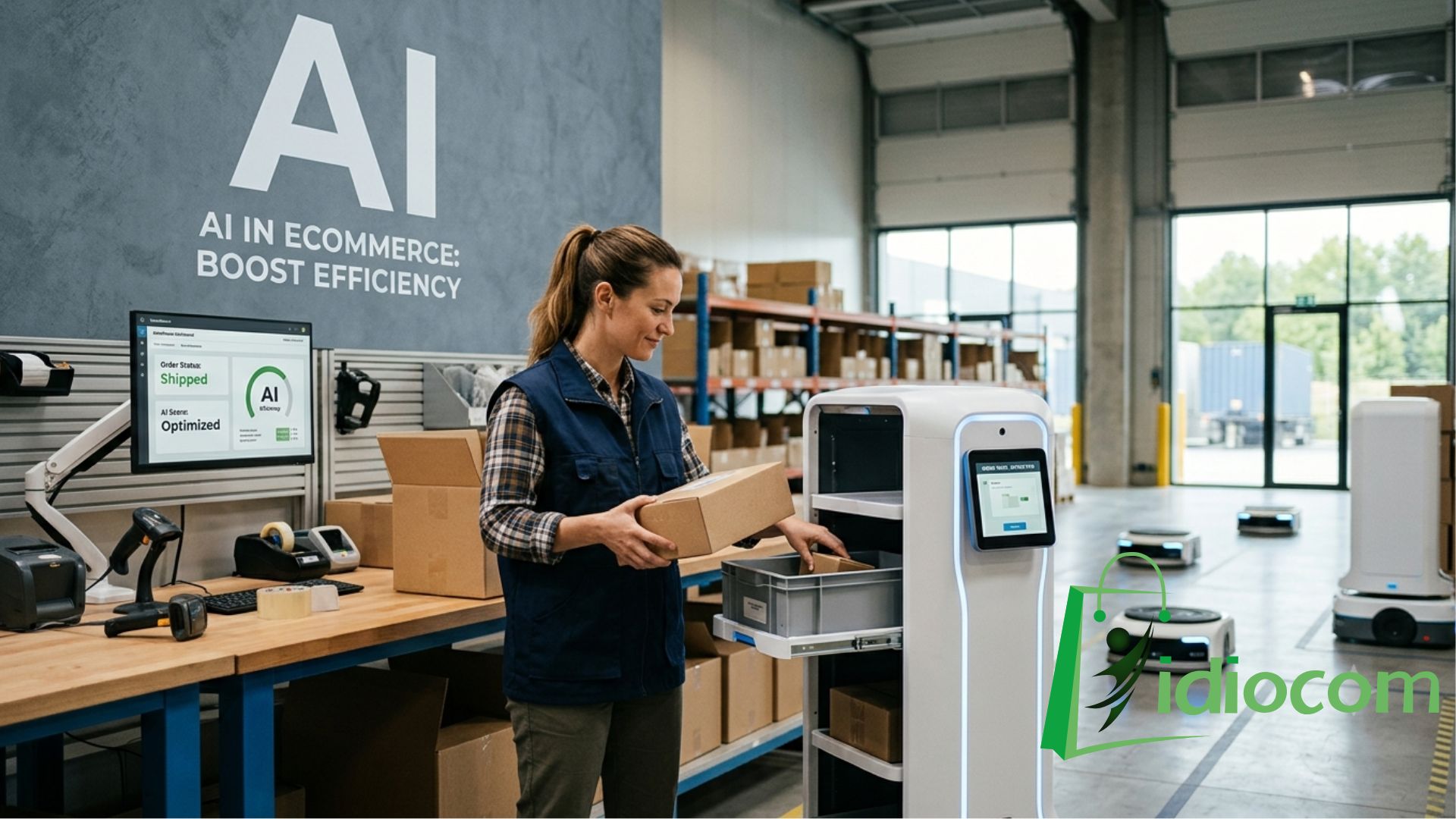
AI in Ecommerce: 10 Ways to Save Time and Boost Efficiency
October 7, 2026
An e-commerce theme is an aesthetic basis for your online store, but it affects how users perceive your brand, find products, browse the store, and make a purchase. In the online marketplace, a bad website design can hinder the sales of the first-class product.
When choosing among the e-commerce platforms in India, businesses should pay attention to the theme and the layout of the store, besides the cost, payment options, availability of the products, and marketing features of the platform. The right theme will transmit the brand message to customers from the desktops as well as from mobile devices.
Creating a new online store or improving an established business, the company has to have a good balance of design, usability, functionality, and adaptability of the theme.
Let’s consider a traditional store. The entrance, the way the products are displayed, and the lighting play an important part in visitors’ experiences. As far as e-commerce is concerned, the theme plays an equally important role.
The e-store shows the following things:
Thus, the theme is connected with the brand identity of the store.
For example, jewelry brands may use a clean and simple layout, and electronics e-stores may require more detailed presentations.
1. Pick a Theme Compatible with Your Brand Image
Your logo is not everything about your brand. Customers have an opinion based on your colors, fonts, graphics, space, approach, and the visual elements you applied. Choosing a good theme creates a coherent structure for them. For example:
Fashion: an approach based on visual communication, high-quality images and convenient online navigation.
Jewelry: a simple design, quality photos, and luxurious presentation.
Interiors: the dimensions of the products, pictures of “lifestyle” and plenty of information about the products.
Electronics: specifications of the item, comparison of some products and easy navigation through certain categories.
The best theme does not mean the most beautiful one, it means the one that reflects the brand and the needs of the customers.
2. Create Designs for Your Customer’s Journey and Not for Your Homepage Only
One of the main mistakes e-commerce businesses make is that they choose a theme only because of how amazing the homepage looks. The whole shopping experience doesn’t take place on just the homepage. It has multiple important transitions that your customers go through during their buying process:
Landing page → Category → Product page → Cart → Checkout
Every stage should seem interconnected to the customers. That’s why your theme should allow for easy:
Categories search
Product search
Options filtering
Products viewing
Variants selection
Cart additions
Navigation to previous pages
Checkout
E-commerce website builders can be very helpful in this case since they allow making quick modifications to various sections of the store without spending conditions.
3. Prioritize the Product Presentation.
The main idea should not overshadow the product.The main idea should help communicate the product. A good product page uses both visual and informational elements to their advantage, namely:
High-quality images
Different product angles
Transparent pricing
Variations of the product
Profile of the product
Necessity of the product
Customer feedback
For brands where product photography plays a huge role in the sales process, this helps to achieve impressive results. The appearance of a confusing website can spoil even the best pictures taken of the product.
4. Mobile-first design has become a necessity now
More and more people are purchasing products from their mobile phones. This means that you need to go beyond merely squeezing the desktop version of your shop into a smaller form factor. Your shop should be optimized for mobile use. Here are some things to keep in mind when designing your online shop:
When searching for an online e-commerce platform in India, you should look for one that has a mobile-friendly design.
5. Quickness is an Integral Part of the Shopping Experience
Although an attractive theme can be impressive, if excessive design features slow it down, it is not a good idea.
Large images, complicated animations, unnecessary scripts, and unoptimized tools from third parties have a significant influence on the speed.
When comparing the best ecommerce website builder for the business, it is recommended to check the performance of the theme aside from checking the pictures of it.
Ask yourself the questions: How fast does the actual storefront load? Moderate website design has to bring balance between attractiveness and performance.
6. Customization Allows For Expansion of Your Store
Things will change in your business after launching. You can launch:
New product lines
Seasonal advertising campaigns
New collections
Advertising banners
Customer reviews
Editorials
New markets
New channels of sales
Your theme must adapt to all these changes without putting you to the task of totally redesigning your store. An ecommerce platform for D2C businesses will face a lot of these branding and merchandising changes when the business expands. As a result, you should search for flexible blocks, templates, control of branding, and simple content management tools.
7. Using a Theme That Works for Your Industry Cuts Down on Time to Launch
Selecting the right theme for your business will save you valuable design resources. Take a clothing retailer, for instance. A clothing store may be able to use themes specifically created for:
Product ranges
Variations in sizes
Galleries of products
Lookbooks
On the contrary, the same rules could apply to a furniture store, which may need themes with elements like:
Dimensions
Information about the materials
Images of the lifestyle
Specifications of the product
The beauty of industry-specific themes is not only in the visual appeal. It is also in its relevance to customers.
The theme that reflects the customer journey of your target audience will minimize the efforts needed to customize it before launch.
8. Differentiating Features from Quality of the Theme
More does not mean better.Even if a theme looks good on video thanks to sliders, transitions, pop-up messages, banners, or other visual effects, it may not help users make buying decisions. Instead, whenever you assess a design element, you should ask whether this element helps better understand, find, or buy a product.
If the answer is negative, feel free to eliminate this feature from your design. In the end, all effective ecommerce sites are the result of well-thought-out design decisions.
Not all companies need the help of an agency to choose or modify a theme. A basic shop with a small amount of items may be made using an ecommerce website builder and a ready-made theme.However, when your demands encompass:
Complex catalogs
Custom storefront experiences
Transfer from a different platform
Advanced integration
Conversion optimization
Multi-channel sales
D2C progress
Ongoing ecommerce strategy
Companies that look for an ecommerce agency in India should analyze not only their design portfolios but also their understanding of ecommerce operations, customer experience, technology, and measurable business results.
By collaborating with experienced ecommerce experts in India, businesses can get assistance when the shop requires more than just a simple theme.
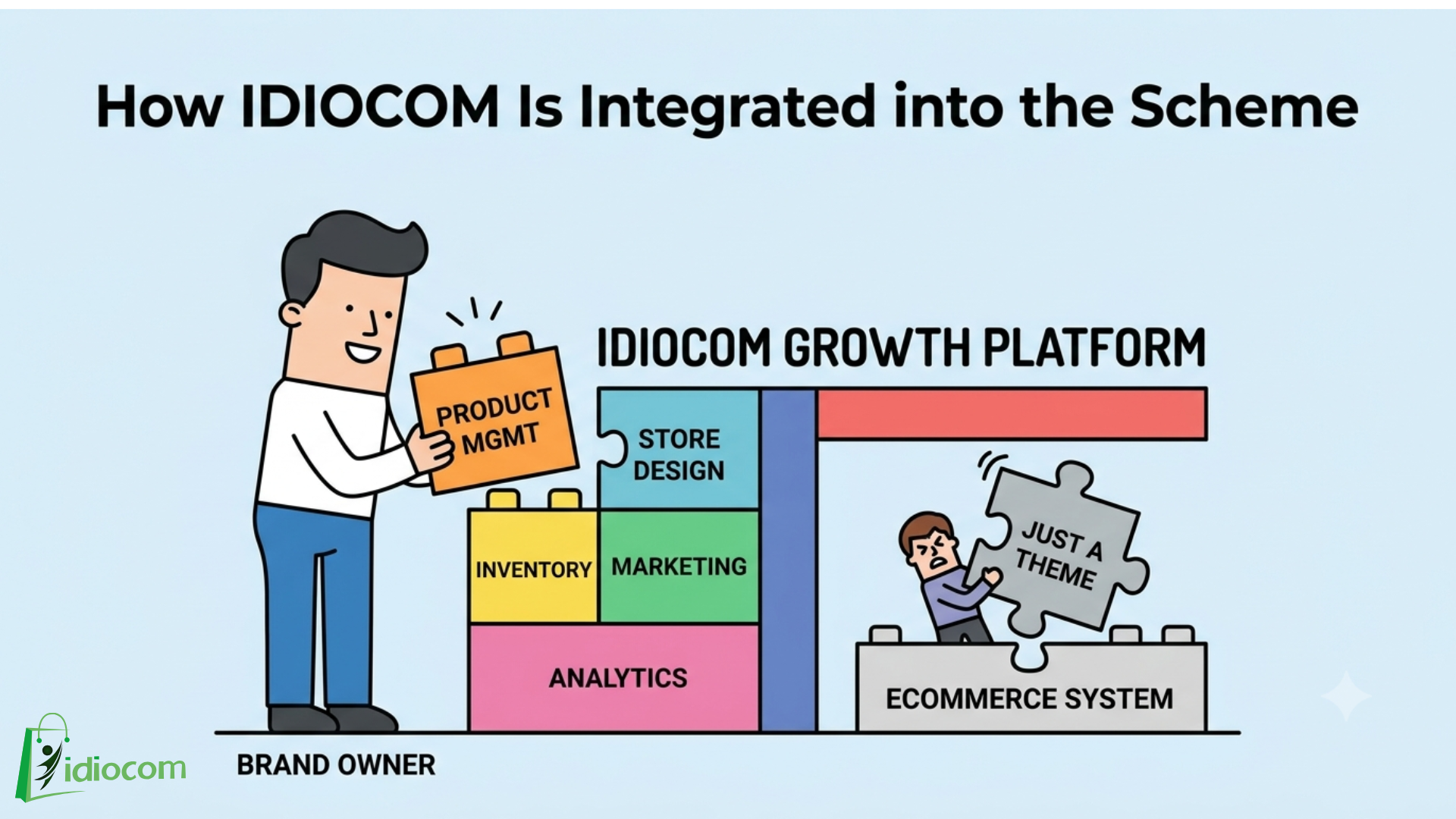
A theme works best when placed in the framework of a bigger ecommerce system. Idiocom presents itself as an ecommerce growth platform that combines storefront design with product management, inventory control, marketing, analytics, and other ecommerce functions. This type of approach allows the businesses to go beyond the question: “Which theme is the most attractive?” and rather focus on the question: “Which ecommerce infrastructure is to be used to set up the store and the business?”
When starting a new brand, it could mean starting from the readymade storefront and adjusting it to fit its needs. When developing a business, it means having ecommerce infrastructure that can cater to new products, clients, and marketing activities.
The theme you use for your Ecommerce store will play an important role in your overall user experience. The ecommerce theme you select also impacts how potential customers judge your store, view products and acquire information. Choosing a theme based on just the design of the homepage is not enough.
It’s important to look for a theme that follows the principles of brand uniformity, user-friendly navigation, usable mobile checkout, product oriented layout and adaptability.
In addition to this, you need to think about the technology used for the theme. You may start with just a few products, but your ecommerce solution needs to be able to meet your business needs as it grows.
What is an e-commerce theme?
An e-commerce theme refers to the design framework that determines the appearance and layout of the online store.
How do e-commerce themes impact sales?
A theme impacts many factors such as how a product is discovered, usability, e-commerce usability, and checkout. A good and orderly design may help limit the friction that prevents customers from shopping easily, while a poorly created and disorganized interface makes things only more difficult.
Should I use free or paid e-commerce themes?
It all depends on your specific requirements. Free themes may work well for simple stores while the use of paid or custom-made themes may allow gaining more flexibility in terms of design. Therefore, it is better to focus on the actual business needs rather than the price.
Do e-commerce themes need to be mobile responsive?
Yes. It is essential to offer an equivalent user experience for all devices including mobile phones, tablets, and computers.