How to Scale an Ecommerce Business Without Wasting Ad Budget
- June 2, 2026
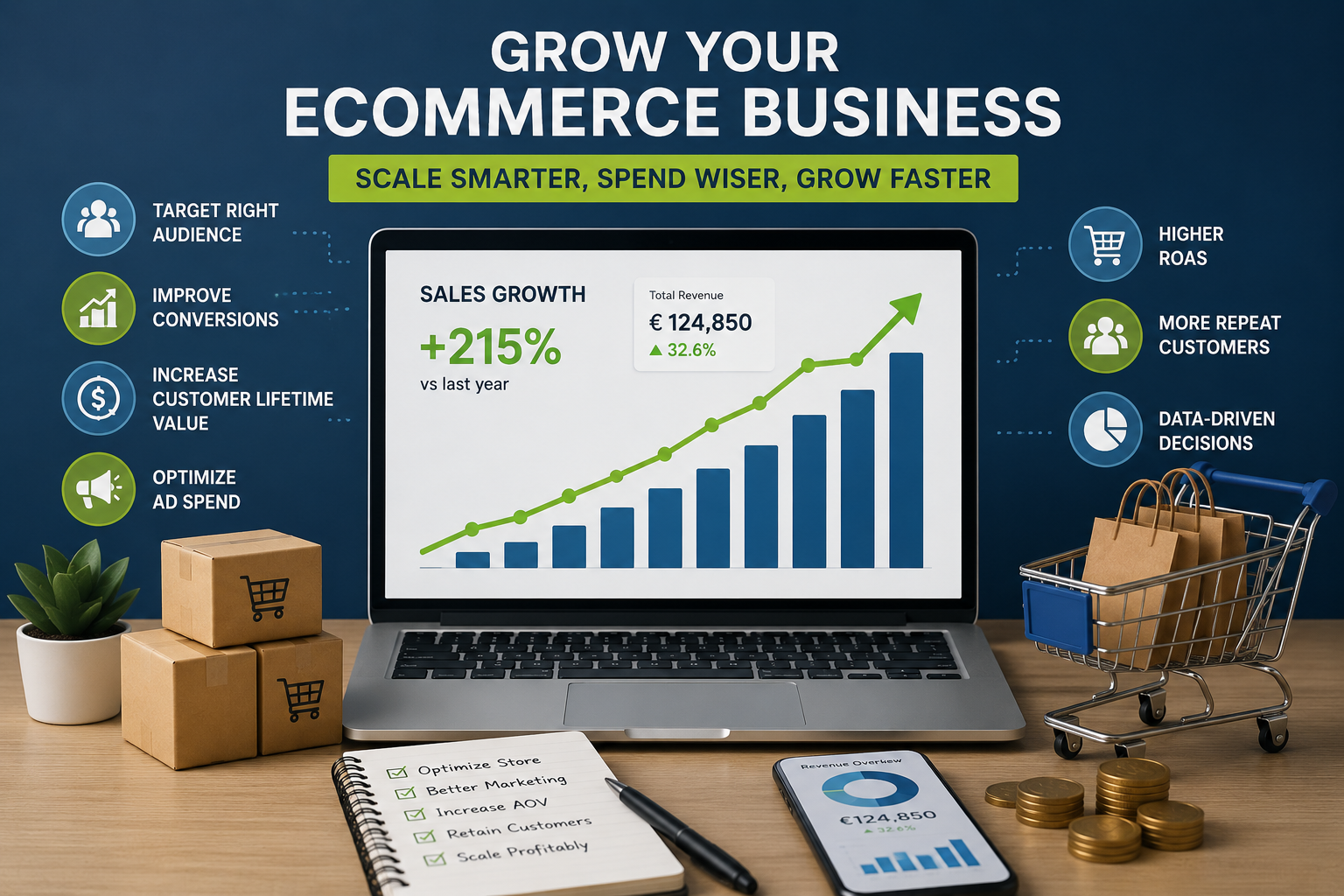
Scaling an ecommerce business is one of the biggest goals for online store owners. However, many businesses make the mistake of increasing advertising spend without a clear growth strategy. The result is often higher costs, lower profitability, and disappointing returns.
If you are wondering how to scale ecommerce business operations efficiently, the answer is not simply spending more on ads. Sustainable growth comes from optimizing customer acquisition, improving conversion rates, increasing customer lifetime value, and using data-driven marketing decisions.
In this guide, we will explore practical strategies that help ecommerce brands scale revenue while maintaining a healthy return on investment.
Why Many Ecommerce Businesses Waste Ad Budget
Before discussing growth strategies, it is important to understand why advertising budgets often get wasted.
Common reasons include:
- Targeting the wrong audience
- Running campaigns without performance tracking
- Ignoring website conversion optimization
- Focusing only on new customer acquisition
- Poor product page experience
- Lack of customer retention strategies
Businesses that address these issues first are better positioned to scale successfully.
Build a Strong Foundation Before Scaling
Optimize Your Ecommerce Store
Before increasing traffic, ensure your website is ready to convert visitors into customers.
Key areas to improve include:
- Fast page loading speed
- Mobile-friendly design
- Clear navigation
- High-quality product images
- Detailed product descriptions
- Simplified checkout process
A higher conversion rate means you can generate more revenue without increasing advertising costs.
Track the Right Metrics
Understanding business performance is essential when learning how to scale ecommerce business growth sustainably.
Monitor:
- Customer Acquisition Cost (CAC)
- Return on Ad Spend (ROAS)
- Conversion Rate
- Average Order Value (AOV)
- Customer Lifetime Value (CLV)
- Cart Abandonment Rate
These metrics help identify where growth opportunities exist.
Focus on Customer Lifetime Value
Create Effective Email Marketing Campaigns
Email marketing remains one of the highest ROI channels available to ecommerce brands.
Use automated campaigns such as:
- Welcome emails
- Cart abandonment reminders
- Post-purchase follow-ups
- Product recommendations
- Re-engagement campaigns
Retaining existing customers is usually more cost-effective than acquiring new ones.
Introduce Loyalty Programs
Loyalty programs encourage repeat purchases and strengthen customer relationships.
Benefits include:
- Higher retention rates
- Increased average order value
- Improved customer satisfaction
- More referrals
Improve Advertising Efficiency
Scale Winning Campaigns Gradually
Many businesses increase budgets too quickly.
Instead:
- Identify top-performing campaigns.
- Increase budgets incrementally.
- Monitor performance closely.
- Adjust based on results.
This approach reduces risk while supporting sustainable growth.
Use Retargeting Campaigns
Retargeting focuses on users who have already interacted with your brand.
Target:
- Website visitors
- Cart abandoners
- Previous customers
- Product viewers
These audiences typically convert at a higher rate than cold traffic.
Leverage Lookalike Audiences
Lookalike audiences allow advertisers to reach people who share characteristics with existing customers.
This improves targeting accuracy and helps reduce wasted ad spend.
Increase Average Order Value
Upselling and Cross-Selling
Effective techniques include:
- Product bundles
- Frequently bought together recommendations
- Premium product upgrades
- Complementary product suggestions
Even small improvements in average order value can significantly impact profitability.
Offer Free Shipping Thresholds
Many ecommerce brands encourage larger purchases by offering free shipping above a specific spending threshold.
For example:
- Free shipping on orders above €75
- Discounted shipping for larger carts
This motivates customers to add more items before checkout.
Invest in Organic Growth Channels
Search Engine Optimization (SEO)
SEO creates long-term visibility without relying solely on paid advertising.
Focus on:
- Keyword optimization
- Technical SEO
- Content marketing
- Internal linking
- Product page optimization
Businesses implementing strong SEO strategies often reduce dependence on paid ads over time.
Content Marketing
Publishing valuable content helps establish authority and attract qualified traffic.
Examples include:
- Buying guides
- Product comparison articles
- Industry trend reports
- Educational blog posts
Authority-driven content supports brand trust and organic growth.
Use Data for Smarter Decisions
Conduct Regular A/B Testing
Testing helps identify what works best for your audience.
Test:
- Headlines
- Product images
- Call-to-action buttons
- Landing pages
- Checkout processes
Small improvements can produce significant revenue gains at scale.
Analyze Customer Behavior
Use analytics tools to understand:
- Popular products
- Customer journeys
- Conversion bottlenecks
- Traffic sources
Data-driven decisions help allocate marketing budgets more effectively.
Future Trends in Ecommerce Scaling
AI-Powered Personalization
Artificial intelligence is helping ecommerce brands deliver personalized experiences that increase engagement and conversions.
First-Party Data Strategies
As privacy regulations evolve, collecting and utilizing first-party customer data will become increasingly important.
Omnichannel Commerce
Successful ecommerce brands are integrating online stores, social commerce, marketplaces, mobile apps, and email marketing to create a seamless customer experience.
Conclusion
Learning how to scale ecommerce business growth successfully requires more than increasing advertising spend. The most successful ecommerce brands focus on conversion optimization, customer retention, data-driven decision making, SEO, and long-term customer value.
By improving operational efficiency and investing in sustainable growth strategies, businesses can increase revenue while maintaining profitability.
Ready to Scale Smarter?
Book a Free Consultation today and discover how your ecommerce business can achieve sustainable growth without wasting valuable ad budget