AI in Ecommerce: 10 Ways to Save Time and Boost Efficiency
October 7, 2026
There have been substantial changes in how businesses market themselves, as consumers have taken to searching for, comparing and purchasing their products on the Internet. While a brick-and-mortar store may continue to provide many opportunities for face-to-face experience, ecommerce provides new opportunities for reaching customers, operating a business, gathering information on customer needs and going out into markets beyond the local community.
For an e-commerce platform India business to go online is not only about setting up its virtual store. It opens new opportunities in relation to the marketing of products, order fulfillment, using customer data and scaling its activities.
For small businesses, retailers, manufacturers and direct-to-customer brands, there is technology that will allow this process to become more feasible. Modern e-commerce platforms integrate storefront set-up with the management of the products, inventory, orders, marketing and other business processes.
A traditional store is naturally tied to its location. Customers generally need to travel to the store to browse and purchase products. An online store removes much of that geographical limitation. A business in one city can potentially sell to customers across India, provided it has suitable logistics, payment, and fulfillment capabilities.
For an e-commerce platform for Indian businesses, this wider reach can create opportunities to serve customers in metros as well as Tier-2 and Tier-3 markets.
This does not mean every online business automatically reaches a national or international audience. Visibility still depends on factors such as SEO, marketing, product demand, pricing, customer experience, and fulfillment. However, e-commerce provides the infrastructure to pursue markets that a single physical location cannot easily serve.
A physical shop operates based on the time frame in which it is operational. An e-commerce shop could continue being accessible to the consumers around the clock.The consumer is able to shop during lunch hours, compare products in the evening, and place orders late into the night without having to wait for the shop to open.
There are a number of advantages for both the consumer and the business. Order capturing could occur at any time, whether or not the business team is actually in the shop.
Nevertheless, availability around the clock does not mean availability of customer service all the time. The business will require certain processes to ensure this.
In traditional retail, there may be costs associated with rent, utilities, shop maintenance, display, and the operation itself. E-commerce doesn’t get rid of all business costs, but rather shifts them around.
Businesses will still have to spend money on technology, inventory, packing, shipping, payments, marketing, customer service, and other operations that go into running a business. The key difference lies in the fact that businesses can develop sales infrastructure without relying fully on physical shop itself.
Online store builders will help businesses even further in developing online stores, especially those who don’t wish to develop everything from scratch.
E-commerce has one great strength – the vast amount of data that can be collected during the customer journey. The data could include:
Popular products
Pages with engagement
At which point in the buying process people abandon
Frequently bought products
Campaigns driving traffic
Recurring purchases
This data can help organizations make more data-driven decisions when it comes to product assortment, pricing, merchandising, marketing, and customer experience. While traditional retail also collects useful customer data, especially from sales records and customer interaction, there is a lot more that can be collected through e-commerce.
The management of stock becomes increasingly tough in a growing company where the stock management is done manually. The modern e-commerce system has the capability to integrate product catalog, stock, and order management so that there is transparency about the availability of products and products which are sold.
This is even more useful for those companies which sell their products through multiple channels. Such integration helps prevent problems like overselling, old stock data, and manual order entry mistakes. For growing companies, this feature is critical for assessing e-commerce solutions India.
Payment flexibility is another critical aspect of e-commerce.Depending on the target market and integration possibilities, e-commerce websites may provide different modes of payment like cards, digital wallets, UPI, net banking, etc.
It is easy for an Indian business to offer payment options that consumers can relate to. Good e-commerce infrastructure will ensure that price details, cost of shipping, refund policy, etc. are shared with consumers before payment.
The most common blunder that companies can do when starting out is to assume that ecommerce is nothing more than building a product catalog on their website.For a thriving online business, there are multiple systems that need to work together:
Store + Products + Inventory + Orders + Payments + Marketing + Analytics + Customer Experience
And this is where an ecommerce software company can help by doing more than just building the company’s website. A company can either hire an ecommerce agency for specific ecommerce strategy and implementation or opt for a fully integrated ecommerce platform.
Hence, when choosing the right ecommerce website builder, the company needs to look beyond templates and designs.
Scaling a conventional brick-and-mortar business usually involves thinking about additional store fronts, employees, equipment, and expenses.E-commerce is another option for scaling.
A business can scale up by adding more products, reaching out to new audiences, employing new marketing tools, and expanding delivery reach without necessarily opening another store.Scaling does not come easy, of course, as higher online sales will necessitate more inventory, better warehouse management, customer service, technology and logistics.
That’s why selecting an ecommerce scaling solution that can handle increased complexity is important.
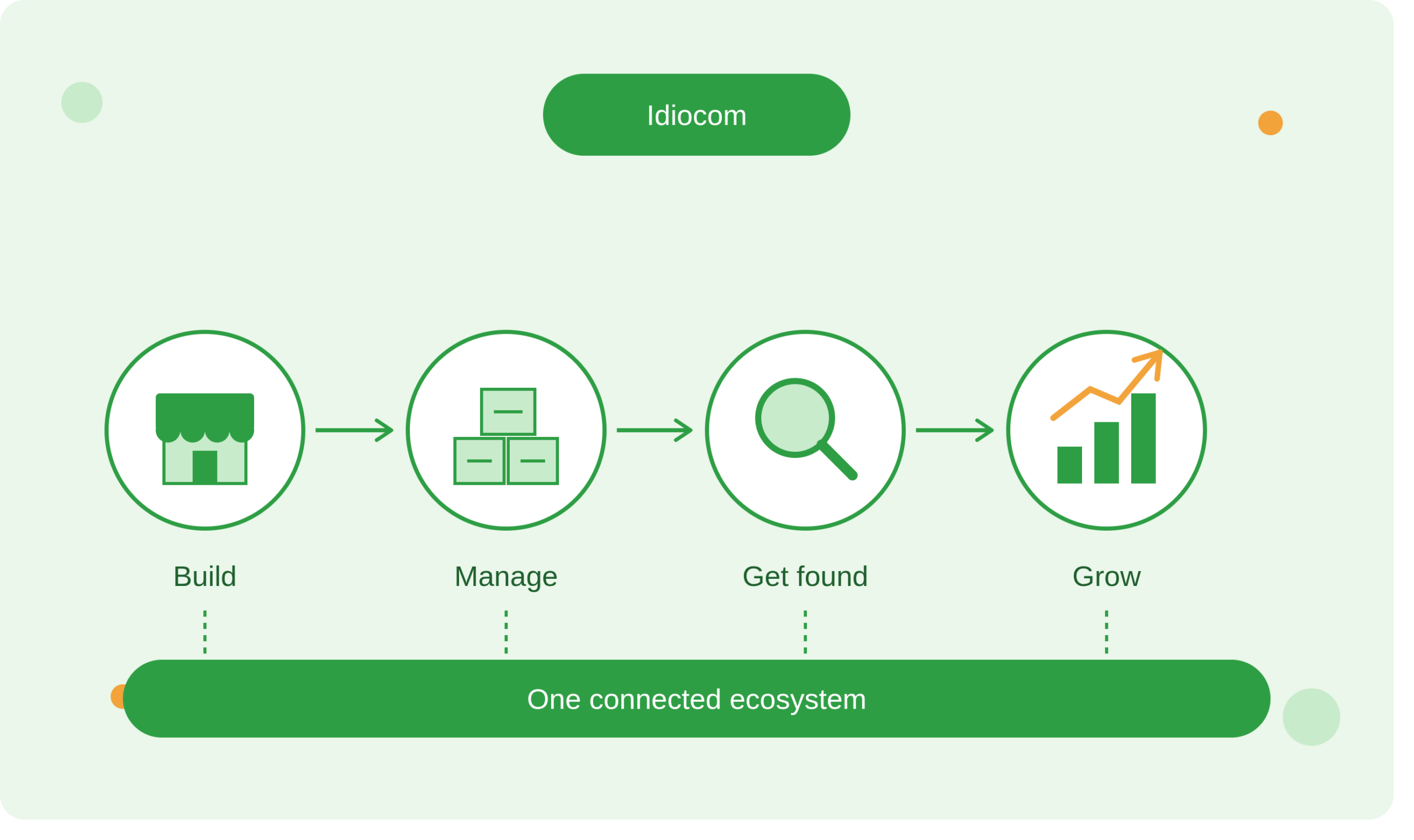
Idiocom offers an ecommerce growth platform which combines ecommerce website development, product management, inventory, orders management, marketing, analytics and ecommerce features enabled by artificial intelligence into one ecosystem.
For companies that move from traditional commerce to online commerce, such an ecosystem can serve as a base for developing and managing the company’s digital commerce infrastructure without treating each business process as a separate system.
The goal here is not just about creating a website; it is about providing companies with an ecosystem to Build. Manage. Get Found. Grow.Companies which need help with their strategy and technical solutions for launching the online store can consult ecommerce experts India.
E-commerce has redefined the way businesses operate and how they relate to their customers. Rather than depending mainly on physical storefronts, businesses have an option of using digital storefronts that will enable them to be marketable, gather important customer data, and offer them personalized experiences as well as creating room for growth.
For the Indian retailer, manufacturer, entrepreneur, or D2C brand, the challenge goes beyond just selling products online. It is about creating a connected commerce ecosystem that will allow them to adjust to the changing needs of their customers and businesses.
The ideal ecommerce platform that Indian businesses can count on involves more than the storefront.
Is ecommerce better than traditional commerce?
It depends. Depending on the type of business, clients, products offered, location, and requirements, both ecommerce and physical retail can be beneficial, as they have different pros that you can use in your favor.
Is ecommerce good for small businesses?
Certainly. Small businesses can benefit from ecommerce by reaching clients beyond the local area and creating another sales channel. However, it is necessary to choose the appropriate technologies and capabilities required by the business.
What should I consider when selecting an ecommerce solution?
Go further than the design of the website itself. Pay attention to such things as product management, inventory, order processing, payment, mobile capabilities, marketing, analytics, integration, scalability, and support.
Can ecommerce aid a D2C brand in growth?
Sure, ecommerce will be useful for D2C brands because this business can use ecommerce for selling products, collecting information about customers, organizing marketing campaigns, and building relationships with clients.