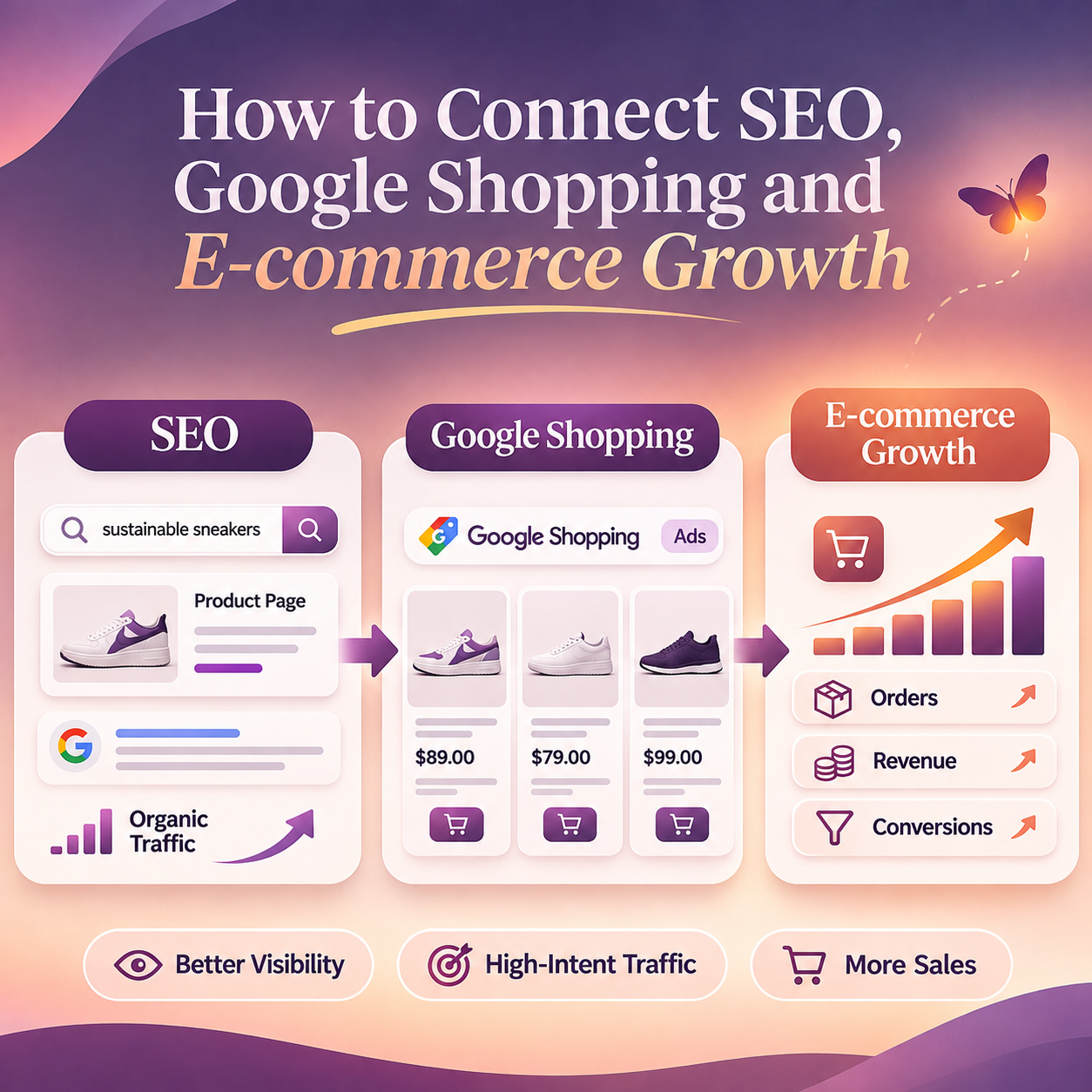
How to Connect SEO, Google Shopping and E-commerce Growth
November 12, 2026
Search Engine Optimization has the ability to bring organic traffic over the long period of time. Google Shopping places products in front of users with high purchasing intention. Whereas paid campaigns generate immediate demand, content or product optimization can impact conversions in the long run. However, true potential emerges when these channels are integrated.
Effective e-commerce solutions are the solutions that allow users combining product data, e-commerce SEO, Google Shopping, analytics, and e-commerce marketing as part of one integrated process rather than treating them separately. Having integrated product catalog for both organic search as well as for paid shopping campaign, customers can rely on the fact that all improvements will be helpful for all channels of development.
Although SEO and Google Shopping may seem to be completely separate tactics, SEO is concerned with increasing organic exposure while Google Shopping deals with paid or product-oriented search results. Nonetheless, both are reliant on product data. Search engines and retail platforms need to know what you are selling, who the product is intended for, how much it costs, whether it is in stock, and why it matters for the user’s query.
Therefore, the product title, description, category, image, price, availability, and any structured information are important in both cases. The better the product information is provided, the better the e-commerce marketing will turn out.
The link between SEO and shopping campaigns starts off with the product catalogue. Low-quality product data results in issues everywhere.If product titles are unclear, descriptions are replicated, categories are not consistent or important attributes are missing, then advertising systems and search engines will have less information to use.
A strong e-commerce catalogue must clearly define the key features of every product. For instance rather than using some product title such as:
One should have a more informative title explaining what the product is and what material, style, type or important characteristics it has. The point is not keyword stuffing.The point is clarity. Good e-commerce software makes it simpler to manage product information across the website, product feeds, marketing systems as well as marketplaces.
E-commerce SEO must facilitate finding products to customers at several points of the purchasing process. Some queries are very likely to result in a sale: “order oak dining table online”. Some queries imply searching for the needed information: “what is the optimal dining table size for 6 people?” Effective SEO must meet both challenges.
There should be different titles, descriptions, headings, images and specifications on product pages. Don’t repeat same descriptions of the manufacturer hundreds of times. Uniqueness matters, as search engines get better information about the product when using unique content.
Category pages are great for organic traffic.Rather than use them merely as product listings, optimize them based on consumer intent. For instance, a category page called “Luxury Outdoor Furniture” could bring together the right products and relevant content, site filters, internal links, and pertinent FAQs.
Instructional materials, comparisons, and informative blogs help form connections with customers even before they make a purchase. These types of pages should lead visitors to targeted products and categories.This chain looks like this:
Search → Content → Product Finding → Purchase
This indicates the beginning of revenue generation from SEO efforts in e-commerce.
Google Shopping enables products to be seen in search experiences, where people are comparing products. This is very effective for e-commerce businesses since customers get to see product pictures, prices, names, and more details before clicking. The only thing that matters in this case is the quality of the product feed.
An e-commerce business must have correct information about product title, description, image, price, availability, brand, and product category.If the store information does not match the feed information, it can lead to poor performance of the campaign and negative customer experience. For example, the customer can see one price in shopping and later get to a product page where the price is different. It is a matter of consistency and trust.
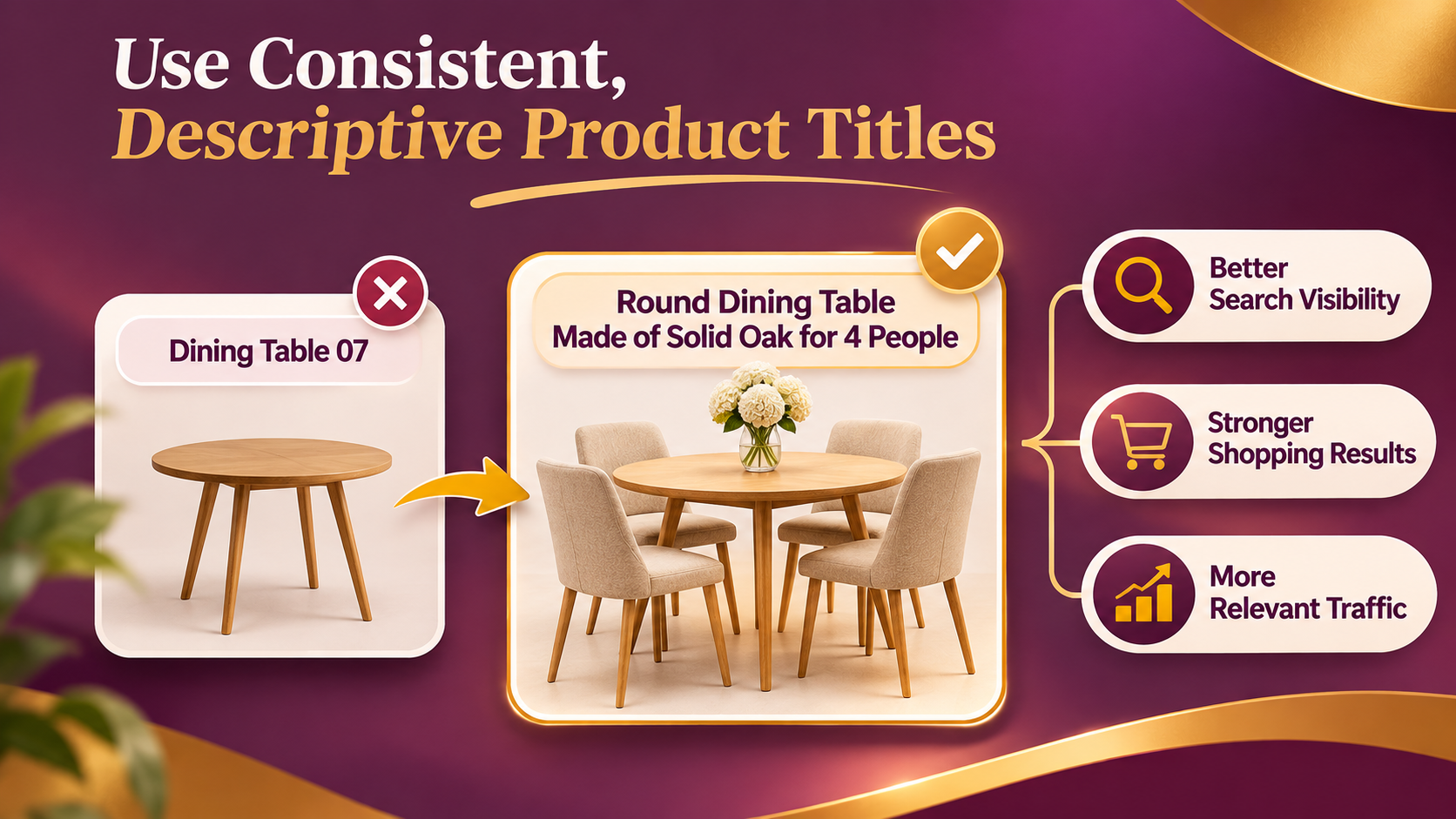
People usually make the mistake of optimizing their website content and shopping feeds separately. Rather, it is wise to leverage customer search behaviour for optimizing both. Such data could be useful if it shows that customers tend to search with the material, dimension, color, design, etc. For instance:
Bad: Dining Table 07
Good: Round Dining Table Made of Solid Oak for 4 People
The second title gives customers and search engines more information regarding the products. This doesn’t mean that every channel should contain the same wording.It indicates the need to keep the general strategy concerning the products the same.
SEO is a process that can take time until you see its results. Paid campaigns are a faster way to gather useful information. The use of Google Shopping and pay-per-click data gives insights into your business like which products have been clicked, which searches lead to purchases, which products raise interest but do not convert, and which categories bring in the best ROI.
This evidence can be used for improving e-commerce SEO. When you have a category that makes lots of money through PPC advertising, you could consider creating more content, adding links, writing guides, and increasing SEO investments within this category.
The correlation also functions in the opposite manner. Using organic search data can show marketers the preference of buyers. By examining search queries, the demand for some types of products, features, colors, sizes or application can be revealed. This serves as the basis for changing:
Google Shopping, landing pages, product sets, marketing and promotional activities, email marketing and social media content. Effective e-commerce marketing is all about the influence of search behavior of the audience.
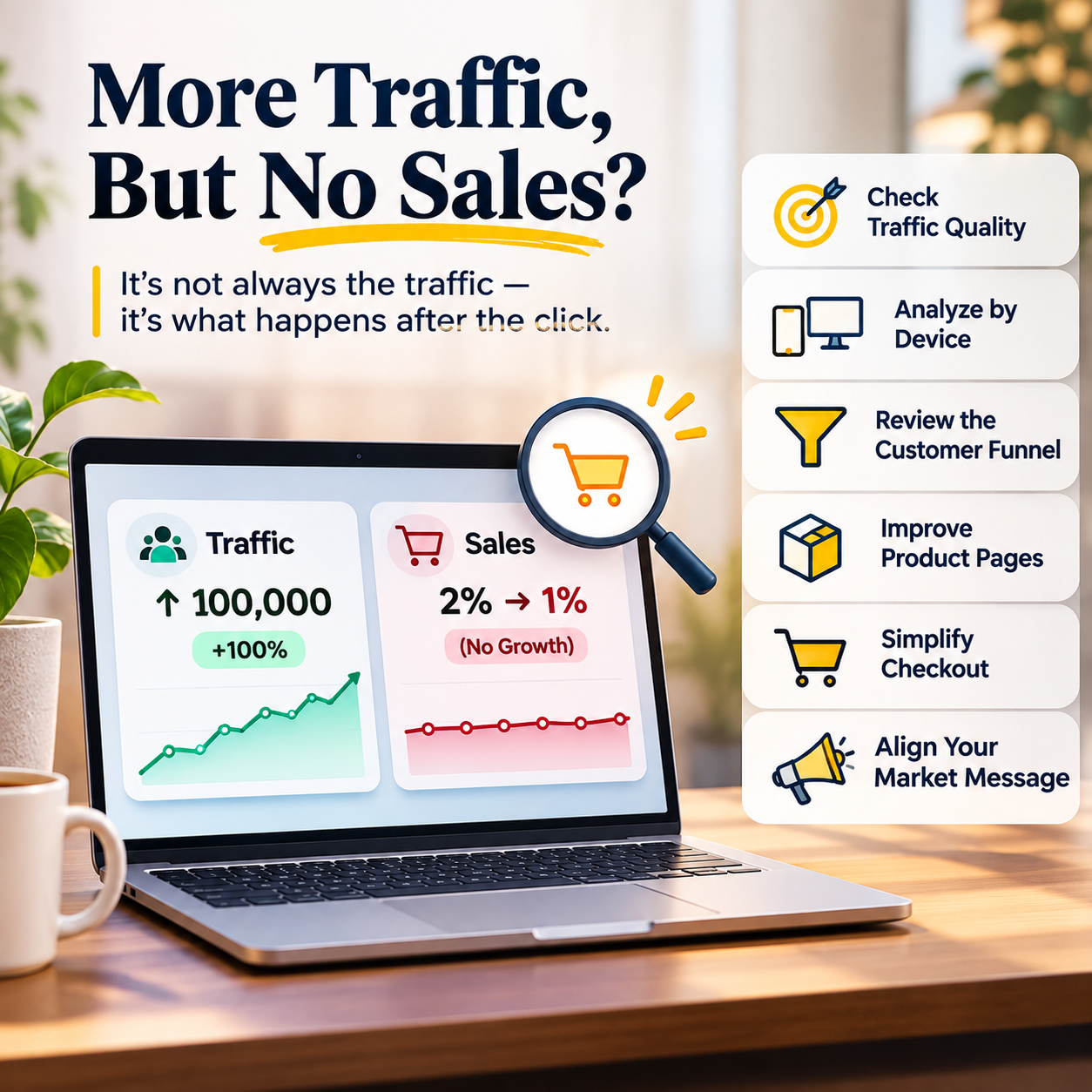
Just because you have traffic it does not mean you will automatically grow your e-commerce. Your visitors have yet to convert. If a product page gets organic or Google Shopping traffic it must answer customers’ questions. Depending on the product this includes price, specifications, measurements, materials, product availability, shipping, returns, product reviews, images, videos, and payment methods.
Having traffic from a good marketing effort will be useless if there is no confidence created by the product page. That is why your e-commerce solution must provide support both for the generation of traffic and creating a great customer experience.Customers are found due to SEO. Commercial interest is gained by Google Shopping. Revenue is obtained through optimization of conversions.
Search Engine Optimization, Google Shopping, and online sales campaigns should not be assessed in solitude. A consumer might initially become aware of your business through a non-paid article, come back with Google Shopping, and place an order via direct news or email. Relying exclusively on the last click will only show a part of the customer’s true journey.
Companies need to track indicators like organic traffic, product impressions, shopping clicks, conversion ratios, income by item sold, average order values, customer acquisition costs, repeat orders, and customer lifetime values.The goal is to be aware of the input each channel provides to the complete purchasing process.
It’s unnecessary to spend the same marketing budget on all products.For example, some items get massive traffic but don’t do much profit-wise. On the other hand, there may be an item that has lower traffic volumes but higher conversion rates. Use your knowledge of SEO and shopping and sales analysis to identify the specific items/products or product categories that yield more value for your business. After that, you will understand where and how your marketing budget should be allocated.
For example, if a particular product category has high conversion and low traffic, it may require some improvements in SEO, more funds allocated for google shopping, better visual content, enhanced internal linking, and more targeted landing pages.
One of the biggest hurdles in e-commerce is fragmentation. The SEO team modifies the product name. The advertising team creates a separate feed. The merchandise team modifies the category. The IT team modifies the website.
When there is no coordination among these teams, inconsistencies arise almost immediately. Successful growth in e-commerce depends on shared information about the products and common commercial objectives. SEO, paid advertising, content, merchandising and IT should work based on the same approach to customers.
Consider the framework as three connected layers.
Leverage e-Commerce SEO and Google Shopping to help shout your products to customers.
Utilize killer product pages, smooth navigation, credibility cues, and good checkout practices to convert visitors.
Utilize email marketing, remarketing, product recommendations, loyalty programs, and customer experience to drive repeat sales. Growth becomes more viable only when all three layers work together.
It is necessary to point out that SEO and Google Shopping cannot work as separate e-commerce techniques. Both methods are based on proper product information, right customer intent, similar landing pages, and effective measurement system. A connected international e-commerce strategy might be unnecessary for all shops, but a connected marketing strategy is.
Good e-commerce solutions should facilitate work with product data, manage websites, keep feeds updated and help with different acquisition channels from the same e-commerce base.
How can e-commerce SEO aid Google Shopping?
E-commerce SEO focuses on product content, the design of the pages, the content factors, and the technology used by shoppers. Most of these aspects enable businesses to enhance their product data and landing pages for Google Shopping.
Is Google Shopping helpful for e-commerce development?
Absolutely. Google Shopping helps e-commerce companies engage with individuals who look for products. The level of its effectiveness depends on the quality of product feed, the pricing policies, the targeting, the quality of landing pages, and the conversion rate.
Which e-commerce features are needed for connecting SEO with shopping?
Useful e-commerce features should be aimed at managing the product catalog, controlling SEO features, offering well-structured product information, setting up shopping feeds, and helping to analyze the whole process.
Does the title of a product have to be the same for SEO and Google Shopping?
They have to be identical in terms of the strategy that is used for including product information. However, these titles don’t have to be strictly the same.