Expanding E-commerce Globally: What Changes in New Markets?
November 4, 2026
Just because a particular e-commerce model may be successful in one country does not mean that it will necessarily apply in another.Customers might be willing to buy the same item as in another country, but the way they find it, assess it, pay for it, obtain it and whether they have a certain level of trust in the brand will be different.
As a result, it is not enough to translate a website and distribute a product worldwide to achieve success at the international level. A proper international e-commerce strategy takes into account demand, pricing, localization, payments, logistics, customer needs, regulatory requirements, and marketing before entering the foreign market.
Thus, if a business decides to enter the foreign e-commerce market, it should aim not just at selling internationally but at choosing the right markets.
Typical ecommerce runs smoothly in a comfortable environment. Less disruption is caused by unknowns, including knowledge of customers’ preferences, pricing in this area, approaches to shipping, competitors, and payment methods.
When speaking of global ecommerce, things become more complicated.Products that do well in one market might not perform favorably in another because of cultural differences, purchasing power, customer expectations, and competition. This leads to the following question:”Can we deliver to this country?”, “What is crucial is how we measure up to existing competition in the region.”
Organizations frequently focus more on bigger markets.While size does play its part, searching for markets where demand for their product exists is much more important. Prior to entering a market, gather information on the search engine inquiries regarding the product category and the success of similar businesses as well as pricing competitive capabilities considering the international operational costs.
When outlining your international e-commerce plan, do a comprehensive analysis of the opportunity in terms of customer demand, competitors, average order size, customer acquisition costs, logistics and profit margin. Sometimes it may be advantageous to enter smaller markets with more favorable product-market fit than pursue larger but highly competitive markets.
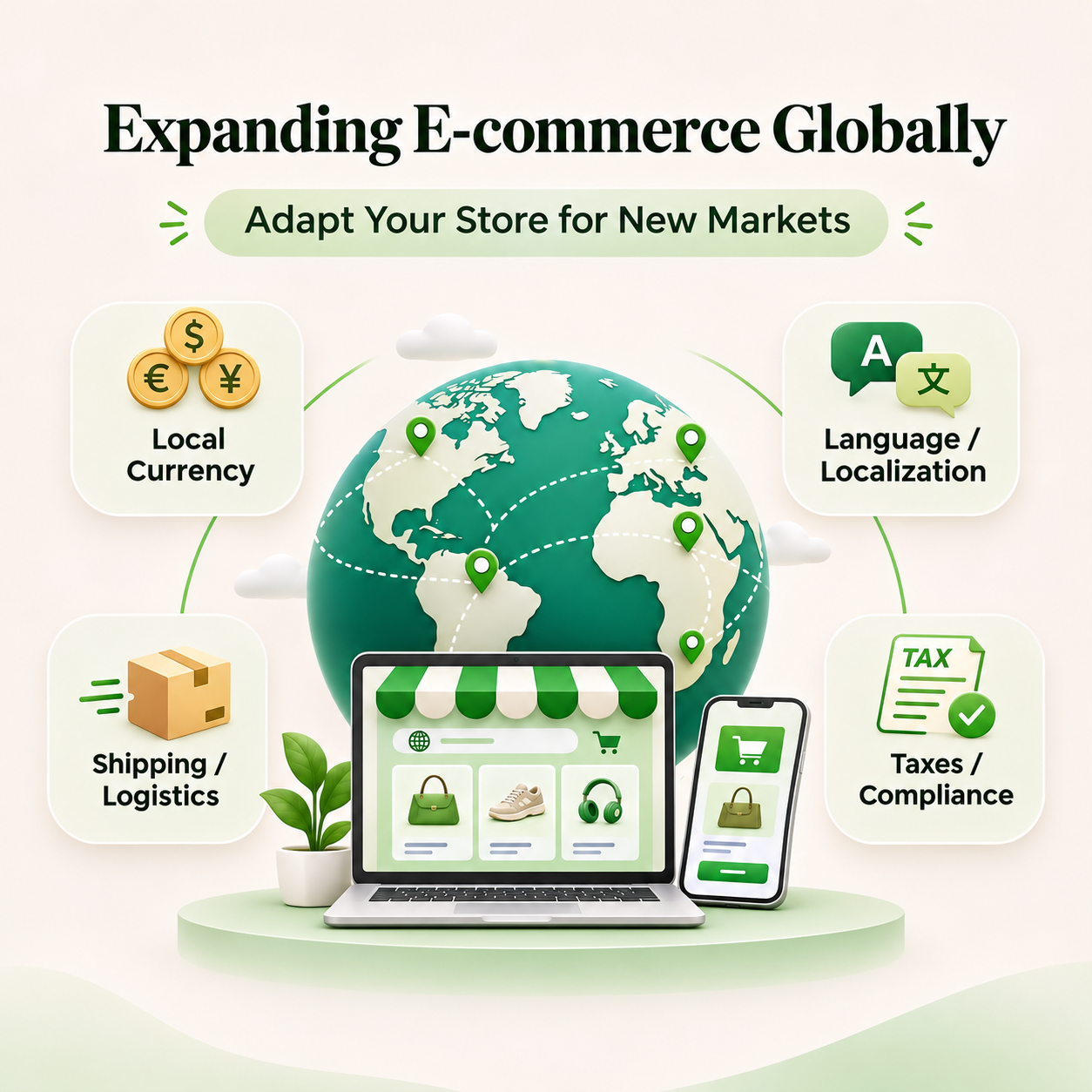
International pricing is often complex and cannot be achieved simply by exchanging currency. International pricing for a ₹5,000 product cannot simply be done based on the current exchange rate. The costs will also include factors like shipping, duties, taxes, payment processing, currency conversion, warehousing, returns, and purchasing power.
The company must accurately determine the total cost of serving each market when selling internationally. Finally, the total price should ideally be communicated to the customers to avoid any surprises.
Translation is great, Nevertheless, true localization encompasses much more. It’s about creating a store that resonates with customers in the new market. In most cases, that would mean adapting the currency, units, dates, terminology, descriptions of the products, symbols used for promotions, and the customers’ service methods.
Even a simple call to action will work differently in different markets. The best global e-commerce experience should never make international customers feel like they are using the local version of the original site. Localization should help the store meet the needs of the customers while keeping the brand’s essence and identity intact.
It is a known fact that the payment system differs from place to place.What works well in your home market may not apply elsewhere.If you are planning on growing your business online, you should study the payment options available to your potential customers in every target country.
They may favor cards, e-wallets, bank transfers, solutions that allow buying something now and paying later, or other practices on the local market. Currency also matters.Showing the price in your customer’s currency makes it more reassuring and easy for them to buy.
Shipping problems represent perhaps the greatest difficulty in international sales. There is a need for consumers to know all aspects of delivery and not just the price.They wish to know delivery particulars, such as the time taken to ship and whether there is a tracking system, whether customs fees are factored in, and what happens if delivery takes too long.
Businesses and retailers need to decide whether to use their warehouse or a regional fulfillment center for shipping. Local shipping can be an option where shipping volumes are low.
However, when the volume rises, it might be smart to operate a regional fulfillment center to reduce shipping time and improve customer satisfaction. The right choice depends upon multiple aspects and parameters, including order size and shipping costs.
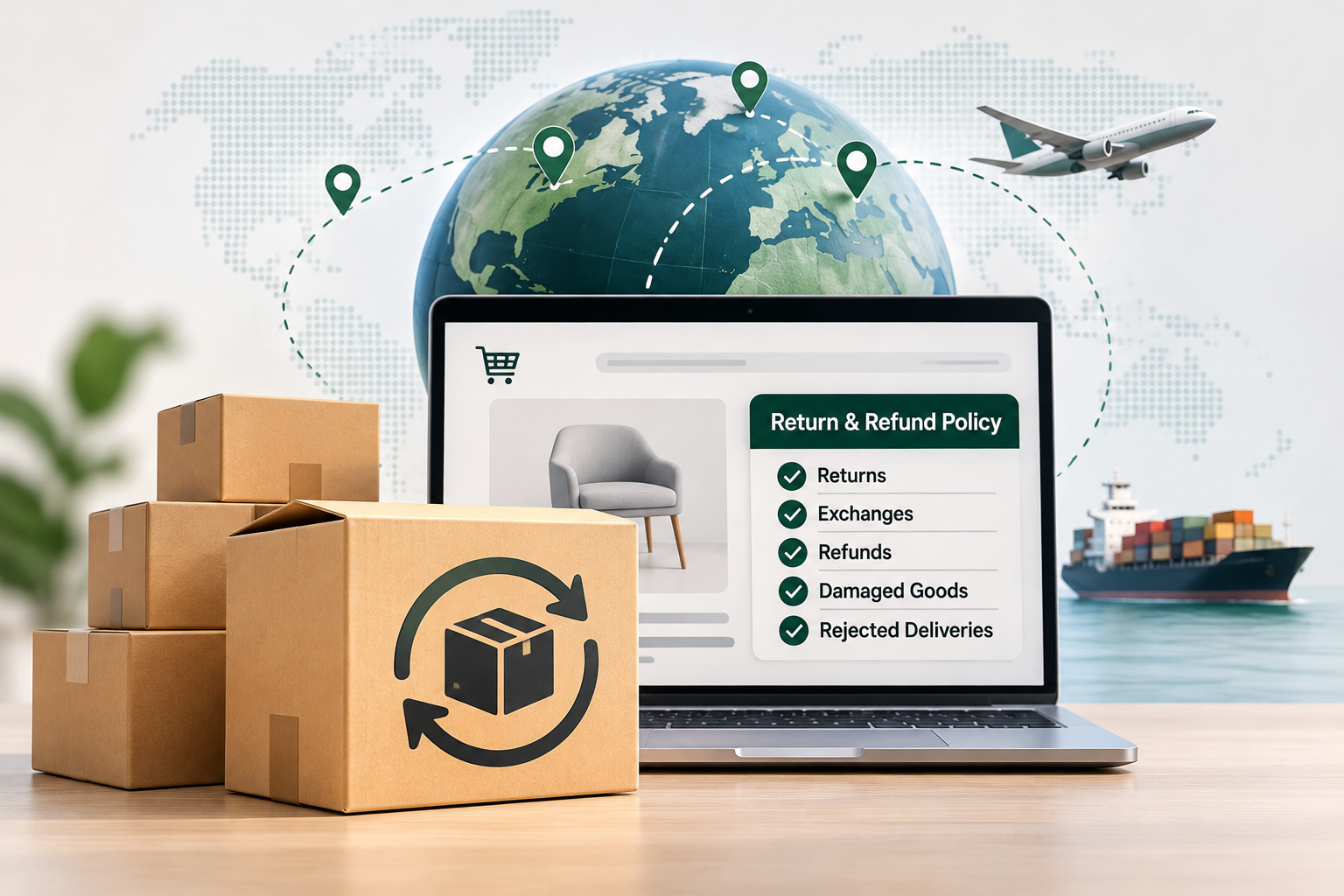
Returns already generate expenses on a domestic level, but international returns get much more complicated. Reverse logistics may create a situation where some products would become impossible to sell internationally, considering the costs.
It is crucial to clarify how returns, exchanges, refunds, damaged goods, and rejected deliveries function before entering a new market. Customers should be able to find this information without difficulty. Having a clear return policy helps customers feel more comfortable buying from an unfamiliar international brand.
Various markets have different expectations regarding the speed of delivery, customer service, payment methods, discounts, warranties, and returns. Therefore, the customer experience should be tracked instead of copied.
Take, for example, delivery preferences. Some markets may have customers that prefer fast delivery, whereas customers in other markets may not mind waiting longer for premium or specialized products. The same can be said about customer support methods.
Some countries may prefer email communications, while others prefer using messaging apps or live chat. An effective international e-commerce strategy takes into consideration these particularities and adjusts the customer journey accordingly.
International SEO is more challenging than just translating the existing pages. The customers using different countries might use different words to search for the same products. Keyword research should therefore be performed separately for different important markets.
The technical setup may also need localized URLs, language targeting, region-specific content, metadata, and international SEO signals.For global e-commerce, the search visibility should be built on how clients are using the search engine in the target market. Just translating the best-performing local content into another language does not support its ranking internationally.
Entering a new country means dealing with its regulatory environment.According to the country and product sold, businesses may have to consider taxes, customs issues, rights of consumers, data safety, product regulations, invoicing, or packaging.These matters need to be understood before making a serious marketing investment. Compliance problems discovered after launching will make online business expansion more expensive.
One of the most important decisions in marketing is how deeply to penetrate each market.
When businesses adopt the cross-border model, they carry on operations from their home market and accept international customers. This strategy allows companies to explore market demands without investing much in local infrastructure.
After the demand is set, a business may choose to establish a more local presence using local warehousing, payment systems, marketing, and customer support. This approach, however, entails higher costs but offers better user experience and efficiency in operations. Not all markets need to be localized fully at the beginning.The growth may be gradual.
Going international does not involve executing a complete launch of the business. There are companies that can collect some information about the market by using limited number of products and advertising funds. Track the real behavior of the users.
This knowledge can help you understand whether it is worth making an investment in the business expansion or not.
Going global creates great opportunities for growth. However, cross-border e-commerce entails more than merely adding shipping options to an existing e-commerce framework. A sound global e-commerce strategy relies on thorough knowledge of demand, pricing, localization, payment methods, and logistics.
Meaningful global e-commerce expansion hinges on tweaking purchase processes for overseas clients while retaining the brand identity that made the business successful in the domestic market.