Build vs Buy: When Should an E-commerce Business Move to a New Platform?
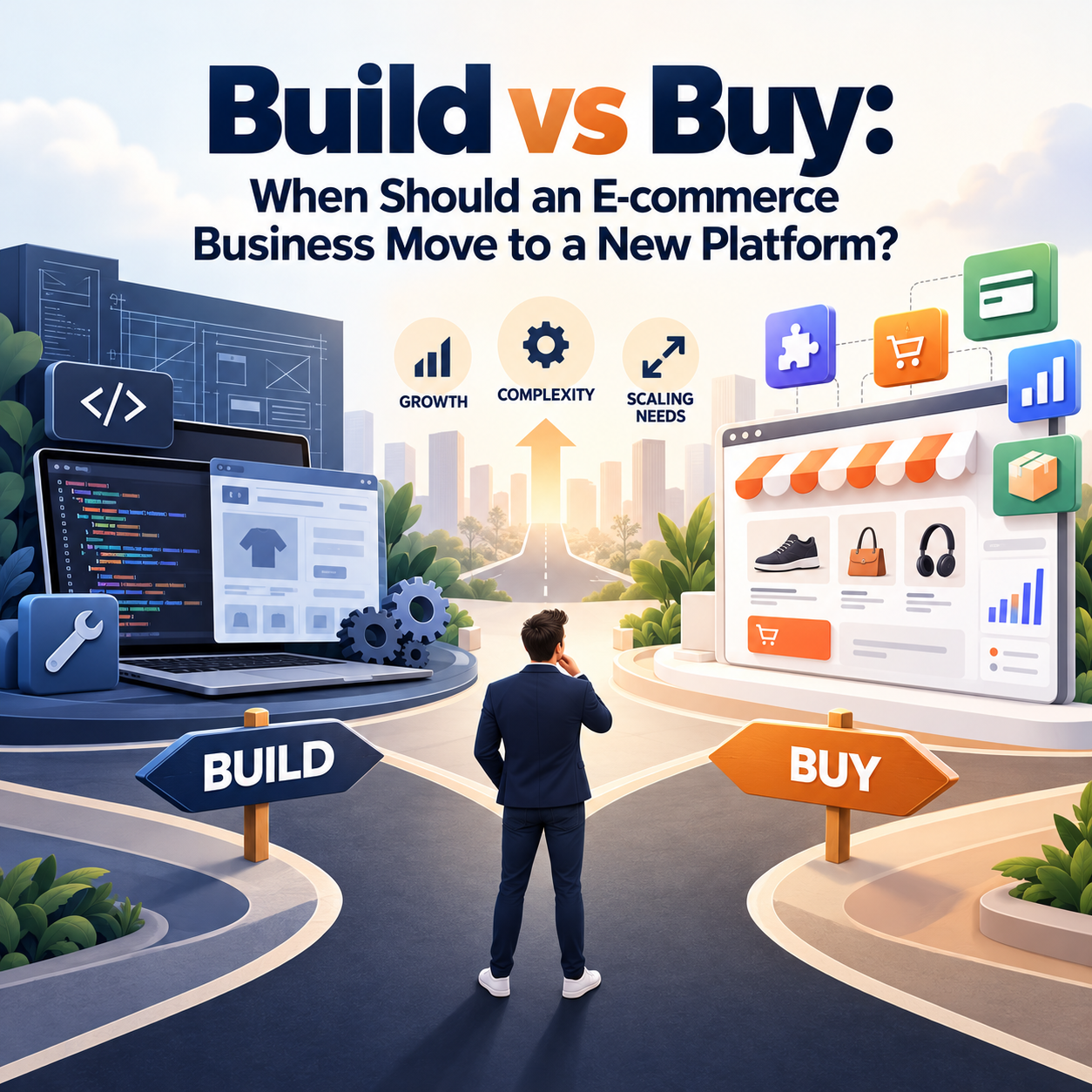
E-commerce platforms are capable of sustaining a business over time, but the conditions change eventually whenever growth comes along in the business. An e-commerce platform that has worked satisfactorily when the business was processing a small number of orders daily will start posing various problems whenever the volume of products on offer increases, the customers’ expectations evolve, more integrations have to be done, new markets appear, and complicated internal processes become established.
It is in this context that the business has to make an important choice: Should it continue to upgrade the existing e-commerce platform, invest in a ready-made e-commerce system, or have a customized solution developed? The question boils down to the challenge of building versus buying a solution.
When making the decision, a business should not be guided by fashion trends, competitors’ preferences, or the number of features that a particular e-commerce platform offers. The decision has to rely on the efficiency of the existing system in supporting business development.
What Does Build vs Buy Mean in E-commerce?
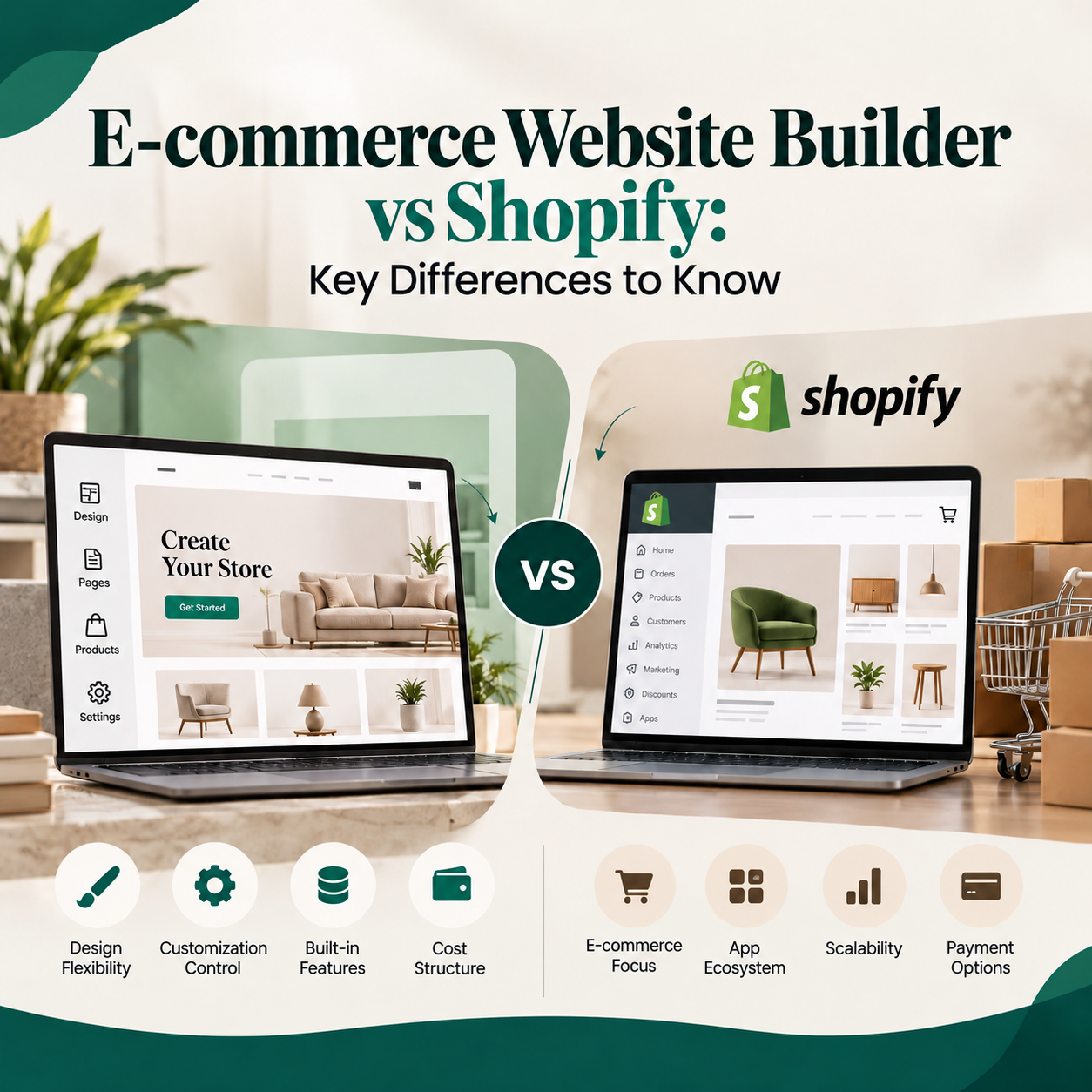
In e-commerce, the term “buy” is used in regards to already acquiring a certain structure or platform which has already incorporated a lot of the essential aspects of running an online shop.Generally, the elements of e-commerce “buy” may include hosting, checking out, product handling, payment processing, analytics, and integración.
On the other hand, “build” means creating a unique online shop that might be done from the very beginning or with some adjustments applied to an already existing shop.This method of “build” gives more freedom and background behind it. However, the companies implementing this way will have to take full responsibility for ongoing technical maintenance and development.
No method is better than the other.The choice of which method to choose will depend on various facts like how advanced the company is.
The Right Time to Shift Platforms
Changing platforms incurs high costs and can cause disruptions, so there needs to be a really good reason for migrating.If the current platform is already functioning properly and efficiently, it is better to optimize it instead of shifting processes to a new platform.
In many cases, businesses should stick to their existing platforms as long as the main challenges arise from low traffic, ineffective marketing, insufficient product demand, low loyalty of customers, and poor pricing. Shifting to a new platform provides no benefits in resolving the existing product-market problems.
The first question that needs to be asked is: Is technology the bottleneck? If the answer is “no,” migrating to a different platform only adds to costs without resolving the actual problem.
Indications that your E-Commerce Organization is in Need of a New Platform
There are numerous indicators that limitations of the current platform are having an effect on the growth of the business. Performance Problems Are Becoming More Frequent. As order volume grows, issues such as slow page speed, outages, erratic checkout performance, or problems coping with traffic spikes may become critical.
When marketing activities cause technical problems whenever there is an increase in traffic, it may be time to consider different infrastructure.The issue becomes even more serious when performance issues affect directly sales conversions and customer confidence in the brand.
The Trends Involving Manual Work
Typically, fast-growing e-commerce companies implement temporary manual processes. Initially, workers might engage in updating inventory by hand, exporting orders, preparing reports, or syncing information between systems. However, soon enough these methods prove costly due to increasing order volumes.
When employees spend too much time transferring information from one tool to another, the platform turns out to operate inefficiently.
The Challenges of Integrations
Today e-commerce companies operate in a multi-system environment. They must connect their online stores with CRM programs and ERP solutions, as well as with warehousing and shipping applications and accounting and customer support tools.
Given that every new integration often requires costly custom development or unreliable plugins, making all integrations by hand, e-commerce platforms might be the biggest bottleneck.
The Customer’s Experience Cannot Be Enhanced
A platform can be limiting for the customer-facing aspect, too. A business in expansion may seek an enhanced search, advanced filtering capabilities, subscriptions, loyalty programs, personalized suggestions, multiple currencies, multiple languages, B2B pricing, or the complicated configuration of products.
If major changes and enhancements in the customer experience are constantly postponed as the existing platform does not allow them to happen, it is a good reason to think about changing the platform. The most effective approach to reach a decision is to assess the company from different perspectives.
Capability of Expansion
Think about whether the current solution is able to cope with more transactions, customers, staff, products, or queries than it has in the recent past. Your analysis should not be limited to what is currently possible. Look at the implications of an increase or rise in the size of your business.
In case the growth of the company requires regular use of workarounds, then it has ceased being scalable.
Customer Experience
Check if the system provides the firm option for fulfilling customer requirements from the process of purchase. The requirements relate to speed of the page, search, navigation, personalization, checkout, mobile usability, and post-purchase features. If the platform limitations hinder the conversion or satisfaction of customers, the cost of being on the platform can exceed moving.
Efficiency in Operation
Think about the amount of human labor involved simply because systems do not work together properly.A system demanding extra manpower for mere processing, transferring, or reconciling of information may look cheap, yet incur high hidden expenses. Automation and integration ought to be easier as the firm expands.
Total cost
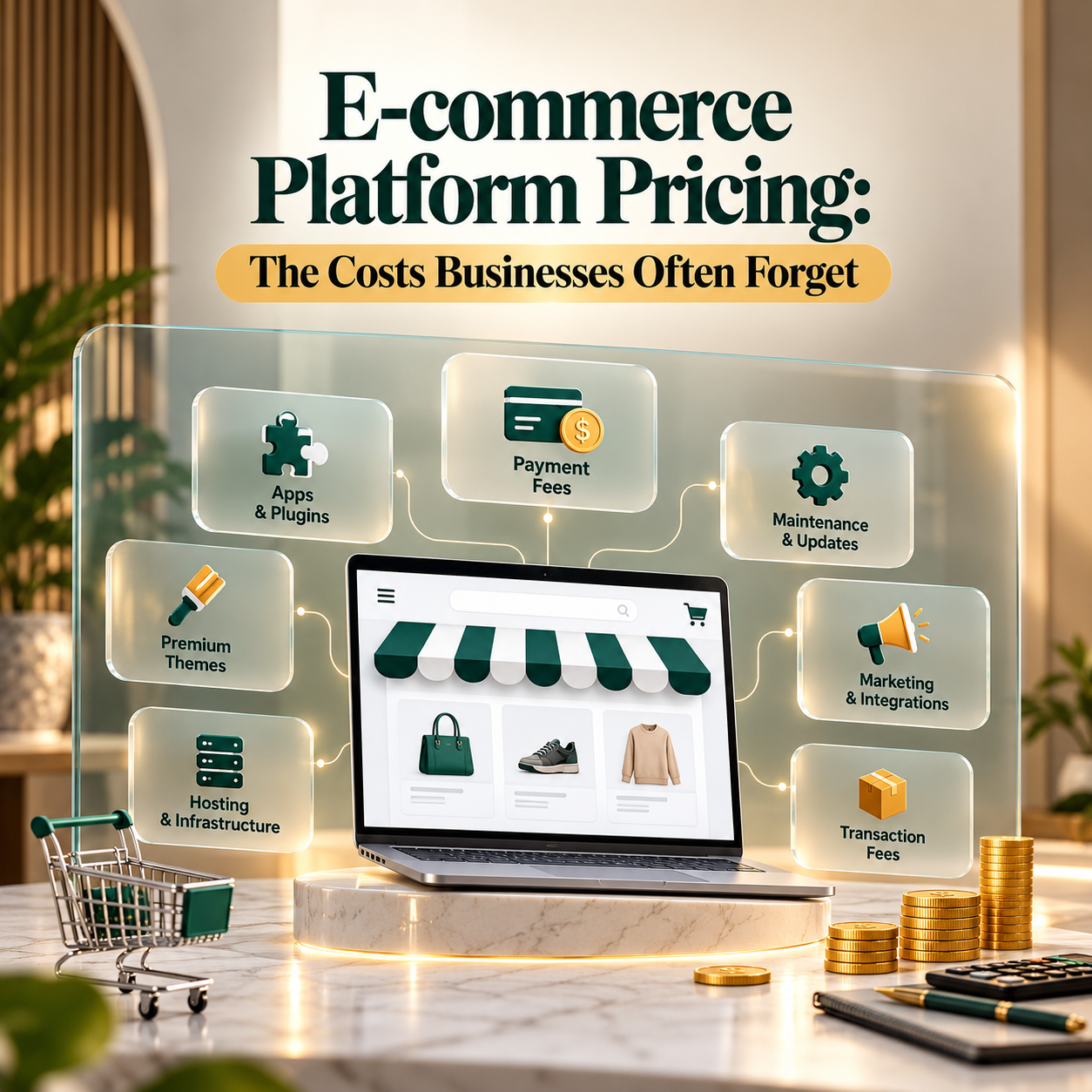
Businesses usually only compare subscription fees from platforms. This is rarely enough.The complete cost of being on the platform can actually comprise apps, plug-ins, custom development, technical support, employee time, integration maintenance, hosting, and loss of sales because of optimal performance troubles. Thus, the choice is to compare the total cost of ownership rather than that of monthly pricing.
Strategic Flexibility
Contemplate the future vision of the business over the next three to five years. It may involve needs for going international, wholesale and B2B commerce, subscriptions, marketplaces, as well various brands, stores, and advanced personalization. The platform that suits the business model now can become pricey in the future.
Strategic Flexibility
Contemplate the future vision of the business over the next three to five years.It may involve needs for going international, wholesale and B2B commerce, subscriptions, marketplaces, as well various brands, stores, and advanced personalization. The platform that suits the business model now can become pricey in the future.
When It Is Advantageous to Develop a Tailor-Made Solution
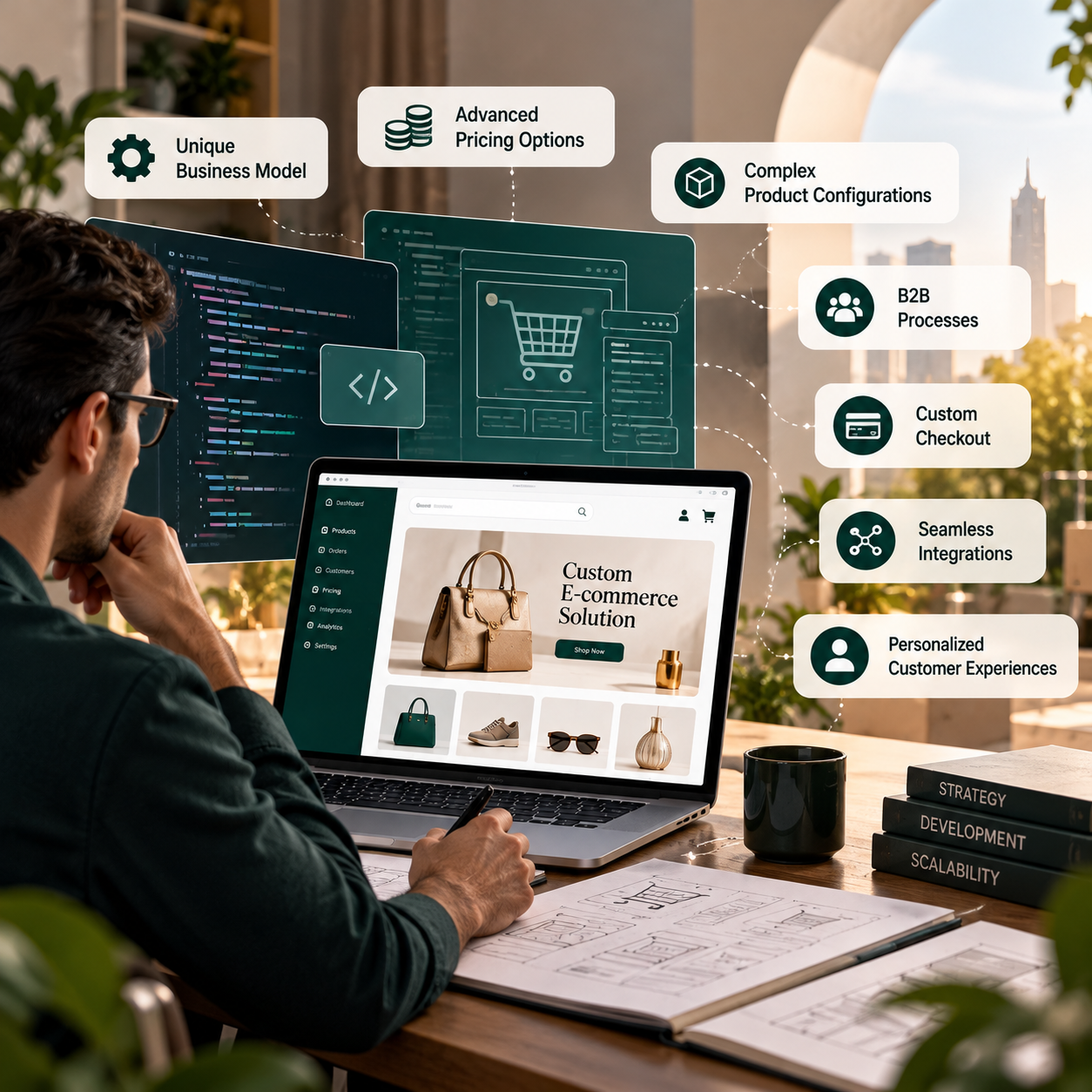
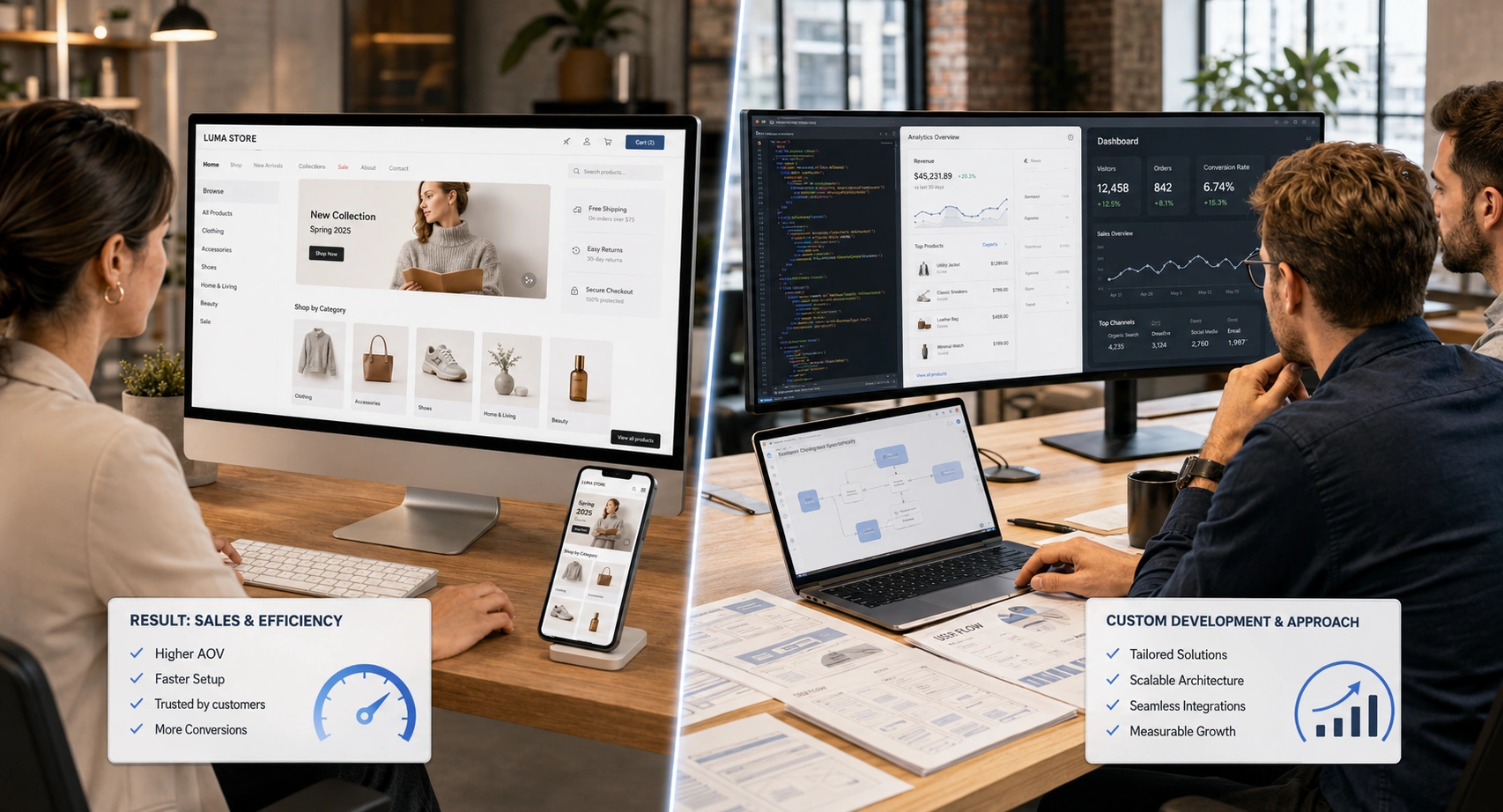
A tailor-made solution might be reasonable for companies using an uncommon e-commerce model. Such solutions can cover some unusual pricing options, advanced business-to-business processes, rare checkout practices, successful customer experiences, complex product configurations, or a strong connection with internal processes.
Creating a custom architecture might also be effective when the e-commerce process represents a competitive advantage. Nevertheless, customization should always include accountability. Companies should be ready for high development expenses, constant maintenance, great security level, strict quality assurance, documentation, and technical accountability.
One question should always be avoided: “Can we create it?” Instead the question should be “Will this solution bring enough business value to justify the costs?”
Times when replatforming becomes the best alternative
It may be worth considering switching platforms if multiple issues arise. When you see a decline in performance, integration difficulties, an increase in manual processes, and negative effects on customers together with rising costs, this indicates that the current platform does not meet the specific needs of the business anymore.
In this case, maintaining and patching the old platform can be costlier than moving to another solution. The essential point is to replatform before the existing technology turns into a major obstacle in the company’s growth.
Reallocate only for Suitable Reasons
Companies must avoid the mindset that competition is a criterion for making the switch to a new system and that a new platform looks more stylish or modern than their current one. Design upgrades can happen without switching platforms.
Also, migrating on account of one missing capability might not be fair. Businesses should first evaluate all available ways to solve problems, including configuration, integrations, custom development, or process improvements. Migration should bring measurable results to the company.
Summary
When deciding whether to develop, purchase, or switch to a different e-commerce platform, the key is to consider the requirements of the business rather than follow latest trends in technology. If the existing e-commerce platform is functioning properly and is flexible, cost-effective, scalable, and can support the organization for years to come, then staying with it may be the right decision.
If the current e-commerce platform is causing poor operations, limiting the customer experience, increasing the costs of the company’s technical activities or limiting growth, switching may be the better option.
Questions to Ask Before Moving to a New Ecommerce Platform
- How much time does your team spend working around platform limitations every week?
- Are rising app, development, and integration costs making your current platform more expensive than it appears?
- Can your existing platform support two or three times your current traffic and order volume?
- Are important customer experience improvements being delayed because of technical restrictions?
- Would moving to a new platform reduce manual work and improve operational efficiency?
- And most importantly, is your ecommerce platform helping your business grow—or has it become one of the reasons growth is slowing down?