AI in Ecommerce: 10 Ways to Save Time and Boost Efficiency
October 7, 2026
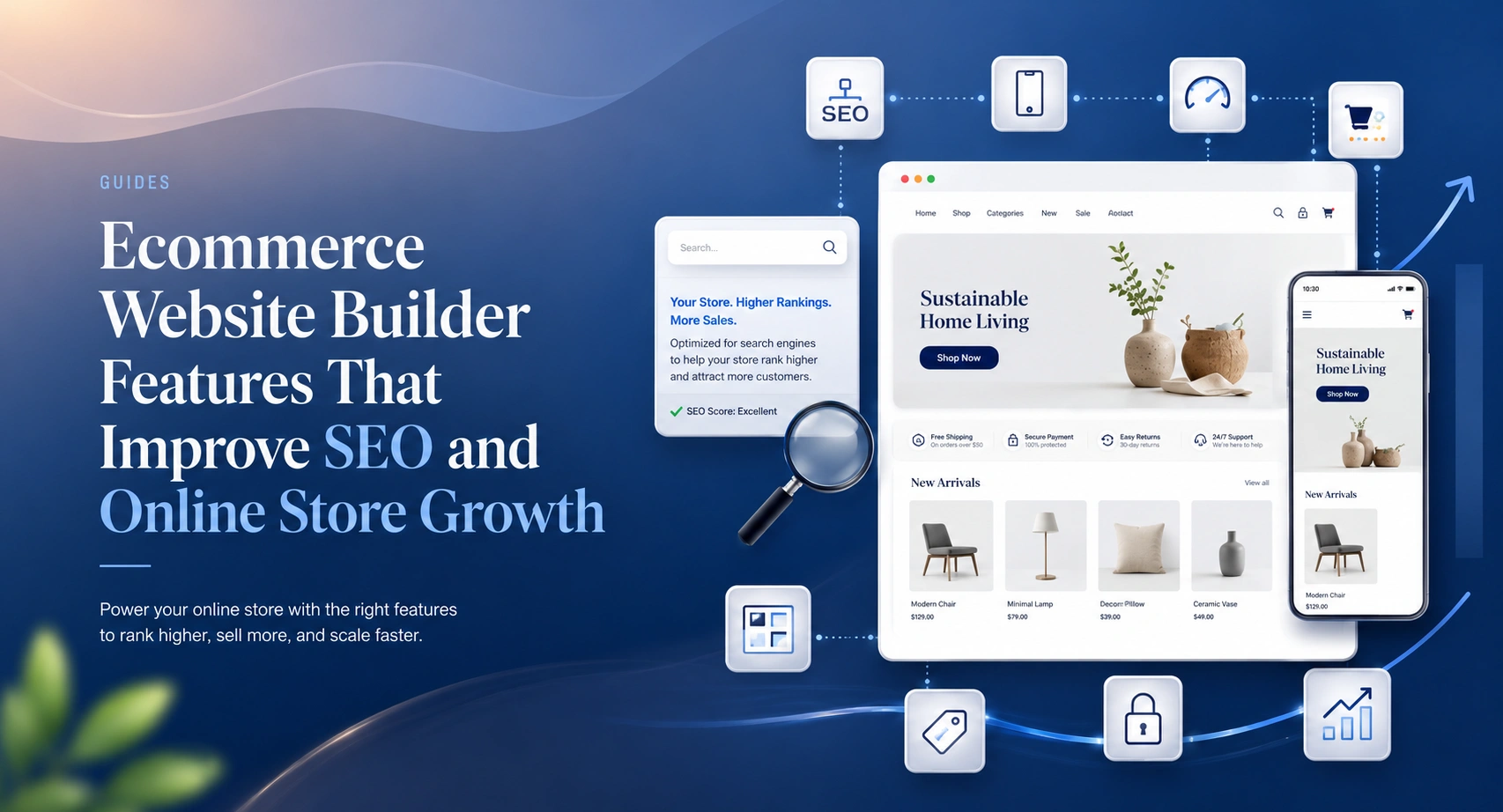
Creating an online store is just one step in the process of growing an ecommerce business. While the look of the site may help make a good first impression, it’s important to be discoverable in search engines, provide easy navigation around the store, and facilitate smooth shopping experience for customers. That’s why selecting the right ecommerce solutions might make a difference in both SEO and business development.
Ecommerce platforms are becoming more sophisticated in their ability to do more than to allow creating a storefront. Mobile responsiveness, customizing page content, managing products, providing analytics, marketing tools, and AI – all these features might help create a better foundation for growing ecommerce organically.
For an expanding brand, the task is not to create an online store, but to create an ecommerce ecosystem that will attract visitors and convert them into customers.
SEO goes beyond the use of keywords. There is the need for search engines to understand what you have on your website and the need for your customers to have an enjoyable experience once they visit your site.
An ecommerce website builder can affect many aspects that are important for SEO such as website architecture, mobile friendliness, web pages’ content, products classification, navigation and performance.
It becomes important for you to make good technology choices.A website building solution that makes it hard for you to modify product descriptions, categorize products, create quality landing pages or enhance customer experience may end up affecting your SEO efforts.
Mobile shopping has become one of the important aspects of e-commerce, and therefore responsiveness has become a fundamental prerequisite in e-commerce.
An ecommerce website that is mobile-friendly must give the customer the freedom to navigate the categories, view product pictures, read descriptions, choose from variations, and purchase from the site without difficulties on small screen devices.This aspect is important even from the SEO point of view since Google ranks websites based on their mobile version.
In choosing the best ecommerce platform for your business, don’t just check out the templates but determine how easy it will be to have a seamless experience across different devices.
An ecommerce site can have many products on its pages, from a hundred to a thousand. Lack of organization will confuse both consumers and search engines regarding the way the site is structured.
Organizations can be represented by categories, collections, product pages, and links within the website.
For instance, an online clothing retailer may organize products this way:
Women → Dresses → Casual Dresses → Product Page
The system allows customers to navigate through the website and establish connections between the pages of interest to them. Well-organized ecommerce website should provide users with an opportunity to create categories, collections, products and other elements.
Product pages may be some of the most important pages on an ecommerce website.Product page that includes useful information instead of just a product name and price would be a good example. The description, specifications, pictures, variants, availability, and other relevant information may help buyers to understand whether the product fits their needs or not.
For search engine optimization, such useful and unique product information also gives the search engine more clues about the page content.
It is better to avoid using the same product description for several products. In case it is possible, you can create your own product information that describes the main product features, uses, benefits, materials, sizes, and other relevant information.
Ecommerce website must provide this possibility for the user.
When you need SEO, you will need to generate content based on your customers’ search intent.This involves category pages, buyers’ guides, landing pages, educational content, FAQ sections, and many other pieces of helpful material.
However, having an inflexible ecommerce site will make it hard for you to make these changes. With a flexible site, you will have much more freedom to manage your content and create pages depending on your customers’ needs.
So, in case of a direct-to-consumer skincare company, you can provide educational content related to skincare procedures while tying up these articles with certain product categories and pages.
The users are not happy with the wait that the loading time brings.Larger images, redundant scripts, misconfigured applications, and inefficient website structure can all have an impact on the site speed. So, the site speed needs to be taken into account when assessing an ecommerce platform.
Moreover, companies should take care of their content by using the right sized images, avoiding excessive elements on the webpage, and monitoring website performance. The right ecommerce platform should give an appropriate technical base for the future growth of the website.

Navigation caters to two parties – customers and search engines.The customer needs to locate products easily and fast, while the search engine needs to comprehend the connection between various pages.
Some elements of good navigation may include proper categorization, sub-categorization, collections, filters, breadcrumb navigation, and context-based internal linking.
This is particularly important when working with larger catalogs of products.
Consider a home interior store offering several thousand products. The client would be able to browse for furniture, lighting, carpets, wall decorations, and other products separately through an organized catalog.
This may lead to more product discovery opportunities.
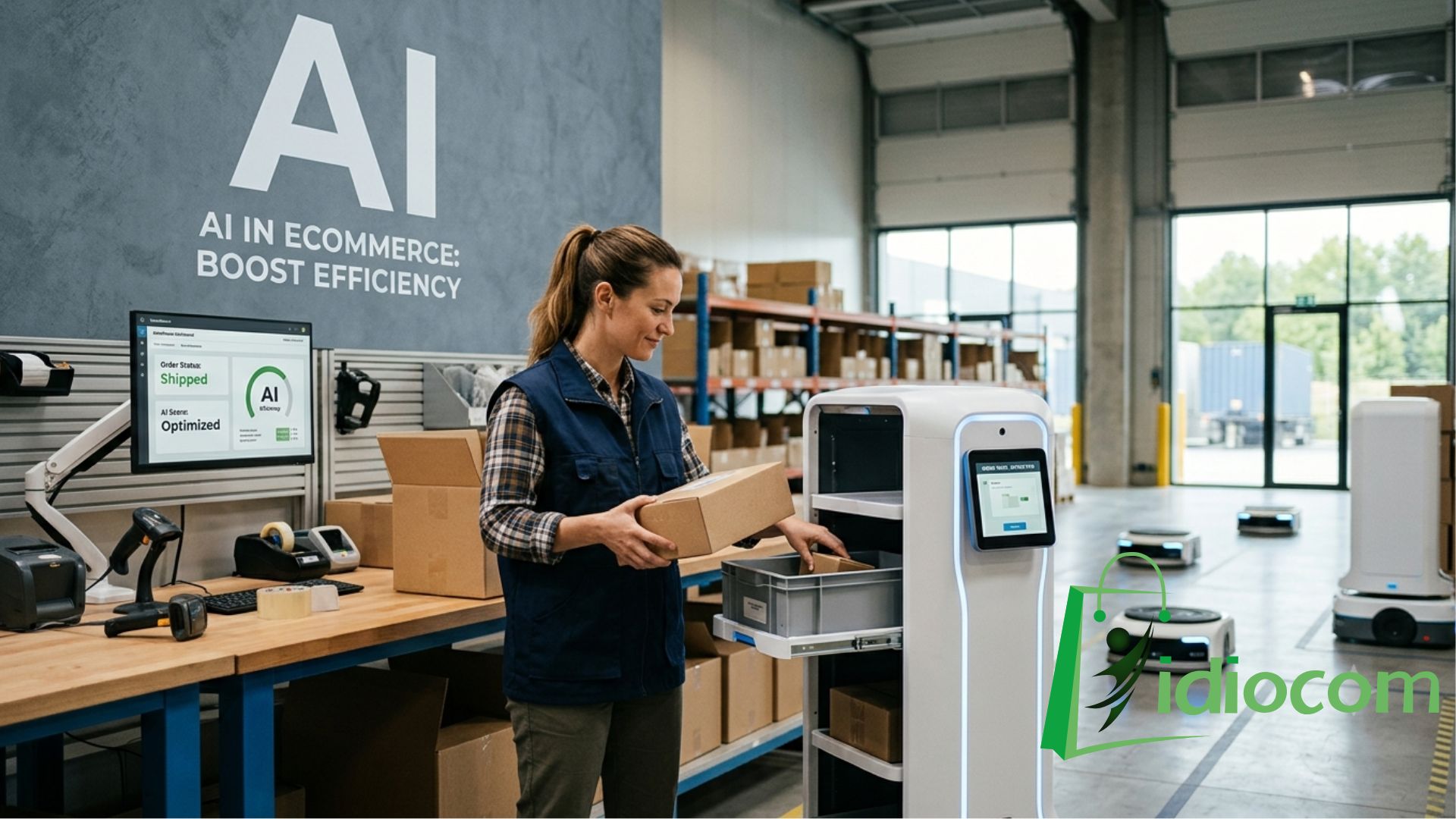
AI is becoming increasingly common in the current ecommerce technologies.An AI ecommerce website builder can make some processes in creating and maintaining an online shop easier. Based on the platform used, AI can aid in such areas as creating product descriptions, building a catalog or organizing content, etc.
When it comes to businesses dealing with large product catalogs, it can make the process of working on ecommerce content more automated.Hence, it can be especially helpful in cases where there is a need to manage large volumes of ecommerce content.
Nevertheless, it is necessary to ensure the quality of generated content by checking its accuracy, uniqueness, relevance to the brand and SEO value.
Organic traffic does not constitute the end goal. The enterprise must know how the visitor uses the website after visiting it.
Analytics helps answer questions like:
Such information can affect not only SEO efforts but also eCommerce operations.
For instance, when a certain category has much organic traffic but produces little sales, the company may consider changing something about the presentation, navigation, pricing, trust factors, calls-to-action. This is why analytics must become part of the eCommerce infrastructure rather than remain a reporting tool.
SEO is just one aspect of a much larger strategy for ecommerce success.Other marketing tactics can include things like email marketing, pay-per-click marketing, social media marketing, promotions, content marketing, and more.
Using an integrated all-in-one ecommerce platform can make managing various aspects of this ecosystem easier.
However, the benefit of using an all-in-one system isn’t necessarily that every marketing tactic must be managed in one place. The benefit comes from the ability to tie together your products, store, marketing, and analytics.
Features required to launch 20 products could be drastically different from what would be required for 2,000 products.Ecommerce stores that scale up might need:
A greater number of products and categories
A greater number of product variants and SKUs
A greater number of landing pages
A greater number of marketing campaigns
Advanced analytics
Better inventory visibility
Better customer experience
That’s why it makes sense to judge the ecommerce solution for businesses in light of present and future needs of the business. An ecommerce platform for growing businesses must leave space for scaling up without the business having to re-architect its whole ecommerce presence again and again.
When running a D2C brand, there is the need to control the complete customer experience starting from the moment when someone visits your website up until after purchasing from you.
As a result, when looking for an ecommerce platform for D2C brands, you have to consider flexibility regarding storefront, products, content, marketing, customer experience, and analytics.
It is especially crucial to maintain brand consistency since as a D2C brand, you will mostly deal with customers on your website.
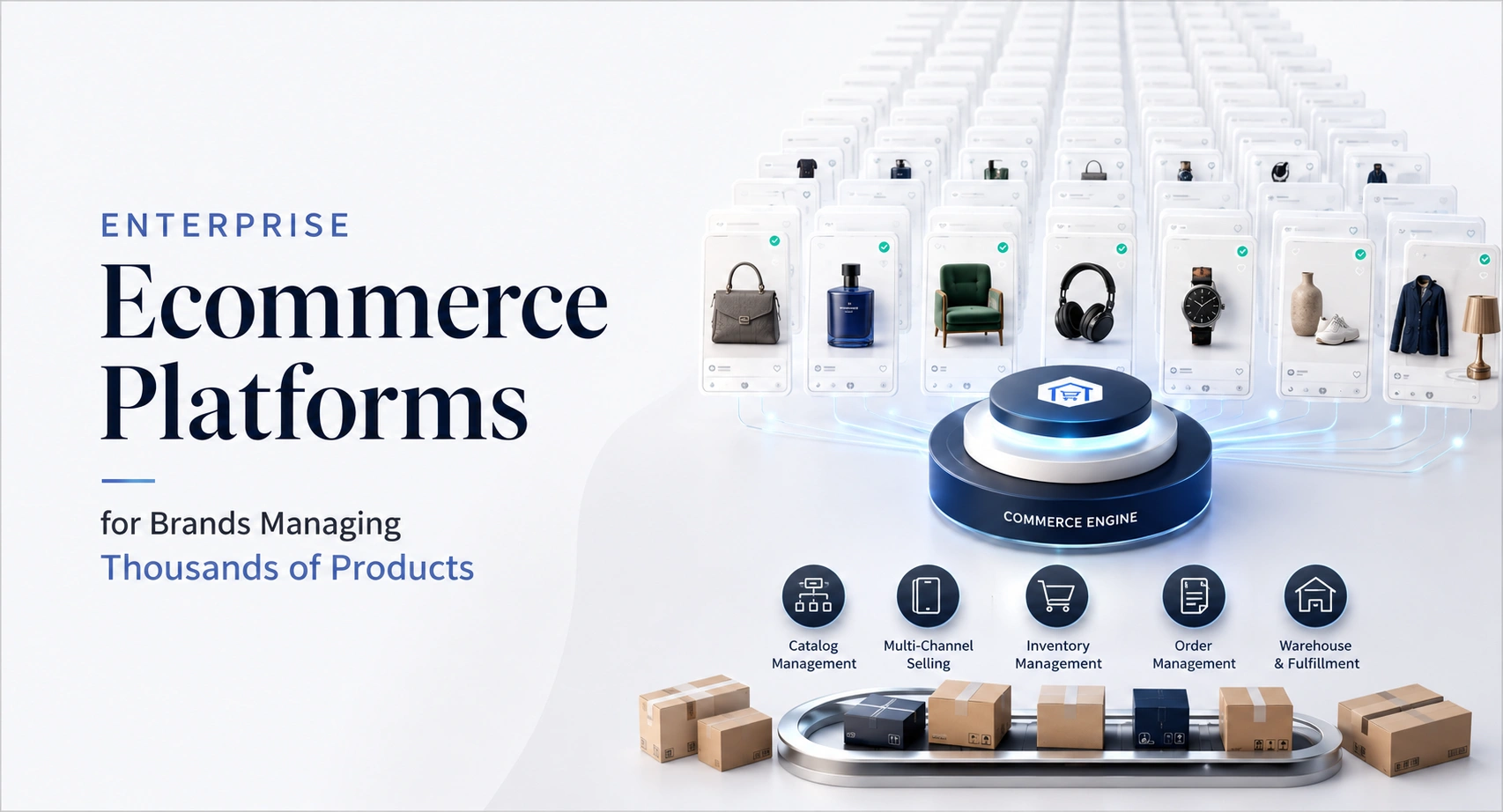
Idiocom is marketed as more than just a website creator. The system integrates a variety of functions, including storefront creation, product management, inventory management, order management, marketing, analysis, and catalog management enabled by AI.
Such an approach will allow companies to link the website for customers with the tools needed for the growth of their online stores. When choosing scalable solutions for e-commerce, the factor that matters is not whether the technology will be able to build a website but whether the system will enable a full cycle of e-commerce activities.
There is more to an ecommerce website builder than getting products online. With the right technology, businesses will have the basis for search, discoverability, customer experience, marketing, analytics, and growth.
Mobile-friendly design, structured catalogs, custom content, intuitive navigation, performance optimization, AI-driven processes, and analytics among others can contribute to creating a more solid ecommerce base.
This applies to new ventures, existing stores, and D2C brands since the selection of ecommerce solutions should not be limited to the day one of launching a store but to the capabilities of growing and managing a business as it grows.
Does an ecommerce website builder impact SEO?
Yes. The tool can affect such crucial components as site structure, mobile responsiveness, content management, product organization, navigation, and performance. However, the SEO performance is also determined by content, technical optimization, competition, authority, and strategy.
Which ecommerce features matter for SEO?
The crucial features include responsive design, customization of content, reasonable category hierarchy, product management, internal linking, performance optimization, analytics, and possibility of creating relevant landing pages and content.
Is an AI ecommerce website builder beneficial for SEO?
AI can speed up some ecommerce content and catalog tasks, however, human evaluation of these elements will be still necessary. Companies are encouraged to focus on valuable, original, useful, and customer-oriented content, not on quantity.
Why do companies that are scaling require a scalable ecommerce platform?
Companies that scale usually increase the number of products, customers, orders, marketing efforts, and needs. A scalable platform enables to implement the necessary infrastructure without full rebuilding of the site.