Ecommerce Platform vs Ecommerce Agency vs Managed Growth Partner: What Is the Difference?
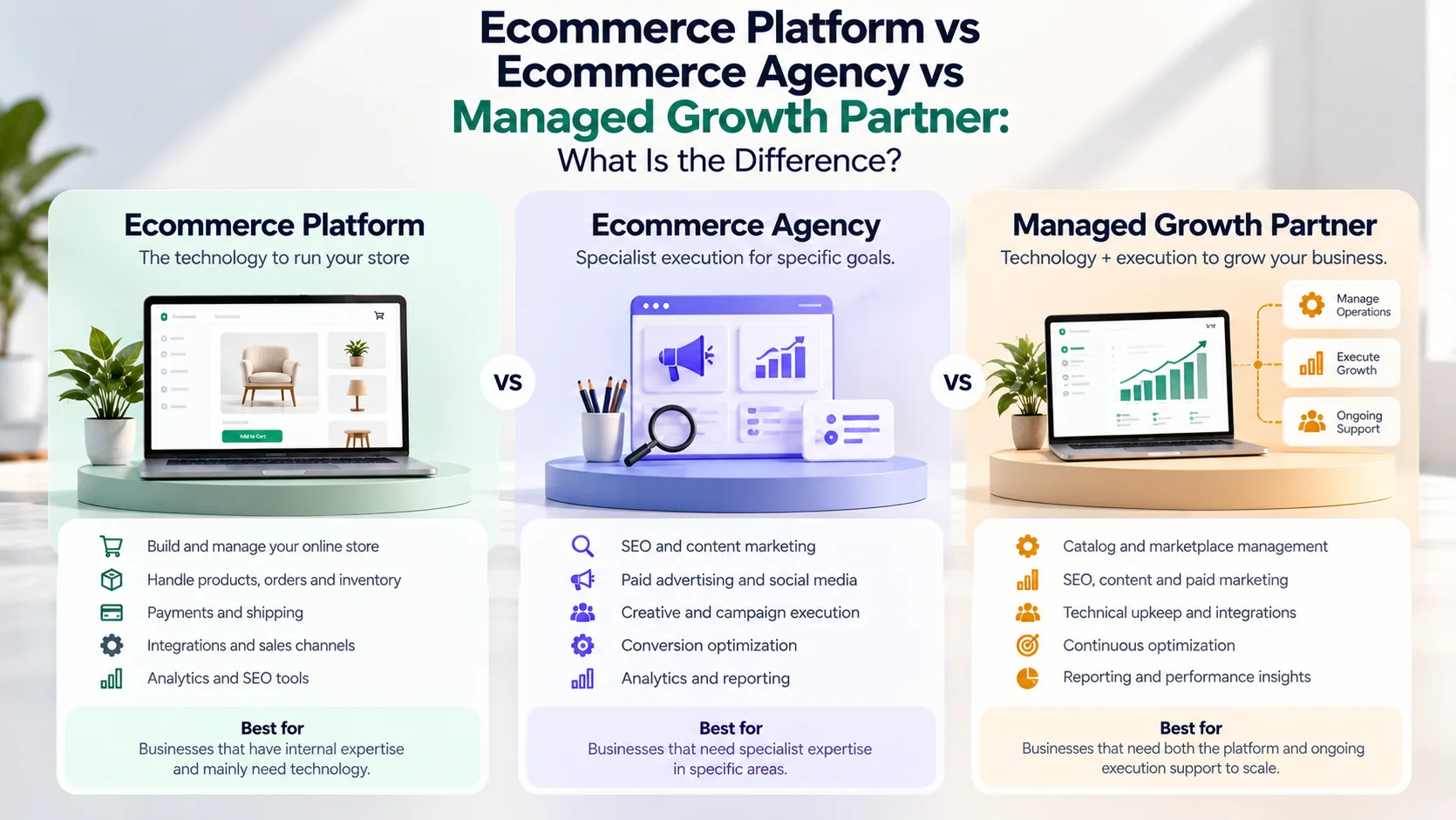
Choosing how to run an ecommerce business is not only a technology decision. It is also an operating-model decision. An ecommerce agency can provide specialist execution, an ecommerce platform can provide the technology and infrastructure needed to operate a store, while a managed growth partner can combine technology with ongoing execution and optimization. Understanding the difference matters because businesses often expect one model to solve problems that actually belong to another.
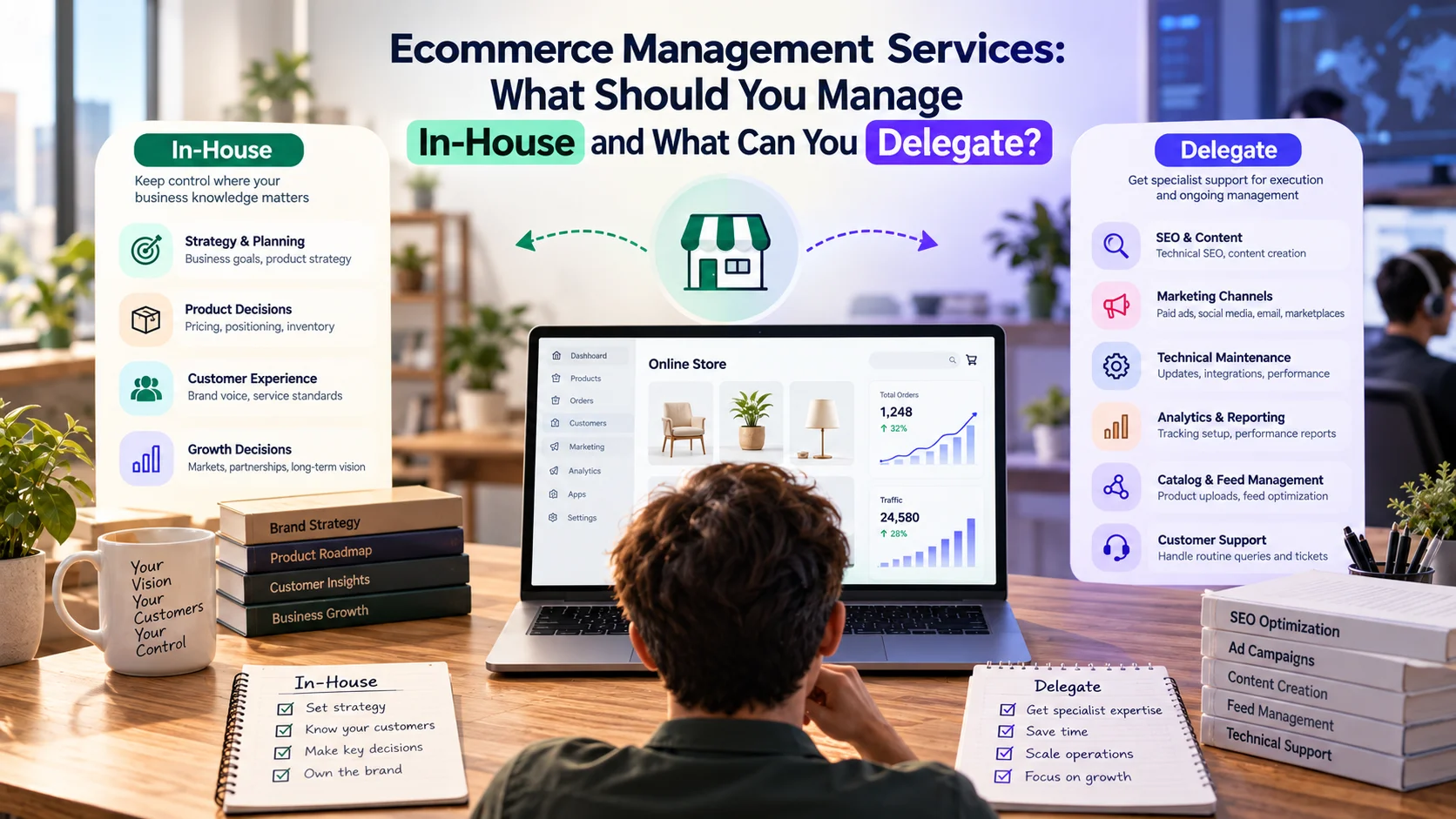
A platform can give you the tools to create products, process orders, manage customers and operate your store, but it does not necessarily provide the people needed to execute marketing or growth activities. An agency can bring expertise and execution capacity, but the business may still need to manage its ecommerce technology separately. A managed growth model sits between these approaches, combining software with ongoing support where required. The right choice depends on your internal capabilities, growth stage, operational complexity and how much execution you want to keep inside the business.
The Three Ecommerce Operating Models
At a basic level, the three models can be understood through one question:
Who provides the technology, and who is responsible for doing the work?
| Model |
Primary Role |
What You Get |
What You Still Own |
| Ecommerce Platform |
Technology |
Store, operations and commerce tools |
Strategy and execution |
| Ecommerce Agency |
Specialist execution |
Marketing, SEO, content or technical services |
Platform and business decisions |
| Managed Growth Partner |
Technology + execution |
Platform plus ongoing operational and growth support |
Business direction and approvals |
The distinction is important because these models are not necessarily competing alternatives.
A business can use an ecommerce platform and an agency simultaneously. A managed growth partner may also incorporate technology, specialist expertise and ongoing execution into one relationship.
The decision is therefore less about choosing a label and more about deciding where responsibility should sit.
What Is an Ecommerce Platform?
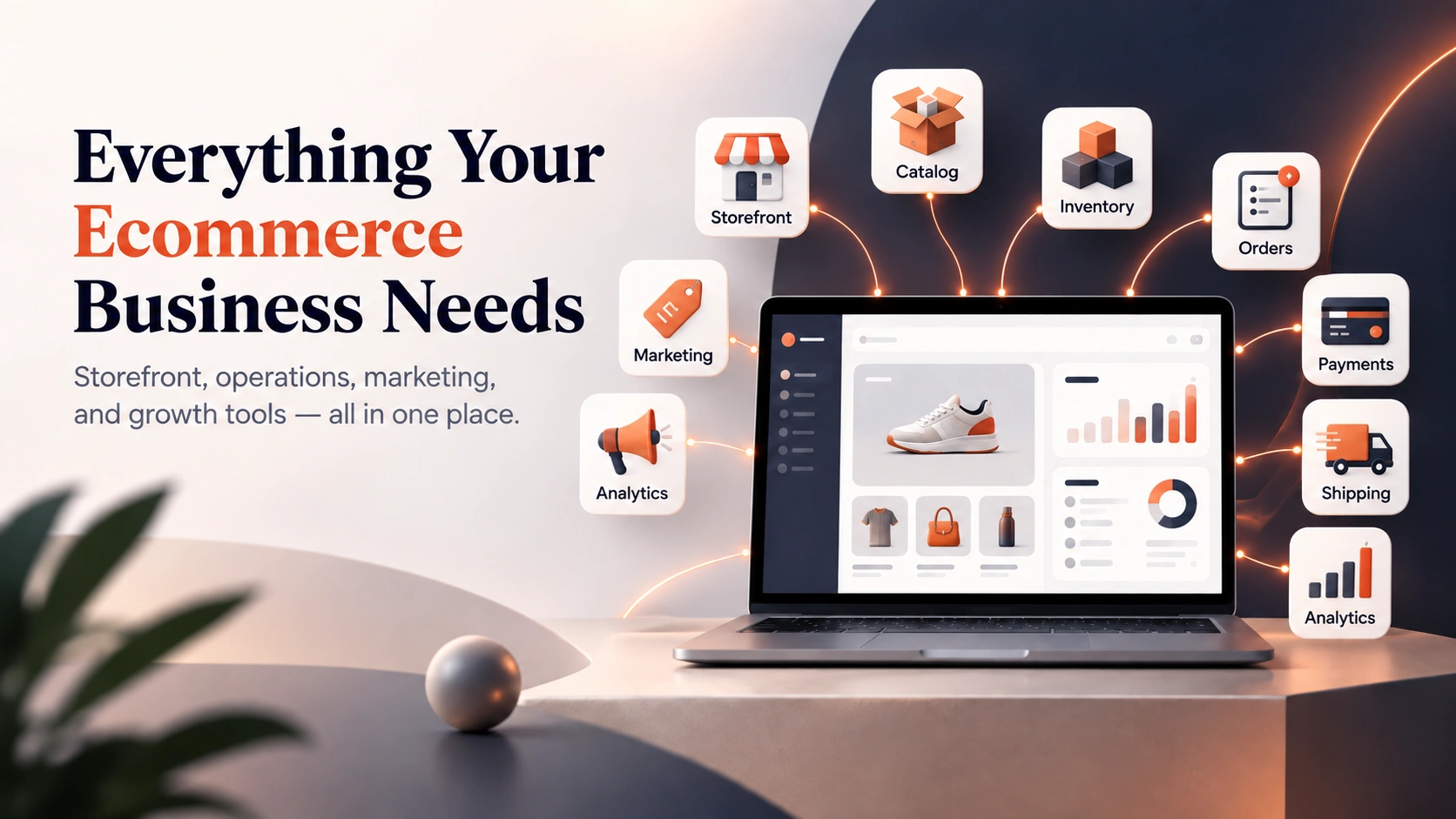
An ecommerce platform is the technology layer used to operate an online business.
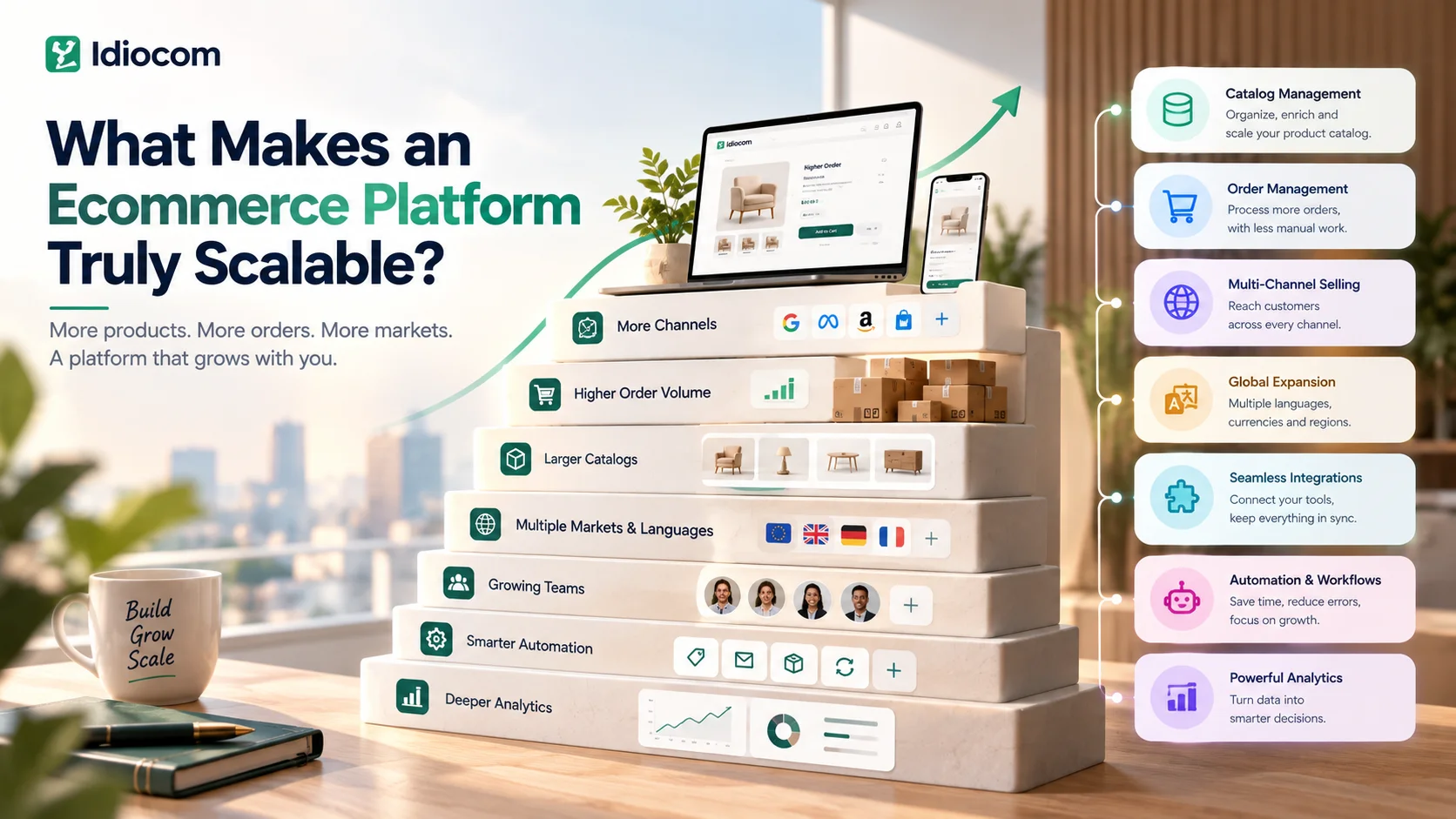
Depending on the platform, it can provide capabilities such as:
- Storefront creation
- Product management
- Order management
- Customer management
- Payments
- Shipping
- Inventory workflows
- Analytics
- SEO controls
- Integrations
- Sales-channel connections
For example, Google provides ecommerce-specific guidance around product structured data, Merchant Center feeds and site architecture because the underlying website needs to communicate product information correctly to search engines and commerce systems.
A platform therefore provides the operating infrastructure.
But infrastructure is not the same as execution.
If a merchant launches a store with 1,000 products, the platform may provide the tools to manage those products. It does not automatically determine which products should receive promotional priority, which keywords should be targeted or which customer segments should be pursued.
The platform model works well when:
- You have capable internal staff.
- Your team can manage day-to-day store operations.
- You already have marketing or SEO expertise.
- You want direct control over the store.
- You mainly need technology rather than additional execution capacity.
The biggest consideration is that software does not eliminate the work of running an ecommerce business.
What Is an Ecommerce Agency?
An ecommerce agency generally provides specialist services that help a business execute particular parts of its ecommerce strategy.
Depending on the agency, services may include:
- SEO
- Paid advertising
- Content marketing
- Social media
- Web development
- Conversion optimization
- Marketplace management
- Email marketing
- Creative production
- Analytics
This can be valuable when a business has a clear objective but lacks the internal expertise or resources to execute it.
For example, a retailer may already have a functioning ecommerce platform but lack technical SEO expertise. Instead of hiring a full-time SEO team, it could work with an agency for technical audits, content strategy and ongoing optimization.
The agency model is therefore often specialist-led.
The business typically provides the platform, products, brand and strategic direction while the agency contributes specific expertise.
The trade-off
An agency can provide deeper expertise in a particular area, but the merchant may need to coordinate multiple providers.
For example:
Platform → Agency → Analytics provider → Development team → Marketing tools
As the business grows, each additional system or provider can create another management relationship.
That does not make the agency model inherently problematic. It simply means coordination becomes part of the operating model.
What Is a Managed Growth Partner?
A managed growth partner combines technology with ongoing execution and support.
Instead of simply providing software or delivering a defined specialist service, the partner can help operate and improve parts of the ecommerce business continuously.
Managed ecommerce services can cover areas such as catalog management, marketplace operations, advertising, content, reporting and technical upkeep.
The model can therefore look like:
Platform + People + Processes + Optimization
This is particularly relevant for businesses that have outgrown doing everything themselves but do not necessarily want to build a large internal ecommerce department.
The merchant still controls the business.
The managed partner provides additional capacity and expertise.
Ecommerce Platform vs Ecommerce Agency vs Managed Growth Partner
The easiest way to understand the distinction is to examine what each model is designed to solve.
| Business Need |
Ecommerce Platform |
Ecommerce Agency |
Managed Growth Partner |
| Build online store |
✓ |
✓* |
✓ |
| Product management tools |
✓ |
✓* |
✓ |
| Order management |
✓ |
✓* |
✓ |
| SEO execution |
Tools |
✓ |
✓ |
| Content production |
Tools |
✓ |
✓ |
| Paid marketing |
Tools/integrations |
✓ |
✓ |
| Technical maintenance |
✓* |
✓ |
✓ |
| Catalog execution |
Tools |
✓ |
✓ |
| Analytics |
✓ |
✓ |
✓ |
| Ongoing growth execution |
|
✓ |
✓ |
| Strategic business ownership |
✓ |
|
✓ |
| One connected operating environment |
✓ |
Depends |
Potentially ✓ |
*Capabilities vary by provider and service arrangement.
The important distinction is that a platform primarily provides capability, while an agency primarily provides specialist execution.
A managed growth partner attempts to connect both.
What an Ecommerce Platform Does Well
The biggest strength of a platform is repeatability.
Once the underlying system is configured, a merchant can use it to perform recurring activities without commissioning a new project every time.
For example, product management can remain within the same system as orders and customer information.
This matters as the business grows.
Google’s Merchant API allows merchants to create, update, retrieve and delete product information programmatically, illustrating how ecommerce platforms and connected systems increasingly depend on structured, reusable product data.
A strong platform can therefore reduce technical friction.
However, merchants should evaluate more than feature count.
Ask:
- How easy is it for staff to use?
- Can workflows be automated?
- Can product data be managed at scale?
- Can new channels be connected?
- Can the platform support growth?
- How much developer involvement is required?
- How much operational work remains after setup?
The best ecommerce platform for one company may not be the best fit for another because the answer depends on how the business operates.
What an Ecommerce Agency Does Well
The major advantage of an agency is specialized knowledge.
A business may understand its products extremely well but lack expertise in:
- Technical SEO
- Performance marketing
- Conversion optimization
- Content strategy
- Analytics
- Marketplace advertising
An agency allows the company to access those skills without necessarily building every capability internally.
For example, a merchant launching into a new market may need research, localized content, paid campaigns and technical SEO.
An experienced agency can provide a team covering several of those disciplines.
But the business still needs to manage the relationship.
That means defining:
- Objectives
- Deliverables
- Approval processes
- Reporting requirements
- Access permissions
- Success metrics
The more strategic the work, the more important this collaboration becomes.
What a Managed Growth Partner Adds
The managed growth model addresses a common gap between having software and having the capacity to use it effectively.
Consider a business with:
- 3,000 products
- Multiple sales channels
- Growing organic traffic
- Paid advertising
- Several employees
- Regular product launches
The company may already have an ecommerce platform.
Its problem is no longer simply technology.
It needs people to continuously manage catalogs, feeds, content, SEO, marketing, analytics and operational improvements.
A managed growth partner can potentially fill that execution gap.
Instead of buying software separately and then assembling multiple specialist relationships, the merchant can have a connected service model.
The value is not simply “someone else does the work.”
The value is continuity between technology and execution.
Where Each Model Can Become Limiting
Every operating model involves trade-offs.
Platform-only model
The main limitation is internal capacity.
You may have excellent technology but insufficient people to execute growth activities.
A platform cannot decide your marketing priorities or take responsibility for your commercial strategy.
Agency model
The main consideration is coordination.
You may have excellent specialists but still need to manage the platform, internal operations and relationships between providers.
The agency also may focus on a specific function rather than the entire ecommerce operating environment.
Managed growth model
The main consideration is governance.
Because the partner becomes more deeply involved in execution, the business needs clear ownership, access controls, approval processes, reporting and communication.
Managed support should never become a reason for the merchant to stop understanding what is happening inside its own business.
The relationship should increase execution capacity without eliminating business oversight.
Software Alone vs Software + Execution Support
A useful way to decide between models is to examine the type of problem you have.
Problem: “We need a better way to operate our store.”
A platform may be the primary requirement.
Problem: “We have the platform, but we don’t have enough specialist expertise.”
An agency may be appropriate.
Problem: “We need the technology and ongoing people to operate and grow it.”
A managed growth model may fit the operating requirement more closely.
This distinction prevents businesses from buying services for the wrong problem.
For example, hiring an SEO agency will not fix a poorly structured product catalog. Likewise, migrating to a new ecommerce platform will not automatically create an acquisition strategy.
Sometimes the problem is technological.
Sometimes it is operational.
Sometimes it is strategic.
Often, it is a combination.
The Difference Between Advice and Execution
Another important distinction is between consulting and managed services.
A consultant might tell you:
“Your product pages need better structured data and stronger internal linking.”
Your team then implements the recommendation.
A managed partner might instead be responsible for implementing the agreed changes, monitoring them and reporting the results.
This difference matters because businesses often underestimate the gap between knowing what to do and having the capacity to do it consistently.
Google recommends structured product data and Merchant Center product feeds as ways of communicating ecommerce information to Google.
Knowing that recommendation is one thing.
Maintaining product data, monitoring issues and keeping information synchronized over time is another.
Google’s Merchant API documentation specifically supports ongoing product updates and monitoring of product issues, illustrating why ecommerce data management is a continuing operational process rather than a one-time setup task.
When Platform-Only Makes Sense
A platform-only approach may suit a business when its internal team already has the required capabilities.
For example:
Founder + ecommerce manager + internal marketer + developer
The business may have enough expertise to manage the store, marketing and technical requirements internally.
In this situation, adding managed support may not be necessary for every function.
The platform becomes the central operating system, while the internal team owns execution.
When an Agency Makes Sense
An agency can be useful when the business has a specific capability gap.
For example:
Internal team: Products, customers, operations
Agency: SEO and paid advertising
Platform: Store and order management
This structure provides specialist support without transferring broad operational responsibility.
It can work particularly well when the business already has a capable ecommerce manager who can coordinate external specialists.
When a Managed Growth Partner Makes Sense
A managed growth partner becomes relevant when the business needs more than isolated specialist services.
For example:
Business: Strategy, products, pricing and customer relationships
Platform: Store, catalog, orders, payments and operations
Growth partner: SEO, content, catalog execution, visibility, analytics and ongoing optimization
This model can be particularly relevant for businesses that are growing quickly but do not want to build separate teams for every ecommerce function.
The critical requirement is transparency.
The merchant should know:
- What is being managed
- Who is responsible
- What has been changed
- What the data shows
- What is being optimized
- Which decisions still require approval
A Practical Decision Framework
Before selecting an operating model, assess your business across five areas.
1. Technology
Do you already have the ecommerce functionality you need?
2. People
Do you have enough internal expertise and capacity?
3. Execution
Can your team consistently complete the work required for growth?
4. Complexity
How many products, channels, markets, integrations and workflows are involved?
5. Control
Which decisions must remain entirely inside the business?
Your answers will reveal where support is actually needed.
For instance, a small retailer with strong internal marketing capability may primarily need software.
A growing brand with a capable platform but no SEO team may need an agency.
A business with increasing catalog complexity, multiple channels and limited internal execution capacity may consider a managed growth model.
Where Idiocom Fits
Idiocom is designed around the idea that ecommerce businesses do not always need to choose between software and support as completely separate options.
Its core ecommerce platform brings together store creation, product and order management, payments, shipping, SEO-related functionality and multi-channel capabilities.
For merchants who want to manage their own store, the software can provide the underlying tools and infrastructure.
For businesses that need additional execution capacity, Idiocom’s broader model can combine the platform with managed growth support covering areas such as catalog, content, SEO, visibility and ongoing ecommerce execution.
This creates a platform + growth partner approach.
The distinction is important: the business remains responsible for its commercial direction, while the technology and support layer can help turn that direction into ongoing execution.
That model is particularly relevant for businesses that have reached the point where simply owning ecommerce software is no longer the same as having enough capacity to operate and grow the business.
The Real Difference Comes Down to Responsibility
The three models can ultimately be summarized through responsibility.
Ecommerce platform:
“Here are the tools you need to run your store.”
Ecommerce agency:
“Here is the specialist expertise to execute specific areas.”
Managed growth partner:
“Here is the technology and ongoing execution support to operate and improve those areas.”
None of these models eliminates the need for business ownership.
Products still need to be good. Customers still need to be understood. Pricing still needs to make commercial sense. Brand positioning still needs direction. Growth objectives still need to be defined.
Technology and external expertise can increase execution capacity, but they do not remove the need for informed business decisions.
Final Takeaway
The difference between an ecommerce platform, an ecommerce agency and a managed growth partner is fundamentally about what is provided, who executes the work and where responsibility remains.
An ecommerce platform primarily provides technology and operational tools. An agency provides specialist expertise and execution around defined areas. A managed growth partner combines technology with ongoing execution and optimization, creating a more connected operating model for businesses that need additional capacity.
For some businesses, software alone is enough. Others need specialist agency support. Businesses facing broader operational and growth demands may look for a model that connects their ecommerce technology with ongoing execution.
The most useful question is therefore not simply, “Which model is better?”
It is:
“What does our business need to manage internally, what expertise are we missing, and how much execution capacity do we need to grow?”
Once those responsibilities are clear, choosing between ecommerce solutions becomes much less about comparing labels and much more about designing an operating model that fits the business.